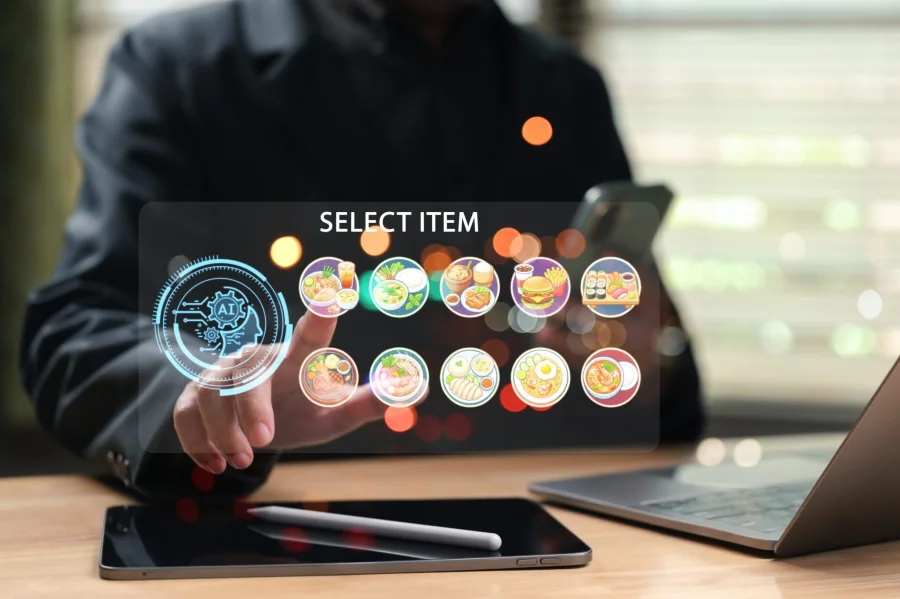

Walk down a New York City street and you might notice something odd about the sandwich signs outside local delis. The croissant layers look impossibly neat. The cheese on the chopped-cheese hero melts with suspicious perfection. These images are not real photographs—they are generated by artificial intelligence.
X user Maggie Moda pointed this out in a post that has gathered 2.8 million views. She spotted a series of peculiar sidewalk signs outside the city's delis and cafés, including croissant sandwiches with almost comically perfect layers, an affogato with a side of random holes, and a chopped-cheese hero with cheese melted a little too perfectly over every piece of meat.
Why Restaurants Are Turning to AI Food Images
The reason is simple: money and time. Generative AI gives restaurants a cheap and remarkably easy alternative to photographing the food they actually sell. For small businesses that cannot afford professional food photography or the hours needed to stage and shoot each menu item, AI tools offer a fast shortcut.
This is a real advantage for independent delis and cafés that compete with larger chains. A polished image can make a $10 sandwich look like a $20 one, and AI delivers that polish in seconds rather than days.
The Backlash: Customers Want Real, Not Perfect
But the reaction to these AI food ads reveals a paradox in how people think about restaurant marketing. Some customers would rather see an imperfect photo of the actual food than a flawless AI-generated version that does not match what arrives on their plate.
The "too perfect" look is part of the problem. When every layer of a croissant lines up exactly right or cheese melts uniformly over every piece of meat, something feels off—even if viewers cannot immediately name why. The random holes in the affogato image are a telltale sign that no human photographer was involved.
Fake Food Ads Are a Decades-Old Tradition
Here is the important context that often gets lost in the outrage: Restaurants have been serving up fake food ads for decades. AI slop is just the latest special on a menu that has always included a little creative exaggeration.
Long before generative AI existed, food stylists used tricks like motor oil instead of syrup, mashed potatoes standing in for ice cream, and cardboard hidden under burgers to add height. Commercial food photography has never been a faithful record of what a restaurant serves—it is a marketing tool designed to make food look as appealing as possible.
The difference with AI is not that the images are fake. It is that the fakeness is now available to every small business, and the results can look uncanny in ways that professional stylists knew how to avoid.
Our Take: The Real Issue Is Trust, Not Technology
In our view, the backlash to AI food ads is not really about the technology itself. It is about trust between a restaurant and its customers.
When a customer sees an AI image and orders the dish, they expect something close to what they saw. If the real food falls short—and it almost always will, because AI images are idealized—the customer feels misled. That feeling damages the relationship far more than a slightly less glamorous real photo ever could.
Restaurants should remember that food marketing has always been aspirational. But the best ads set expectations that the kitchen can actually meet. AI tools are useful, but they should be used carefully. A customer who gets a sandwich that looks nothing like the sign outside is unlikely to come back—no matter how perfect that AI-generated cheese melt looked.
To put it plainly: AI is not the problem. Misleading customers is. And that is a mistake restaurants have been making long before anyone heard of generative AI.