
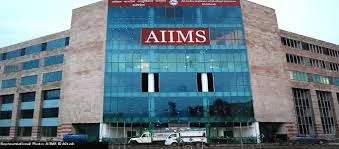

Summary
The All India Institute of Medical Sciences (AIIMS) in Bilaspur is preparing for a major growth phase to better serve the people of Himachal Pradesh and neighboring states. Executive Director Lt Gen (Dr) Daljit Singh (retd) recently shared plans to increase the hospital's capacity from 750 beds to 960 beds, with a future goal of reaching 1,500 beds. The institute is also working on starting an air ambulance service to help patients living in difficult mountain areas get medical help faster. These updates aim to make high-quality healthcare more accessible to everyone in the region, regardless of their financial status.
Main Impact
This expansion is expected to change how healthcare works in the northern hilly regions of India. By increasing the number of beds and adding advanced services like a bone marrow transplant center, AIIMS Bilaspur is reducing the pressure on hospitals in cities like Chandigarh and New Delhi. For local residents, this means they no longer have to travel long distances for complex surgeries or cancer treatments. The introduction of an air ambulance service will be especially helpful for those in remote areas where roads can be slow or dangerous, potentially saving many lives during medical emergencies.
Key Details
What Happened
Since its foundation was laid in 2017, AIIMS Bilaspur has grown into a fully functional medical hub. The institute now operates 41 different departments, including 18 broad specialties and 14 super-specialty areas. It has become a primary choice for patients from Himachal Pradesh, Punjab, Haryana, and Jammu & Kashmir. The hospital currently sees more than 1,800 patients every day in its outpatient departments and handles around 70 to 80 emergency cases daily. With an 80 percent occupancy rate, the hospital is reaching its current limits, which is why the expansion is now a top priority.
Important Numbers and Facts
The development of AIIMS Bilaspur has involved significant investment and resources. The institute is built on nearly 247.5 acres of land. So far, more than 1,272 crore rupees have been spent on building the infrastructure, while another 140 crore rupees were used to buy modern medical equipment. A team of 134 clinical and non-clinical doctors currently provides care to patients. To further improve cancer care, a new bone marrow transplant center has been approved with a budget of 21.33 crore rupees. This center will include specialized building space and advanced medical tools to treat serious blood-related diseases.
Background and Context
In the past, people living in the mountains of Himachal Pradesh often struggled to find advanced medical care nearby. Most had to travel to major cities for even basic surgeries. AIIMS Bilaspur was established to fill this gap. It provides "tertiary care," which is a high level of specialized medical treatment. The institute is not just a hospital; it is also a place for learning and research. Currently, about 900 students are enrolled in various medical, nursing, and paramedical courses. This helps train the next generation of healthcare workers who understand the specific needs of the region.
Public or Industry Reaction
The hospital has gained a strong reputation for handling difficult cases that other local hospitals cannot manage. Doctors at the institute have already performed rare and complex procedures, such as "awake brain surgery," where the patient stays conscious during the operation. They have also completed complicated spine reconstructions and tumor removals. This success has built trust among the public. People now see AIIMS Bilaspur as a reliable place for high-risk treatments. The medical community has also noted the hospital's efficient emergency system, which uses a color-coded "triage" method to treat the most critical patients first.
What This Means Going Forward
The next steps for AIIMS Bilaspur involve finishing new construction projects, including a mortuary and a standalone trauma center. The proposed air ambulance service is a key part of the future plan. The hospital already has two working helipads and is ready to use "BHISM cubes," which are portable medical units used during disasters. As the hospital grows to 1,500 beds in the coming years, it will likely become the most important medical center in the entire northern mountain belt. This growth will also lead to more research into diseases that are common in the area, such as certain types of cancer.
Final Take
AIIMS Bilaspur is moving beyond being just a local hospital to becoming a world-class medical institution. By focusing on expansion and new technology like air ambulances, it is solving the unique challenges of mountain healthcare. The commitment to treating every patient equally, combined with advanced surgical skills, ensures that the people of the region have a bright and healthy future ahead.
Frequently Asked Questions
How many beds will AIIMS Bilaspur have in the future?
The hospital currently has 750 beds. It plans to increase this number to 960 beds very soon, with a long-term goal of reaching 1,500 beds to meet the growing demand.
What is an air ambulance and why is it needed?
An air ambulance is a helicopter equipped with medical tools to transport sick or injured people. It is needed in Himachal Pradesh because the mountainous land makes it difficult and slow for traditional ambulances to reach hospitals during emergencies.
Does the hospital offer specialized cancer treatment?
Yes, the hospital has departments for radiotherapy and surgical oncology. It is also building a new bone marrow transplant center specifically to treat advanced cancer and blood disorders.
