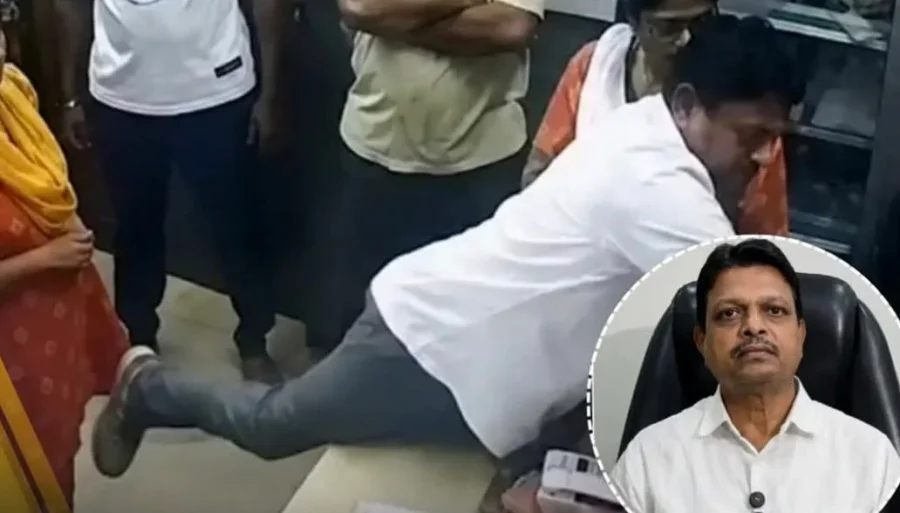

The Bombay High Court has intervened in a case involving a Shiv Sena corporator accused of assaulting doctors at a civic hospital in Thane district. The court stayed the bail granted to the accused and ordered him to surrender to the police.
High Court Cancels Bail in Doctor Assault Case
In a special sitting, a Bench of Acting Chief Justice Ravindra V. Ghuge and Justice Gautam Ankhad took suo motu cognisance of media reports on the case. According to NDTV, the court cancelled the bail and asked the corporator to surrender by 5 pm on Sunday.
The High Court described the lower court's decision as "perverse," noting that the magistrate's court in Kalyan had failed to adequately consider the accused's criminal antecedents when granting bail on July 14.
Court Cites Gravity of the Incident
The Bench highlighted the seriousness of the incident, which involved the assault of doctors and nurses at a civic hospital. The court's decision to stay the bail came after reviewing the case's details and the lower court's handling of it.
According to Deccan Chronicle, the High Court directed Ramesh Mhatre to surrender before investigating officers by Sunday evening. The court also warned that proceedings would continue against him.
What This Means for the Case
The High Court's intervention means the accused will have to return to custody while the legal process moves forward. The court's strong language — calling the bail order "perverse" — signals that it found the lower court's decision deeply flawed.
As reported by Outlook India, the case has drawn significant attention due to the nature of the assault on healthcare workers and the involvement of a political figure.
Our Take: A Strong Message on Accountability
In our view, the Bombay High Court's swift action sends a clear message: attacks on doctors and healthcare workers will not be taken lightly. By calling the lower court's decision "perverse" and taking suo motu notice, the High Court has shown that judicial oversight is essential when cases involve violence against medical professionals. This ruling also highlights the need for lower courts to carefully examine an accused's background before granting bail, especially in cases with serious allegations. For the public, this decision reinforces that no one — regardless of political position — is above the law.