

Summary
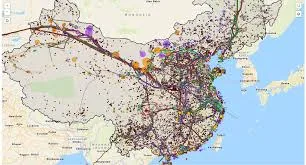
China has successfully used artificial intelligence to create a complete map of its entire renewable energy network. Researchers used advanced computer programs to identify every wind turbine and solar panel across the country using satellite images. This new tool allows the government to see and manage its green energy resources from a national level for the first time. As the demand for electricity grows due to the rise of AI technology, this mapping project helps ensure that power is not wasted and the grid remains stable.
Main Impact
The biggest impact of this project is the ability to coordinate energy across vast distances. In the past, China managed its power grid in smaller, local sections. This often led to a problem called power wasting, where green energy was created but had nowhere to go. By using AI to see the whole country at once, officials can now move electricity from places with extra power to places that need it most. This makes the entire energy system more efficient and helps support the massive amount of electricity needed to run modern data centers.
Key Details
What Happened
A team from Peking University and Alibaba Group’s DAMO Academy developed a deep-learning model to scan the entire country. This AI looked through a massive amount of high-quality satellite photography to find renewable energy sites. The project was difficult because solar panels and wind turbines are located in many different environments, from crowded cities to empty deserts. The AI was trained to recognize these structures even when the terrain or the image quality changed. This resulted in a digital inventory that shows exactly where China’s green energy comes from.
Important Numbers and Facts
The scale of this mapping project is larger than anything attempted before. The AI identified 319,972 solar power facilities and 91,609 individual wind turbines. To find these, the computer had to process 7.56 terabytes of satellite data. This information covers 1,915 different counties across China. The need for this data is urgent because the power used by data centers and AI services in China grew by 44% in the first three months of 2026 alone. Additionally, China’s clean energy industry is now worth about $2.26 trillion, making it a vital part of the national economy.
Background and Context
The world is currently facing a major energy challenge. New technologies like artificial intelligence require a huge amount of electricity to run. In many parts of the world, such as the United States and Europe, the power grids are struggling to keep up. Prices are rising, and the infrastructure is often too old to handle the new demand. While renewable energy like wind and solar is growing, it is hard to manage because the sun does not always shine and the wind does not always blow. This is why having a clear map and a way to balance these sources is becoming a top priority for major nations.
Public or Industry Reaction
Experts in the energy field are calling this a "God's-eye view" of the power system. This means that for the first time, operators can see every part of the network clearly. Industry leaders believe that this will solve the problem of wasted energy. In the past, China struggled with "curtailment," which is when wind or solar farms are forced to shut down because the local grid cannot take any more power. By moving to a national view, the industry expects to see much better stability and fewer wasted resources. The researchers have also shared their code and data publicly so that other scientists can learn from their work.
What This Means Going Forward
This achievement sets a new example for how other countries might manage their own energy transitions. If other nations can use AI to map their grids, they can better plan where to build new data centers and power plants. In China, the government is already moving many data centers to northern and western provinces. These areas have plenty of land and high amounts of wind and solar power. By matching the location of power users with the location of power sources, the country can lower costs and reduce its reliance on fossil fuels. The next step will be using this AI map to automatically balance the grid in real-time.
Final Take
The rise of artificial intelligence is often seen as a threat to the environment because of how much power it uses. However, this project shows that AI can also be the most important tool we have to save energy. By giving humans a clear and detailed view of our resources, technology is helping to fix the very problems it helped create. China’s new map proves that managing a massive green energy system is possible if you have the right data and the right tools to understand it.
Frequently Asked Questions
How did the AI find the solar panels and wind turbines?
The AI used a process called deep learning to look at very clear satellite photos. It was trained to recognize the specific shapes and patterns of solar farms and wind mills across different types of land and weather conditions.
Why is it important to map energy on a national level?
When energy is managed nationally, it is easier to balance the system. If one part of the country is cloudy, the grid can pull power from a different part of the country where it is windy, making the electricity supply more reliable.
Is this technology available for other countries to use?
Yes, the researchers have made their data and the computer code they used available to the public. This means other countries can use the same methods to map and improve their own renewable energy systems.
photo courtsy : google photos