

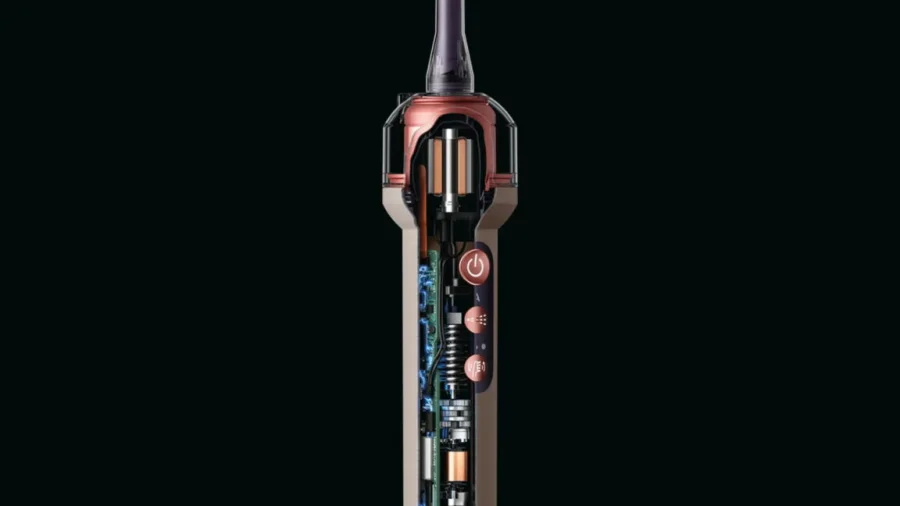

Dyson's $500 toothbrush has disappeared from stores. The company is not fully explaining why. That combination — a premium product quietly vanishing and a company staying mostly silent — is what makes this story worth paying attention to.
The toothbrush was part of Dyson's push into oral care, a category the company entered after finding success with stick vacuums and other premium products. At $500, it was priced far above typical electric toothbrushes. Now it is gone from shelves, and Dyson has not given a complete public explanation for the removal.
Why Dyson's $500 Toothbrush Disappeared Matters
There is always a danger in over-complicating products. Simple is so often best. The story of NASA spending millions on a space pen while Soviet cosmonauts used a pencil is often cited as an example of this — even if the story itself is not actually true. The point still lands: sometimes the simple solution wins.
Dyson built its reputation by reinventing everyday products. Stick vacuums, fans, hair dryers — the company made its name by taking familiar items and engineering them differently. The electric toothbrush was another attempt at that same playbook. But this time, the result was a product that disappeared from stores without a clear public explanation.
The toothbrush itself is not a new invention. The Chinese invented the first bristle toothbrush during the Ming dynasty. That basic concept carried on for centuries until 1937, when Tomlinson Moseley filed a patent for the earliest electric toothbrush. After more than 400 years, the Motodent marked the beginning of a shift from manual brushing to powered oral care.
So the electric toothbrush is a mature category. Customers already know what they want from one. A $500 price tag asks them to believe a product is dramatically better than what already exists. When that product then disappears from stores and the company won't fully explain why, it sends a signal.
What Dyson's Silence Tells Us
Companies usually explain product removals. They cite low sales, a strategic shift, or a redesign. When a company does not fully explain, it leaves room for speculation. Was the product not selling? Was there a technical problem? Was the price simply too high for the market to accept?
We do not know the answer because Dyson has not said. What we do know is that the $500 toothbrush is no longer on store shelves, and the company is not offering a complete account of why.
This is not the first time a premium product has struggled. But Dyson is not a company that usually retreats quietly. Its brand is built on confidence and bold engineering. A quiet disappearance is out of character — and that is exactly why people are asking questions.
Our Take: A $500 Toothbrush Was Always a Hard Sell
In our view, the disappearance of Dyson's $500 toothbrush is not just a product story. It is a lesson about pricing and simplicity.
Electric toothbrushes already do a good job. You can buy one that cleans your teeth well for a fraction of $500. To charge that much, a company has to offer something clearly, obviously better. If customers do not see that difference, the product will not survive on shelves — no matter how well it is engineered.
To put it plainly: over-complicating a simple product is a risk. Dyson has won before by reimagining categories. But not every category needs reinventing, and not every reinvention justifies a premium price. When a product disappears and the company won't fully explain why, it usually means the market already gave its answer.
For readers, the takeaway is simple. A high price does not guarantee a better product. And when a company stays quiet about a product's removal, that silence often says more than a press release would.
