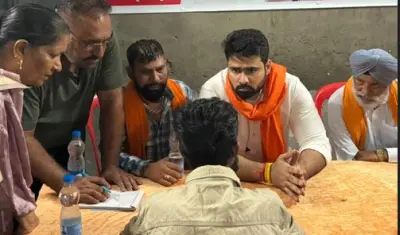


Thousands of farmers are gathering at the Punjab-Haryana border near Shambhu, preparing for a march to Delhi. The protest is against the proposed Indo-US trade deal, which farmers believe threatens their economic future.
Unlike previous large-scale farmer movements, this mobilisation has been quieter. According to the original story, "unlike in the past farmer movements, where farmers were mobilised for the protest openly, this time, the mobilisation was not on the face." Despite this, thousands have now assembled at Shambhu, showing that farmers are deeply concerned about the deal.
Why farmers are opposing the Indo-US trade deal
The core of the protest is fear. Farmers believe that once the Indo-US trade deal is finalised, they will face direct competition from American farmers. In the United States, agriculture is highly mechanised and heavily subsidised. Land holdings are large, leading to much higher yields compared to states like Punjab.
This disparity means Indian farmers could struggle to compete on price and volume. The original story notes that farmers "fear it threatens their economy." The proposed deal is seen as a direct threat to their livelihoods, especially for small and marginal farmers who already operate on thin margins.
A quieter but determined mobilisation
This protest stands out because of its low-key organisation. In the past, farmer movements were openly announced and widely publicised. This time, the mobilisation happened more discreetly. Yet, the numbers gathering at Shambhu show that the sentiment is strong.
According to the original story, "with thousands gathering at Shambhu now, it is clear that the farmers are restive about the proposed deal." The quiet build-up suggests a deep-seated frustration that has been simmering beneath the surface.
Our Take: A warning for policymakers
This protest is a clear signal that farmers feel unheard. The quiet mobilisation shows that even without loud announcements, the anger is real. The Indo-US trade deal may bring benefits in other sectors, but for agriculture, the risks are significant.
In our view, the government must engage directly with farmer unions before moving forward. Ignoring these concerns could lead to a larger confrontation. Farmers are not opposing trade itself — they are opposing a deal that could push them into unfair competition. A balanced approach that protects small farmers while opening markets is essential.