

Summary
The Haryana Assembly held a special one-day session on Tuesday that was marked by a major political standoff. The main opposition party, Congress, decided to boycott the entire proceeding, leaving their seats empty as the session began. Chief Minister Nayab Singh Saini criticized this move, labeling the opposition’s absence as a sign of an "anti-women" mindset. The session was intended to discuss women's empowerment and pass a new bill related to government job promotions, but it quickly turned into a heated debate between the ruling party and the absent opposition.
Main Impact
The boycott by Congress has deepened the divide between the ruling BJP and the opposition in Haryana. By skipping the session, the opposition aimed to protest what they call the government's "political ploys." However, this gave the government a platform to claim that Congress does not support important issues like women's reservation. This tension comes at a time when the central government is also facing hurdles with similar laws. The local impact is significant because it shows that even state-level sessions are now becoming battlegrounds for national issues, potentially slowing down local legislative work.
Key Details
What Happened
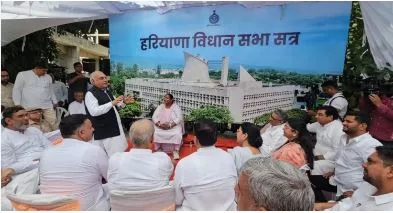
As the session started with the national song, almost all Congress members were missing. One MLA, Jarnail Singh, was present for the song but walked out immediately after it finished. Outside the building, Congress leaders held their own "mock session" to show their protest. Inside, the government moved a resolution to praise women’s achievements and criticize the opposition for not supporting a national bill that would give women 33 percent of seats in legislatures. The government also introduced a new bill to help government clerks get better career growth.
Important Numbers and Facts
The session focused on several key figures and legislative updates. The government highlighted that the sex ratio in Haryana has improved from 871 in 2014 to 928 today. The main point of contention was the Constitution (131st Amendment) Bill, 2026, which recently failed in the Lok Sabha because it did not get a two-thirds majority. This bill is known as the Nari Shakti Vandan Adhiniyam. Additionally, the state introduced the Haryana Clerical Services Bill, 2026, which aims to help Group D employees move up into better positions within the government system.
Background and Context
To understand this conflict, one must look at the national level. The Indian government wants to reserve one-third of all seats in Parliament and state assemblies for women. While most parties say they support this idea, they disagree on how to do it. The current disagreement is about "delimitation," which means redrawing the boundaries of voting areas. The opposition fears that the government will use this process to change how many seats each region has, which could favor the ruling party. Because of this disagreement, the national bill failed to pass recently. The Haryana government called this special session to show they still support the plan and to blame the opposition for the national failure.
Public or Industry Reaction
The reaction from political leaders was swift and sharp. Chief Minister Saini stated that the opposition is "playing with the future of women" and that their absence shows they do not care about empowerment. Other ministers, like Krishan Lal Panwar and Krishan Bedi, mocked the Congress for "running away" from the debate. On the other side, Congress leader Bhupinder Singh Hooda defended the boycott. He argued that the BJP was using the Assembly to play politics rather than doing real work. He also mentioned that the government did not share the details of the resolution with them beforehand, making it impossible to have a fair discussion.
What This Means Going Forward
This event suggests that the fight over women's reservation will be a major topic in the coming months. The BJP is likely to use the failed bill as a campaign tool to paint the opposition as being against progress for women. Meanwhile, Congress will likely continue to focus on the technical flaws they see in the government's plans, such as the link to redrawing voting districts. For the people of Haryana, the passage of the Clerical Services Bill is a positive step for government workers, but the political fighting suggests that other important laws might face delays if the two sides cannot find a way to talk to each other.
Final Take
The special session in Haryana was less about passing laws and more about setting the stage for future elections. While the government used the time to highlight its successes in improving the lives of women, the opposition’s boycott showed a complete lack of trust between the two sides. Both parties are trying to claim the moral high ground on women's rights, but the real work of making these changes happen remains stuck in political arguments. Moving forward, the focus will be on whether these parties can move past their differences to pass laws that truly benefit the public.
Frequently Asked Questions
Why did Congress boycott the Haryana Assembly session?
Congress boycotted the session because they believed the BJP government was using the Assembly for political gain. They also claimed the government did not share the details of the resolution regarding women's reservation before the session started.
What is the Nari Shakti Vandan Adhiniyam?
It is a proposed law that aims to reserve 33 percent of seats for women in the Lok Sabha and state legislative assemblies. It recently failed to pass in the national Parliament because it did not get enough votes.
What was the new bill introduced for government employees?
The government introduced the Haryana Clerical Services Bill, 2026. This law is designed to improve the career paths and promotion chances for government clerks, especially those starting in lower-level Group D positions.
Photo Courtsy : Google photos
