

Summary
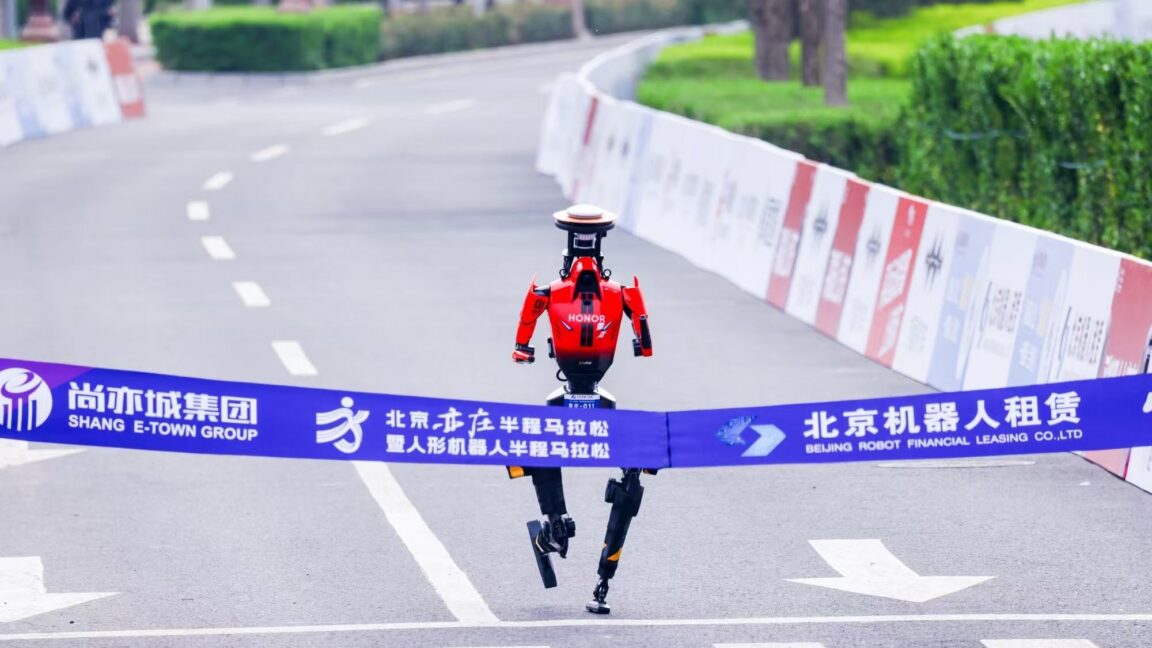
A humanoid robot created by the tech company Honor recently made history by winning a half-marathon in Beijing. The machine finished the race faster than any human has ever done, beating the current world record by several minutes. This event shows that robot technology is moving very fast and that machines are becoming much better at moving on their own in the real world. It marks a major step forward for the robotics industry as companies look for ways to use these machines in everyday life.
Main Impact
The most important part of this event is the incredible speed shown by the robot. It did not just win the race; it finished nearly seven minutes faster than the fastest human runner in history. This proves that machines are now capable of physical tasks that people once thought were only possible for humans. The success of this robot shows that the technology for balance, speed, and movement is ready for more difficult challenges. It also highlights how tech companies are shifting their focus from small gadgets to advanced robots that can work and move in public spaces.
Key Details
What Happened
The race took place on April 19 in Beijing. It was a standard half-marathon, which covers a distance of about 13 miles or 21 kilometers. During the event, the robot had to navigate the entire route without any human help or remote control. It used its own internal computers and sensors to stay on the path and manage its speed. This ability to move without help is called autonomous navigation, and it is one of the hardest things for a robot to do, especially when moving at high speeds over a long distance.
Important Numbers and Facts
The winning robot finished the race in exactly 50 minutes and 26 seconds. For comparison, the human world record for a half-marathon is 57 minutes and 20 seconds, set by the famous runner Jacob Kiplimo. The robot was built with very long legs, measuring about 37 inches or 95 centimeters. These legs were designed to copy the way professional human athletes run. To keep the machine from getting too hot, the engineers added a special liquid-cooling system. This system is based on the technology used to keep smartphones and other electronics cool during heavy use.
Background and Context
Humanoid robots are machines built to look and act like people. For many years, these robots were slow and had trouble staying balanced. They were mostly used in labs or for simple demonstrations. However, in recent years, the industry has changed. Companies are now trying to build robots that can perform real work, such as moving boxes in a warehouse or helping people in their homes. To do these jobs, robots need to be fast, strong, and able to work for a long time without breaking down.
One of the biggest challenges for a running robot is heat. When a robot moves its legs quickly, the motors and batteries create a lot of energy that turns into heat. If the robot gets too hot, it can fail. By using a cooling system usually found in phones, the team at Honor solved this problem. This allows the robot to run at high speeds for over 13 miles without needing to stop or slow down to cool off.
Public or Industry Reaction
The reaction to this record-breaking run has been a mix of excitement and wonder. Many experts in the tech industry see this as a sign that robots are ready to be made in large numbers for the public. Engineers are impressed by how the robot handled the long distance and the outdoor environment. While some people are worried about how robots might change sports or the job market, most are focused on the amazing engineering required to make a machine move so naturally and quickly.
What This Means Going Forward
This race is just the beginning of a new era for robotics. China is already planning to mass-produce these types of humanoid robots. The technology used in this race will likely be used in many other areas. For example, the cooling systems and leg designs could help create robots that work in hot factories or carry heavy items across rough ground. The fact that a smartphone company built the winning robot shows that the technology we use every day is now powerful enough to run very complex machines. In the future, we may see these robots performing tasks that are currently too difficult or dangerous for humans.
Final Take
The Beijing half-marathon has proven that robots are no longer just slow-moving machines in a lab. By beating a human world record, this robot has set a new standard for what technology can achieve. The gap between human and machine physical ability is closing, and the lessons learned from this race will help shape the future of how we live and work with robots.
Frequently Asked Questions
Which company built the record-breaking robot?
The robot was built by Honor, a Chinese technology company that is well-known for making smartphones and other consumer electronics.
How much faster was the robot than the human world record?
The robot finished the half-marathon in 50 minutes and 26 seconds, which is nearly seven minutes faster than the human world record of 57 minutes and 20 seconds.
How does the robot stay cool while running?
The robot uses a custom liquid-cooling system. This technology was adapted from the cooling systems used in high-end smartphones to prevent them from overheating during heavy tasks.

