

Summary
The Indian Air Force (IAF) has deployed two specialized helicopters to help control a large forest fire in the hills of Kasauli. The fire broke out near the Air Force Station and spread quickly across the dry mountain slopes. After ground teams were unable to stop the flames, the military stepped in with aerial support to prevent the fire from reaching the town and military buildings. This operation highlights the serious nature of forest fires in the region and the need for advanced technology to protect local communities.
Main Impact
The primary impact of this fire is the immediate threat to the Air Force Station and the residents of Kasauli. Thick clouds of smoke have covered the area, making the air difficult to breathe and reducing visibility for drivers and pilots. By using heavy-lift helicopters, the IAF is able to reach steep areas that are impossible for fire trucks to access. The decision to continue the operation into the night shows how urgent the situation has become for the local environment and public safety.
Key Details
What Happened
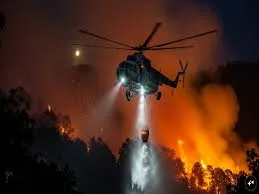
The fire started on Tuesday and grew rapidly due to dry conditions and wind. Ground crews, including forest department workers and local defense staff, worked throughout the day to contain the blaze. However, the fire continued to smolder and spread across various hills. By Tuesday evening, officials decided that ground efforts were not enough. Two IAF helicopters were called from nearby bases to start water-dropping missions. These aircraft flew multiple trips to collect water and dump it directly onto the most active parts of the fire.
Important Numbers and Facts
The operation involves two specific types of aircraft: the Mi-17 and the Chinook. The Chinook is a heavy-lift helicopter known for its ability to carry large amounts of water, while the Mi-17 is a versatile transport helicopter often used in rescue missions. The crews used Sukhna Lake as their primary water source, which required them to fly back and forth between the lake and the burning hills. Operations continued well past 10:00 PM on Tuesday night. To ensure safety in the dark, the Mi-17 crew used Night Vision Goggles (NVG), which allow them to see the terrain and the fire clearly even without sunlight.
Background and Context
Kasauli is a well-known hill station in Himachal Pradesh and is home to important military installations. Forest fires are a common problem in this part of India during the hot, dry months before the monsoon rains arrive. The ground is often covered in dry pine needles, which catch fire very easily and burn very hot. Because the hills are steep and rocky, it is very hard for firefighters to carry heavy equipment to the source of the flames. This is why the Indian Air Force is often asked to help when fires get out of control. Using helicopters to drop water is one of the most effective ways to cool down a large forest fire quickly.
Public or Industry Reaction
Local authorities are taking the situation very seriously. Santosh Sharma, a Commandant with the Home Guards, confirmed that a fire tender has been placed in the center of Kasauli town as a safety measure. This ensures that if the fire moves closer to homes or shops, help is already on the scene. Residents have expressed concern about the smoke, but many are relieved to see the IAF helicopters in the sky. The sight of the Chinook and Mi-17 provides a sense of security that the government is using all available resources to protect the town.
What This Means Going Forward
This mission is a significant example of how the military can use night-time technology for civil emergencies. In the past, most aerial firefighting had to stop when the sun went down because flying near mountains in the dark is very dangerous. By using Night Vision Goggles and clearing the helicopters for night operations, the IAF can now fight fires 24 hours a day. This could change how India handles forest fires in the future, allowing teams to stop fires before they grow larger overnight. Officials will likely keep a close watch on the weather, as wind can easily restart fires that seem to be out.
Final Take
The forest fire in Kasauli is a reminder of how quickly nature can threaten human settlements. The quick action by the Indian Air Force to deploy the Mi-17 and Chinook helicopters shows a strong commitment to disaster response. While the fire caused significant smoke and worry, the use of modern technology and round-the-clock operations offers the best chance to save the local forest and keep the people of Kasauli safe. Continued cooperation between local fire teams and the military will be key to finishing the job.
Frequently Asked Questions
Which helicopters are being used to fight the Kasauli fire?
The Indian Air Force is using two types of helicopters: the Mi-17 and the Chinook. Both are capable of carrying large amounts of water to drop on the flames.
Where are the helicopters getting the water from?
The helicopters are lifting water from Sukhna Lake. They fly to the lake, fill their water buckets, and then fly back to the hills to douse the fire.
How can the pilots see the fire at night?
The Mi-17 crew is using Night Vision Goggles (NVG). This technology allows them to see the ground and the fire in low-light conditions, making it safer to fly near the mountains after dark.
