
Summary
French President Emmanuel Macron has publicly criticized the communication style of U.S. President Donald Trump regarding the ongoing war with Iran. Macron urged the American leader to be more "serious" and to stop making daily public statements about the conflict. The French leader expressed concern that inconsistent messages from the United States are creating confusion during a high-stakes military crisis. This rare public disagreement highlights a growing divide between Western allies on how to handle the war involving the U.S., Israel, and Iran.
Main Impact
The main impact of Macron’s statement is a visible shift in the diplomatic relationship between France and the United States. By telling a sitting U.S. president to "be serious," Macron is signaling that European allies are losing patience with the current administration's handling of the war. This tension could make it harder for the Western alliance to maintain a united front against Iran. When major powers do not agree on their message, it can lead to mistakes on the battlefield and missed opportunities for peace talks.
Key Details
What Happened
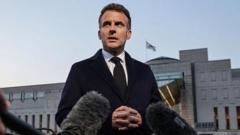
During a recent diplomatic gathering, President Macron addressed the way the U.S. government talks about the war. He specifically pointed out that President Trump often shares contradictory thoughts on the conflict, sometimes multiple times in a single day. Macron’s core message was that wartime leadership requires steady and predictable communication rather than constant updates that change in tone. He argued that speaking every day about military strategy or political goals can give the enemy an advantage and worry friendly nations.
Important Numbers and Facts
The conflict, which involves the United States and Israel on one side and Iran on the other, has reached a critical point as of April 2, 2026. While specific casualty numbers remain classified, the economic impact has seen global oil prices rise by over 15% in the last month alone. Macron’s comments come after a week where the U.S. administration issued three different statements regarding potential ceasefire terms, only to have them clarified or walked back by the Pentagon hours later. This lack of a single, clear voice is what prompted the French president to speak out so forcefully.
Background and Context
To understand why this matters, it is important to look at how diplomacy usually works during a war. Traditionally, world leaders choose their words very carefully to avoid starting a larger fight or scaring the public. President Trump has often used a different approach, using social media and quick press talks to share his immediate thoughts. While this style helped him in politics, Macron believes it is dangerous during a war with a country like Iran. France has long tried to act as a bridge between the U.S. and the Middle East, and Macron feels that the current "noise" from Washington is making that job impossible.
Public or Industry Reaction
The reaction to Macron’s comments has been split. In Europe, many diplomats have quietly supported the French president, agreeing that a more professional tone is needed. They argue that the "chaos" of daily updates makes it hard for other countries to plan their own security. However, inside the U.S., supporters of the president argue that his direct way of speaking keeps the Iranian government off balance. Some military analysts have warned that Macron’s public criticism might actually help Iran by showing that the U.S. and France are not working together perfectly.
What This Means Going Forward
Moving forward, this dispute could lead to a change in how the U.S. shares information about the war. If the White House listens to Macron, we might see fewer daily updates and more formal briefings. However, if the U.S. president continues his current path, the gap between the U.S. and its European partners will likely grow. This could result in France or other EU nations seeking their own separate peace talks with Iran, which would significantly weaken the U.S.-led coalition. The next few weeks will show if the American administration is willing to adopt the "seriousness" that Macron is calling for.
Final Take
Effective leadership during a war requires more than just military power; it requires clear and consistent communication. Macron’s plea for President Trump to speak less and think more about the impact of his words is a reminder that in global politics, what you say can be just as powerful as what you do. For the war to reach a resolution, the allies must find a way to speak with one voice instead of many.
Frequently Asked Questions
Why did Macron criticize Trump?
Macron criticized Trump because he believes the U.S. president's daily and often contradictory comments about the Iran war are making the situation more dangerous and confusing for allies.
What did Macron mean by "be serious"?
He was calling for a more disciplined and professional approach to wartime diplomacy, suggesting that constant public updates are not appropriate for a major military conflict.
How has the U.S. responded to these comments?
While there has been no official change in policy, the comments have sparked a debate between those who prefer traditional diplomacy and those who support the president's direct communication style.