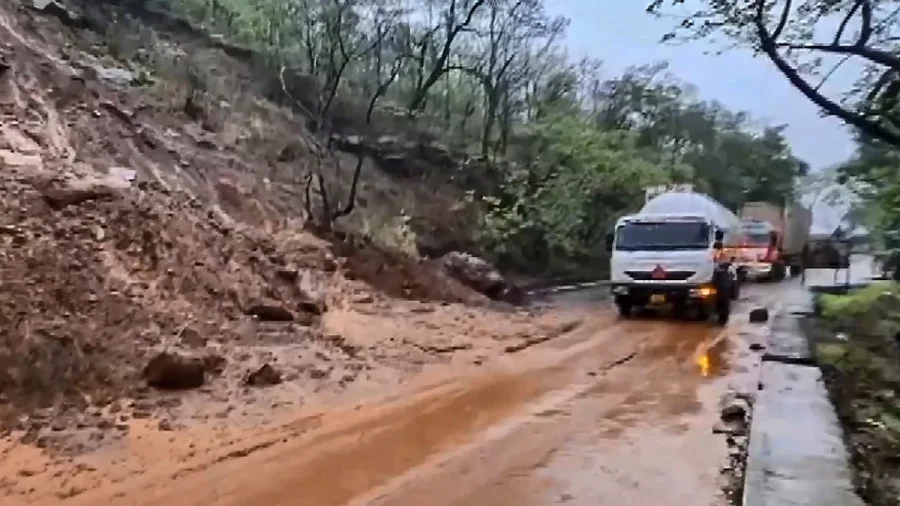

Even as torrential monsoon rains inundate Mumbai and several parts of Maharashtra, the state government on Wednesday acknowledged in the legislative Assembly that large swathes of the state continue to grapple with acute drinking water shortages, with more than 1,200 villages dependent on tanker supply.
Government admits water scarcity in 25 districts
Replying to a starred question by Congress MLA Amit Deshmukh, drinking water and sanitation minister Gulabrao Patil admitted that Deshmukh's claims of widespread water scarcity were "partially true".
According to The Indian Express, Patil informed the House that, according to a report dated 22 June, 25 of Maharashtra's 36 districts were facing water scarcity, with 1,279 villages and 3,389 hamlets receiving drinking water through 1,413 tankers.
MLA questions government's assessment
Deshmukh had questioned the government's assessment, claiming official reports identified a much larger crisis. The minister's response confirmed that the water shortage is severe, even as the state's financial capital Mumbai struggles with flooding from the same monsoon rains.
The situation highlights a stark contrast: while some parts of Maharashtra are overwhelmed by floodwater, other regions are parched and dependent on tankers for their daily drinking water needs.
Our Take: A crisis of mismanagement
This is a clear example of poor water management. On one hand, Mumbai is flooded with rainwater that could be stored and used. On the other hand, over 1,200 villages have no water to drink. The government's admission that 25 out of 36 districts face scarcity shows this is not a small problem — it is a widespread failure. In our view, the state needs to invest in rainwater harvesting and better storage systems. Relying on tankers every year is not a solution; it is a sign that the system is broken. The people of these villages deserve a permanent fix, not temporary tankers.