
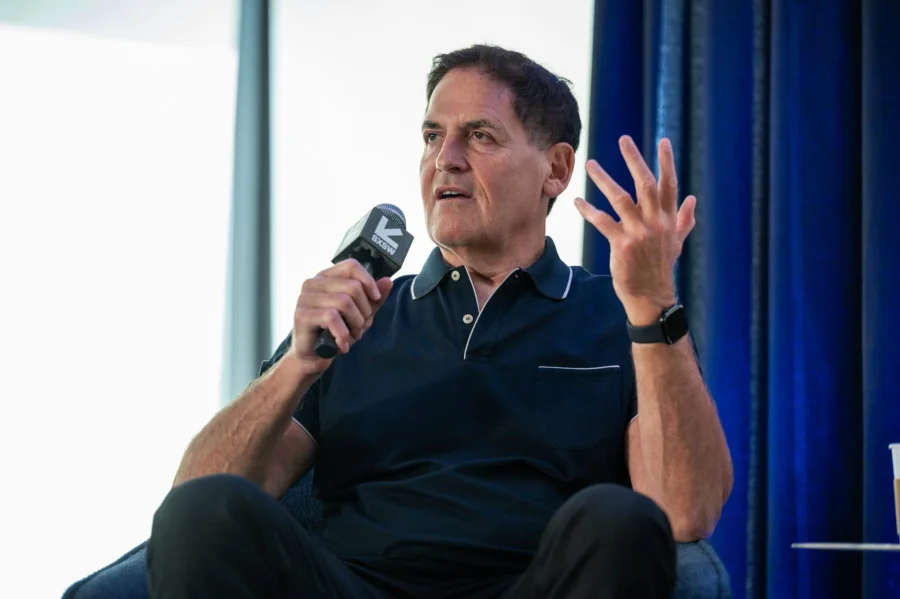

Billionaire entrepreneur and "Shark Tank" investor Mark Cuban has made his position on wages clear: paying employees poorly is "embarrassing," and a $20 federal minimum wage should be the standard.
In a post on X last month, Cuban wrote: "I've said before I think raising the federal minimum wage to $20 is smart." The statement comes as millions of American workers earn just $7.25 per hour — the current federal minimum — which adds up to only $15,080 a year for a full-time worker.
Why Cuban Calls Low Pay ‘Embarrassing’
Cuban didn't just share his opinion on policy. He also shared a personal story about why low wages bother him. According to Benzinga, Cuban wrote: "When I heard people who worked for a company I invested in (but didn't run) needed government assistance, I made sure they all got raises. It was embarrassing to me that we didn't pay enough."
This means Cuban took direct action when he found out that workers at a company he had invested in were earning so little that they qualified for government help like food stamps or Medicaid. He stepped in personally to fix the situation.
The Gap Between Current Law and Cuban’s Proposal
The federal minimum wage has been stuck at $7.25 per hour since 2009. That means a full-time worker earns just over $15,000 a year before taxes — an amount well below the federal poverty line for a family of two.
Cuban's proposal of $20 per hour would more than double the current federal minimum. To put that in perspective, no state in the U.S. has set its minimum wage at $20 per hour. The highest state-level minimum wages are around $16 to $17 per hour in places like Washington, D.C., and California.
Some states still use the federal minimum of $7.25, and a few even have a lower minimum for tipped workers — as low as $2.13 per hour in some cases.
What Cuban’s Comments Mean for Workers
Cuban's statement is notable because he is one of the most visible billionaires in America. He is known for investing in small businesses on "Shark Tank" and owns the Dallas Mavericks. When a billionaire says that paying $7.25 an hour is not enough, it adds weight to the argument that the minimum wage needs to rise.
His personal story also shows that even companies backed by wealthy investors sometimes pay wages so low that workers need government assistance. Cuban's embarrassment about that situation suggests he believes business owners have a responsibility to pay a living wage — not just the legal minimum.
Our Take: Cuban Is Right — But Will It Happen?
Mark Cuban is making a simple point that many workers already know: $7.25 an hour is not enough to live on. When workers at profitable companies still need food stamps or Medicaid, taxpayers are effectively subsidizing those businesses. That is not fair to workers or to taxpayers.
Cuban's proposal of $20 an hour is ambitious. No state has reached that level yet, and political opposition to raising the federal minimum wage has been strong for years. But Cuban's voice matters because he represents the business side of the argument. When a billionaire investor says higher wages are "smart" — not just morally right but economically smart — it challenges the old argument that raising wages hurts businesses.
To put it plainly: If a company cannot pay its workers enough to live without government help, that company's business model has a problem. Cuban's embarrassment should be shared by every business owner who pays poverty wages while claiming they cannot afford more.
The question now is whether lawmakers will listen to Cuban — or to the millions of workers who are still waiting for a raise.