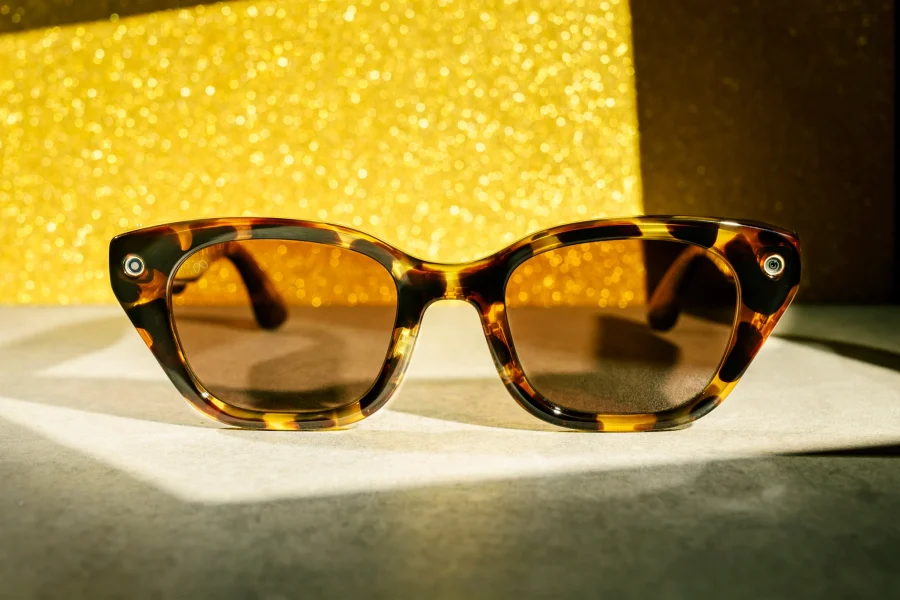

Meta is making a serious push to move beyond the smartphone. The company recently invited journalists to a private demo room at its Menlo Park, California headquarters to show off its growing family of smart glasses. The goal is to prove that the next major way we interact with technology—and with AI—will be worn on our faces, not held in our hands.
Meta's Smart Glasses and the Post-Smartphone Vision
The centerpiece of this strategy is a pair of advanced smart glasses that project a high-resolution digital box inside the right lens. This isn't just a camera on your face; it's a screen that overlays digital information onto the real world. To control this screen, Meta has developed a smart wristband. This band allows you to control objects on the screen by simply moving your fingers.
The interaction is designed to be subtle and natural. According to the demonstration, you can tap your pointer finger and thumb together to open an app. You can also simply say, "Hey, Meta," to start chatting with an AI bot. This combination of visual display and neural input is the core of Meta's pitch for the post-smartphone world.
How the Technology Works
The demo highlighted a collection of devices, including the flagship Ray-Ban Wayfarer camera-enabled glasses. While the Ray-Ban glasses are already known for capturing photos and audio, the new technology adds a visual layer that changes how users interact with digital content.
The system relies on two main components working together:
- The Display: A high-resolution digital box is projected inside the right lens, allowing users to see apps and AI responses without looking down at a phone.
- The Wristband: A smart wristband detects finger movements, letting users control the interface with subtle gestures like tapping their fingers together.
This setup allows for a hands-free experience where the digital world blends with the physical one. The AI bot is a central part of this, acting as a voice assistant that can be summoned instantly.
Our Take: Why This Matters for the Future of Tech
In our view, Meta is trying to solve a problem that has plagued the tech industry for years: how to make wearable tech actually useful. For a long time, smart glasses were seen as a gimmick or a privacy nightmare. By focusing on AI and subtle gesture controls, Meta is trying to make the technology feel less like a computer and more like a helpful tool.
To put it plainly, the smartphone has dominated our lives for over a decade. Meta is betting billions that the next big shift will be to devices that keep our heads up and our hands free. The demo at Menlo Park shows that the hardware is getting closer to that vision. The key question is whether people will want to wear a computer on their face all day. If the technology works as smoothly as demonstrated, Meta might just have a real shot at leading the race for the post-smartphone world.