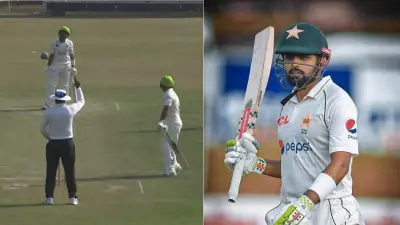

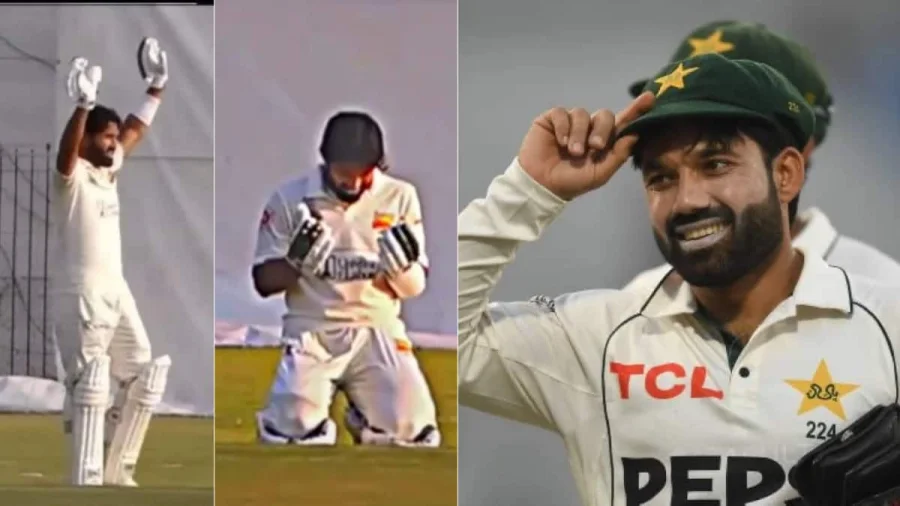

Mohammad Rizwan made a strong statement with the bat after being left out of Pakistan's Test squad. The wicketkeeper-batter scored an unbeaten 200 for Peshawar Region Blues in the Quaid-e-Azam Trophy 2026-27, sending a clear reminder of what he can do at the crease.
Rizwan reached the landmark against Faisalabad Region in Abbottabad. He faced 252 deliveries and hit 35 fours and one six during the innings. The knock came at a time when his international career has been going through a difficult period.
Rizwan's Double Century in Quaid-e-Azam Trophy
The innings developed across the first two days of the match. Rizwan stayed at the crease and built his score steadily, eventually crossing the 200-run mark without being dismissed. It was his second double century in first-class cricket — he had previously scored 224 back in 2014.
The 34-year-old did not hold back his emotions when he reached the milestone. He celebrated on his knees, a reaction that showed how much the achievement meant to him after being overlooked for national selection.
Emotional Celebration After Test Snub
The celebration told its own story. Rizwan, a regular in Pakistan's white-ball setup, was left out of the Test squad, and this innings served as a direct response on the field. Instead of making noise off the pitch, he let his bat do the talking.
To put it plainly, this was a performance of someone with a point to prove. A double century at first-class level is never easy. Doing it right after a national snub makes it far more significant.
Our Take: A Timely Reminder From Rizwan
In our view, Rizwan's innings is exactly the kind of answer selectors should pay attention to. Dropping a player is part of the game, but performances like this raise fair questions about whether the decision was right. A 200 off 252 balls with 35 fours shows control, patience, and hunger — qualities any Test side needs.
What matters for readers is simple: Rizwan has not given up. He has responded in the only way a cricketer truly can — with runs. Whether this knock earns him a recall is up to the selectors, but on the field, he has made his case as loudly as possible.