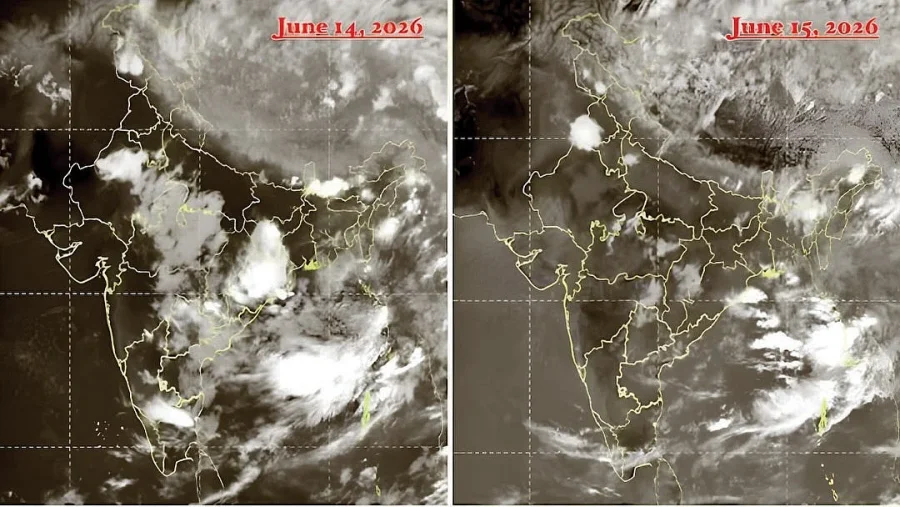

India’s agriculture is facing a serious threat as the southwest monsoon has weakened sharply across large parts of the country. Satellite imagery and meteorological data from the India Meteorological Department (IMD) and global weather agencies confirm a significant ‘monsoon pause’ has set in, just as the crucial kharif sowing season begins.
What Is Causing the Monsoon Pause?
Meteorologists attribute the slowdown to changes in upper-atmospheric wind patterns. These shifts have triggered a pause in the monsoon’s progress, leaving large areas without the rainfall needed for planting. The timing is particularly damaging because farmers rely on the early monsoon rains to sow kharif crops like rice, pulses, and oilseeds.
According to National Herald India, monsoon rains on which much of India's agriculture depends will become only more errant. And while you may have a "good monsoon" as per the data, the underlying crisis runs deeper.
El Niño Has Officially Begun
Adding to the concern, the United States National Oceanic and Atmospheric Administration (NOAA) and the IMD have confirmed that El Niño has officially begun. Scientists are warning that it could evolve into a powerful, even ‘super’ El Niño event later this year. El Niño is known to suppress monsoon rainfall in India, making the current pause even more dangerous for the farm economy.
As reported by a YouTube analysis, India's farm economy is facing mounting pressure from the threat of a weak monsoon, developing El Niño conditions, and rising input costs. These factors together create a perfect storm for agricultural distress.
Impact on Kharif Sowing and Farmers
Past the half-way mark in June, the air over the Indian subcontinent carries a weight heavier than the usual pre-monsoon humidity. But the rain that farmers desperately need has not arrived. The pause in the monsoon means that sowing of kharif crops could be delayed or reduced, directly affecting food production and farmer incomes.
A separate report highlights that at a time when several parts of the country are witnessing agricultural distress, the Met department’s warnings add to the anxiety. The combination of a monsoon pause and El Niño could push many farmers into deeper crisis.
Our Take: A Warning That Must Not Be Ignored
This is not just a weather update — it is a red flag for India’s food security and rural economy. The monsoon pause, combined with the official onset of El Niño, means the government and farmers must prepare for a difficult season. In our view, the authorities should immediately activate contingency plans, including alternative irrigation support, timely distribution of seeds, and financial relief for farmers. Waiting for the monsoon to recover on its own is not an option. The data is clear — agriculture is in peril, and action must follow the warning.