

Summary
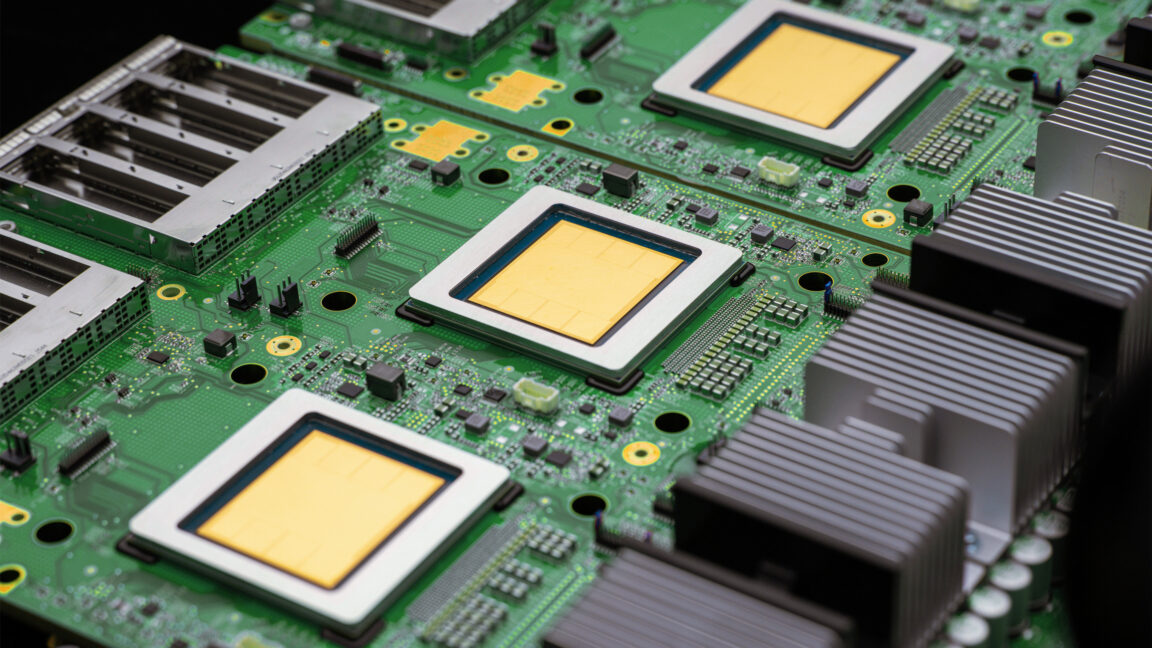
Google has introduced its latest generation of custom artificial intelligence chips, known as the TPU v8 series. These new processors are specifically built to support what Google calls the "agentic era," where AI moves beyond simple chat and starts performing complex tasks. By launching two distinct versions of the chip—the TPU 8t for training and the TPU 8i for running models—Google aims to make AI development faster and more cost-effective. This move helps the company stay competitive as the demand for massive computing power continues to grow across the globe.
Main Impact
The biggest impact of this announcement is the massive increase in speed for building new AI systems. In the past, training a top-tier AI model could take several months of constant computing. Google claims that its new hardware can cut that time down to just a few weeks. This change allows developers to test new ideas and release updates much faster than before. Additionally, by creating its own hardware, Google reduces its need to buy expensive chips from outside suppliers, giving it more control over its cloud computing services.
Key Details
What Happened
Google revealed the eighth generation of its Tensor Processing Units (TPUs). Unlike previous versions that often tried to do everything with one design, Google has split this generation into two specialized parts. The TPU 8t is the "workhorse" designed to handle the heavy lifting of teaching an AI model. The TPU 8i is the "delivery" chip, optimized to run the AI once it is already built. This specialization ensures that energy and power are not wasted on tasks the chip was not meant to do.
Important Numbers and Facts
The new chips follow the seventh-generation "Ironwood" TPU, which was released in 2025. The TPU 8t is focused on "frontier models," which are the largest and most advanced AI systems in existence. By moving from a training cycle of months to weeks, Google is effectively doubling or tripling the pace of AI research. These chips will be available through Google Cloud, allowing other companies to rent this power to build their own software and services.
Background and Context
To understand why these chips matter, it helps to know how AI is made. Most AI today runs on chips made by Nvidia. However, Google has been building its own custom chips for years to save money and improve performance. The "agentic era" mentioned by Google refers to a shift in how we use AI. Early AI was mostly about "generative" tasks, like writing a poem or making a picture. The next step involves "agents"—AI programs that can actually do work, such as booking a flight, managing a calendar, or writing and fixing computer code without human help. These agents require much more reliable and efficient hardware to function properly.
Public or Industry Reaction
Industry experts view this as a direct challenge to other hardware giants. While many companies are struggling to get enough chips to power their AI dreams, Google is showing that it can build its own path. Analysts suggest that this will make Google Cloud more attractive to startups that need high-speed training but want to keep costs low. Some tech observers have noted that by splitting the chips into training and inference versions, Google is following a trend of "specialized silicon" that makes data centers more environmentally friendly by using less electricity for the same amount of work.
What This Means Going Forward
In the coming years, we can expect AI to become much more active in our daily lives. Instead of just asking a chatbot a question, we will likely have AI assistants that handle chores and professional tasks. The TPU 8 series provides the foundation for these assistants to run smoothly. For Google, this hardware ensures they remain a leader in the AI race. For the average user, it means that the AI tools they use will become faster, smarter, and capable of handling much more complex requests without lagging or making as many mistakes.
Final Take
Google is no longer just a software company; it is a major player in the world of high-end hardware. By creating chips that are specifically tuned for the next generation of AI agents, Google is setting a new standard for the industry. This strategy not only speeds up innovation but also makes the massive power requirements of modern AI more manageable. As the "agentic era" begins, the focus is shifting from what AI can say to what AI can actually do, and Google’s new TPUs are designed to be the engine behind that change.
Frequently Asked Questions
What is a TPU?
A TPU, or Tensor Processing Unit, is a custom-made circuit board designed by Google specifically to speed up artificial intelligence tasks. It is different from a standard computer chip because it is built only for AI math.
What is the difference between training and inference?
Training is the process of teaching an AI by showing it billions of examples. Inference is when the finished AI uses what it learned to answer a user's question or perform a task.
Why is Google making its own chips?
Google makes its own chips to reduce costs, improve energy efficiency, and ensure it has enough hardware to power its services without relying entirely on other companies like Nvidia.