

Summary
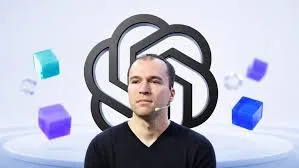
OpenAI co-founder Greg Brockman has officially taken over the company’s product strategy. This leadership change happens as the artificial intelligence giant moves to combine its two most famous tools: ChatGPT and Codex. By bringing these technologies together, OpenAI aims to create a more powerful and unified experience for its millions of users. This move marks a major shift in how the company plans to build and sell its AI software in a crowded market.
Main Impact
The decision to put Greg Brockman in charge of product strategy shows that OpenAI is moving away from being just a research lab. The company is now focusing heavily on making products that work well for everyday people and professional developers. By merging ChatGPT and Codex, the company is simplifying its lineup. Instead of having different tools for talking and for writing computer code, users will soon have one single system that can do both tasks at a high level.
This change is expected to make OpenAI more efficient. When different teams work on different products, it can lead to slow updates or tools that do not work well together. With Brockman leading the strategy, the company wants to ensure that every new feature fits into a clear plan. This will likely help OpenAI stay ahead of big competitors like Google and Meta, who are also trying to build all-in-one AI assistants.
Key Details
What Happened
Greg Brockman, who previously served as the president of OpenAI, is now focusing his energy on the product side of the business. This follows a short break he took from the company last year. His return to a high-level role suggests that the company needs his technical knowledge to guide its future growth. At the same time, reports indicate that the internal teams for ChatGPT and Codex are being brought together. This means the people who build the "brain" for conversation and the people who build the "brain" for programming will now work as one unit.
Important Numbers and Facts
OpenAI has seen massive growth over the last few years. ChatGPT reached over 100 million weekly users faster than almost any other app in history. Codex, the engine that powers tools like GitHub Copilot, has also become a standard for software engineers. By combining these, OpenAI is looking to capture more of the market. Currently, the company is valued at billions of dollars, and these product changes are designed to justify that high price tag to investors. The merger of these tools is expected to roll out in phases over the coming months.
Background and Context
To understand why this matters, it helps to know what these tools do. ChatGPT is a chatbot that can write essays, answer questions, and tell jokes. Codex is a specialized version of that technology that was trained specifically to understand and write computer code. For a long time, these were treated as separate projects. However, as AI has improved, the line between "talking" and "coding" has started to disappear.
In the past, a programmer might use Codex to help write a script and then use ChatGPT to help explain how that script works. By merging them, OpenAI is removing that extra step. This reflects a broader trend in the tech world where companies are trying to build "super apps" that can handle many different types of work in one place. It also helps OpenAI save money on computing power, as they can run one large model instead of two separate ones.
Public or Industry Reaction
The reaction from the tech industry has been mostly positive. Many software developers are excited about the idea of a more capable ChatGPT that understands complex code better than before. They believe this will make their jobs faster and easier. Business experts say that putting a co-founder like Brockman in charge of product strategy gives the company a steady hand during a time of many staff changes.
However, some people are cautious. There are concerns that by focusing so much on products and profit, OpenAI might spend less time on AI safety. Some critics argue that merging these powerful tools could make them harder to control or predict. Despite these worries, the stock market and investors seem to view the move as a sign that OpenAI is becoming a more mature and organized company.
What This Means Going Forward
In the near future, users can expect ChatGPT to become much smarter at technical tasks. If you ask the AI to build a website, it will likely be able to write the code and explain the design choices at the same time without making as many mistakes. For OpenAI, this move is about staying number one. As other companies release their own AI tools, OpenAI needs to make sure its product is the easiest and most useful one to use.
We may also see new types of subscriptions or features that are specifically for businesses. With Brockman leading the way, the company will likely look for more ways to put AI into the tools people already use at work every day. The goal is to make AI a natural part of every office task, from writing a simple email to building a complex software program.
Final Take
OpenAI is entering a new chapter where the focus is on building a single, powerful tool for everyone. By putting Greg Brockman in charge of product strategy and merging its top technologies, the company is making a clear bet on a unified future. This strategy aims to make AI more helpful, more accessible, and more integrated into the way the world works and creates.
Frequently Asked Questions
Who is Greg Brockman?
Greg Brockman is one of the original founders of OpenAI. He has played a major role in the company's technical development and is now leading the strategy for all of its products.
What is the difference between ChatGPT and Codex?
ChatGPT is designed for general conversation and writing, while Codex is specifically built to understand and generate computer programming code. OpenAI is now working to combine these two into one system.
How will this change affect regular users?
Regular users will likely see a more capable version of ChatGPT that is better at solving technical problems and writing code. It will make the tool more versatile for both personal and professional use.