
OLED TVs have long been the gold standard for picture quality, but in 2026, the question is more relevant than ever: are they still worth the extra money? With newer technologies like Mini-LED and QD-OLED improving rapidly, the answer is not as simple as it used to be.
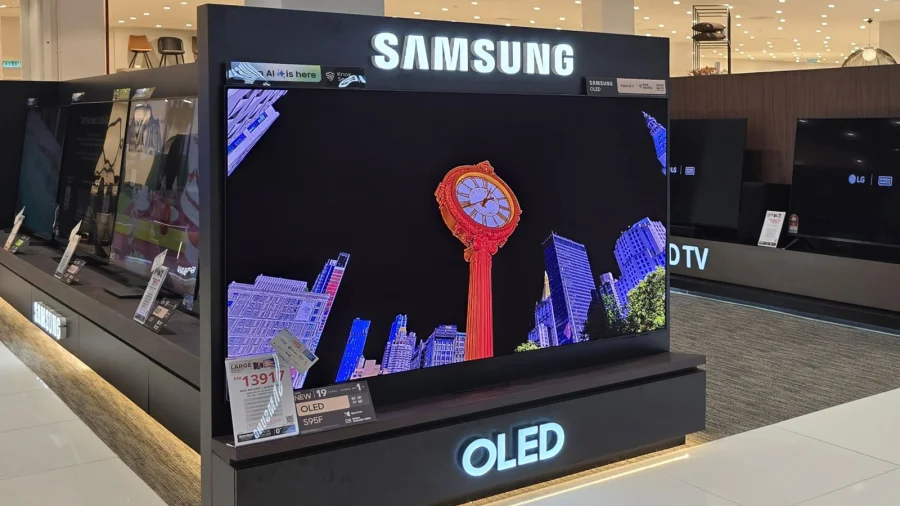
According to Rtings, the Samsung S95H OLED is the best OLED TV tested in 2026. It delivers stellar performance with incredibly high peak brightness, even when most of the screen is bright. This ensures a stunning movie-watching experience. And like all OLEDs, it still offers those true inky blacks that the technology is known for.
What Makes OLED Special in 2026
The core advantage of OLED remains the same: each pixel produces its own light, so blacks are truly black and colors are incredibly vibrant. In a dark room, no other technology comes close to the contrast and depth of an OLED display. The Samsung S95H, for example, pushes brightness levels that were once a weakness of OLED, making it more versatile than earlier models.
The Case Against OLED: Bright Rooms and Price
However, in some scenarios, "lesser" technology really shines. In bright living rooms with lots of windows, even the best OLED can struggle against direct sunlight. Mini-LED TVs, which use thousands of tiny LEDs to control brightness, can get much brighter and are often significantly cheaper for the same screen size. They also do not carry the same risk of permanent burn-in from static images like news tickers or game HUDs.
The Wirecutter notes that the LG C5 represents one of this year's best OLED TV values, combining top-notch picture quality with a long list of useful features. But even the "value" option still commands a premium over comparable non-OLED sets.
Who Should Still Buy OLED in 2026?
OLED is still the best choice for:
- Movie enthusiasts who watch in a dark or dimly lit room
- Gamers who want the fastest response times and best contrast
- Anyone who values color accuracy above all else
If you fall into these categories, the premium is still worth it. The Samsung S95H and LG C5 are excellent examples of how far OLED has come.
Who Should Skip OLED in 2026?
You might be better off with a high-end Mini-LED TV if:
- Your TV is in a bright room with lots of natural light
- You watch a lot of news or sports with static logos
- You want the biggest screen possible for the lowest price
In these cases, the extra brightness and lower cost of Mini-LED make it a more practical choice.
Our Take: The Premium Is Justified — But Only for the Right Buyer
In our view, OLED TVs in 2026 are still worth the premium, but the definition of "worth it" has narrowed. If you are a serious movie watcher or gamer who controls the lighting in your room, OLED remains unbeatable. The Samsung S95H proves that OLED can now get bright enough to compete with Mini-LED in many situations.
But for the average family room with daytime TV and mixed lighting, the premium is harder to justify. Mini-LED technology has matured to the point where the difference in picture quality is small, while the difference in price is large. The bottom line: buy OLED if you care deeply about picture quality in a controlled environment. If not, save your money.