

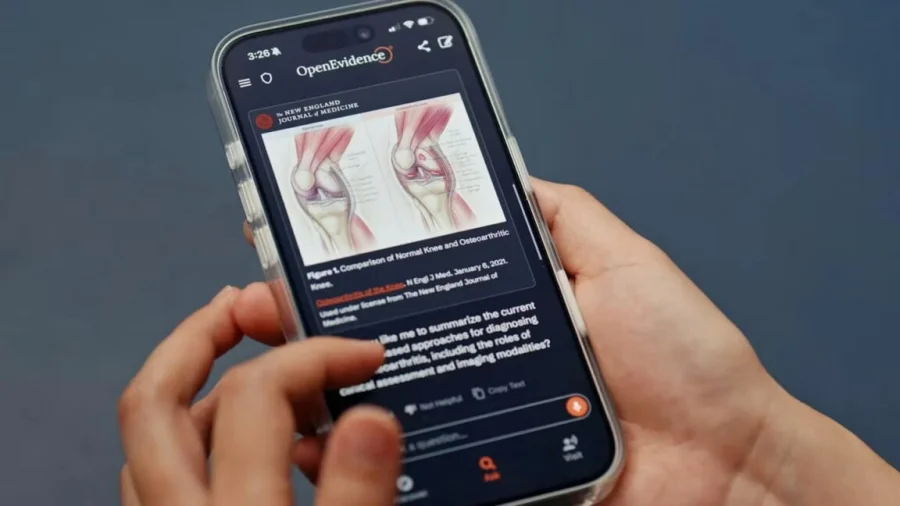

Nearly two-thirds of doctors in the United States are using an AI-powered search engine to help make decisions about patient care. That tool is OpenEvidence, a Miami-based startup now valued at $15 billion. The company says many of America's 1 million physicians processed more than 42 million prompts last month.
Doctors use the company's chatbot to search medical journals and clinical guidelines. They rely on it to help diagnose and treat patients. The platform is free to use and makes money through advertising.
What Is OpenEvidence and How Do Doctors Use It?
OpenEvidence is an AI search engine built for medical professionals. When a doctor types a question, the chatbot scans medical journals and clinical guidelines to return answers. This helps physicians check information quickly when making decisions about diagnosis and treatment.
The company was founded in 2022 by Daniel Nadler, a serial entrepreneur. It has grown largely by word of mouth, spreading from doctor to doctor without a major marketing push. That kind of traction is rare in healthcare, where few tools reach this level of adoption.
Why the $15 Billion Valuation Matters
The $15 billion valuation puts OpenEvidence among the most valuable AI startups. What makes the number notable is how the company reached it: an ad-powered platform that doctors adopted on their own. The startup says it is "the first viral consumer internet app in healthcare."
"We're the first viral consumer internet app in healthcare." — Daniel Nadler, founder of OpenEvidence
The growth raises a debate over the future of patient care. On one side, doctors get fast access to medical research at the point of care. On the other, an advertising-funded tool sitting between a physician and a patient decision invites questions about influence and trust.
Our Take: A Useful Tool With Questions to Answer
In our view, the speed of OpenEvidence's rise tells us something simple: doctors want better search tools, and they will adopt one that saves them time. A chatbot that pulls from medical journals and clinical guidelines can help a busy physician check facts quickly. That is a real benefit.
But the ad-powered model deserves close attention. When a company earns money from advertising and also shapes what a doctor sees while treating a patient, the lines need to be clear. Readers should ask a direct question: are the ads clearly separated from the medical answers? The story does not say, and that gap matters.
To put it plainly, a $15 billion valuation built on word of mouth shows real demand. It does not, by itself, prove the tool improves patient outcomes. Doctors, hospitals, and regulators should treat OpenEvidence as a promising but unproven part of care — useful, widely used, and still in need of scrutiny.
Sources & References
- Financial Times — original report and interview with Daniel Nadler