

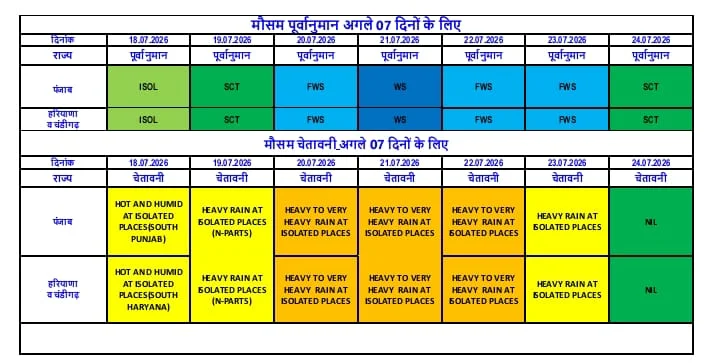

The India Meteorological Department (IMD) has upgraded its rainfall warning for parts of Punjab and Haryana, issuing an orange alert for very heavy rains expected between July 20 and July 22. The alert comes as the weather department predicts a five-day spell of heavy to very heavy rainfall in these states until July 23.
IMD upgrades alert from yellow to orange for Punjab and Haryana
According to The Tribune, the IMD upgraded the alert from yellow to orange for the July 20-22 period, citing active monsoon conditions over northwest India. The department expects fairly widespread to widespread rains at many places in these states from July 20 to July 23, while light to moderate rainfall is likely at a few places on July 19 and July 24.
Which areas will be most affected by the heavy rains?
The IMD has provided specific regional forecasts for the expected rainfall. Heavy rainfall is expected over areas lying along Punjab's eastern borders, while the south-western parts of the state would receive relatively lesser rain. In Haryana, the north-eastern and south-eastern parts are likely to receive higher rainfall, as reported by The Tribune.
Active monsoon conditions expected for a week
The IMD bulletin, issued on July 18, stated that active monsoon conditions are likely over northwest India during the next 6-7 days. This means the region will continue to experience significant rainfall activity beyond the immediate orange alert period. The orange alert signals that residents should be prepared for potentially disruptive weather, including waterlogging and reduced visibility.
Our Take: Preparedness is key during orange alert
The upgrade from yellow to orange alert is a clear signal from the IMD that the coming days could bring challenging weather conditions. In our view, residents in the affected areas — particularly along Punjab's eastern borders and the north-eastern and south-eastern parts of Haryana — should take this warning seriously. While monsoon rains are essential for agriculture, very heavy rainfall in a short period can lead to flooding and disruption. Local authorities should ensure drainage systems are clear and that emergency services are on standby. For the public, staying indoors during peak rainfall and avoiding low-lying areas is the sensible course of action.