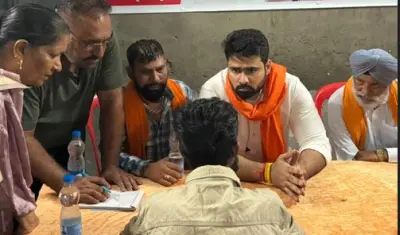
Families in Punjab whose relatives were killed in the Russia-Ukraine war have urged the Centre to appoint a nodal officer at the Indian Embassy in Moscow. The demand comes after the Supreme Court directed the Ministry of External Affairs (MEA) to designate a nodal officer in Delhi to coordinate with families across India.
Why Families Want a Nodal Officer in Moscow
The families welcomed the Supreme Court's move but said a similar official in Moscow was essential. According to Deccan Herald, the nodal officer in Moscow would liaise with Russian authorities and assist Indians searching for missing relatives or completing paperwork for the deceased.
The Supreme Court directed the MEA to appoint a nodal officer to assist families of Indian nationals killed or injured after being duped into joining Russian forces. As reported by New Kerala, the Court also ordered DNA identification of mortal remains, free legal aid, and translated documents for compensation claims.
Punjab Families Among the Most Affected
Of the 51 Indians reported killed in the conflict, many were from Punjab. Nine identified victims include Hira Singh, Jarnail Singh, Sahil Sekri, Tejpal Singh and Gursewak Singh from Amritsar; Budh Ram Singh of Malerkotla; and Sharanjit Singh, among others.
The bench noted that Indian youths were promised jobs but had passports confiscated and were enrolled in the Russian military. The MEA was also directed to ensure compensation claims do not delay repatriation of bodies, according to Daily Pioneer.
"The Court has also directed the Centre to appoint a nodal officer to assist the families in pursuing compensation claims with the Russian authorities." — Instagram
What the Supreme Court Ordered
The Supreme Court's directive covers several key areas to support affected families:
- Appointment of a nodal officer in Delhi to coordinate with families across India
- DNA identification of mortal remains of the deceased
- Free legal aid for families pursuing compensation claims
- Translated documents to help families with paperwork
- Ensuring compensation claims do not delay repatriation of bodies
The families' demand for a similar officer in Moscow highlights a gap in the current arrangement. While the Delhi-based nodal officer will coordinate with families in India, families believe on-ground support in Russia is equally critical for tasks like locating missing relatives and completing local procedures.
Our Take: A Practical Demand That Needs Urgent Action
To put it plainly, the families' request makes complete sense. A nodal officer in Delhi can coordinate paperwork, but the real work happens in Moscow. Families need someone on the ground who can talk directly to Russian authorities, visit hospitals, check records, and speed up the process of identifying and repatriating bodies.
The Supreme Court has taken a strong step by ordering the MEA to act. But the job is only half done if families still struggle to get information from Russia. The Centre should seriously consider this demand — it is not a luxury but a necessity for families who have already lost loved ones and now face a painful bureaucratic battle.
Every day of delay adds to the suffering of these families. The government should act quickly on this request and ensure that no family is left without support, whether in Delhi or in Moscow.