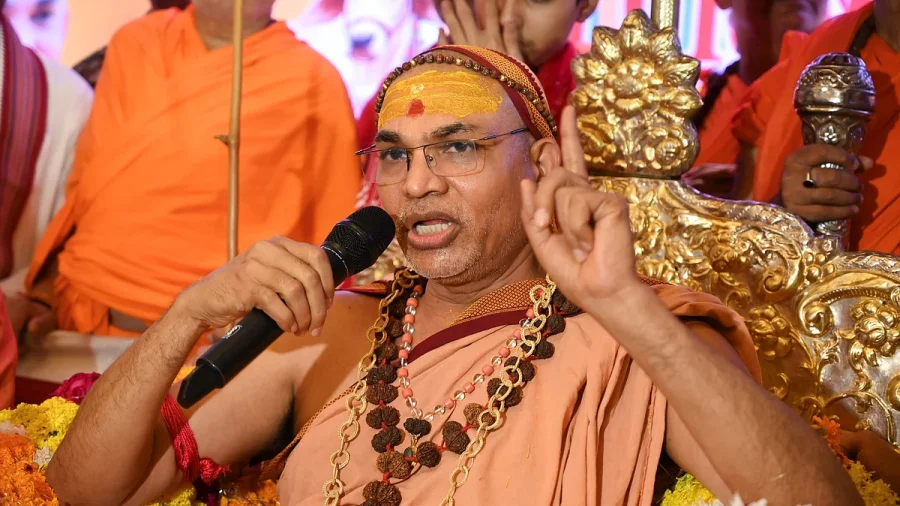

Swami Avimukteshwaranand Saraswati of Jyotirmath has intensified his attack on the alleged Ram temple donation scam, directly questioning the credibility of the Special Investigation Team (SIT) probing the case. The seer has alleged that irregularities have plagued the Ayodhya project from the very beginning — from land acquisition to construction and the handling of devotees' offerings.
Swami Avimukteshwaranand Questions SIT Credibility in Ram Temple Probe
The Shankaracharya has raised serious questions about the freedom of the SIT in investigating the case. According to The Quint, Swami Avimukteshwaranand has criticized the Ram Temple FIR and called the BJP's Hindutva 'fake'. He has argued that the investigation is not being conducted independently and that influential people are being spared.
Demand for Complete Overhaul of Temple Administration
The seer has called for a complete overhaul of the temple's administration. He argued that the management of the Ram temple should be handed over to religious leaders rather than those appointed by the Centre. Speaking to PTI Videos in Lucknow during his 'Gau Pratishtha Dharmayuddh Yatra', Avimukteshwaranand claimed the controversy extended far beyond the alleged embezzlement from donation boxes.
"There have been irregularities ever since donations started coming in." — Swami Avimukteshwaranand Saraswati, as reported by Hindu Existence
Allegations of Irregularities from Land Acquisition to Construction
According to Hindu Existence, the Shankaracharya has targeted the Ram Temple probe, calling the BJP's Hindutva 'Fake'. He has alleged that irregularities have been present at every stage of the project, from the initial land acquisition process to the actual construction work and the management of donations made by devotees.
Our Take: A Test of Institutional Credibility
In our view, Swami Avimukteshwaranand's questioning of the SIT's freedom is a serious matter that goes beyond the specific allegations of donation theft. When a prominent religious leader publicly doubts the independence of a government-appointed investigation team, it raises fundamental questions about transparency and public trust. The seer's demand to hand over temple management to religious leaders rather than central appointees reflects a deeper concern about who controls sacred institutions. While the SIT has been constituted at the request of the trust, as noted by some sources, the perception of bias can be as damaging as actual bias. The public deserves clarity on whether the investigation is truly independent or if it is protecting influential figures. This case will test whether institutional mechanisms can withstand scrutiny from powerful voices.