

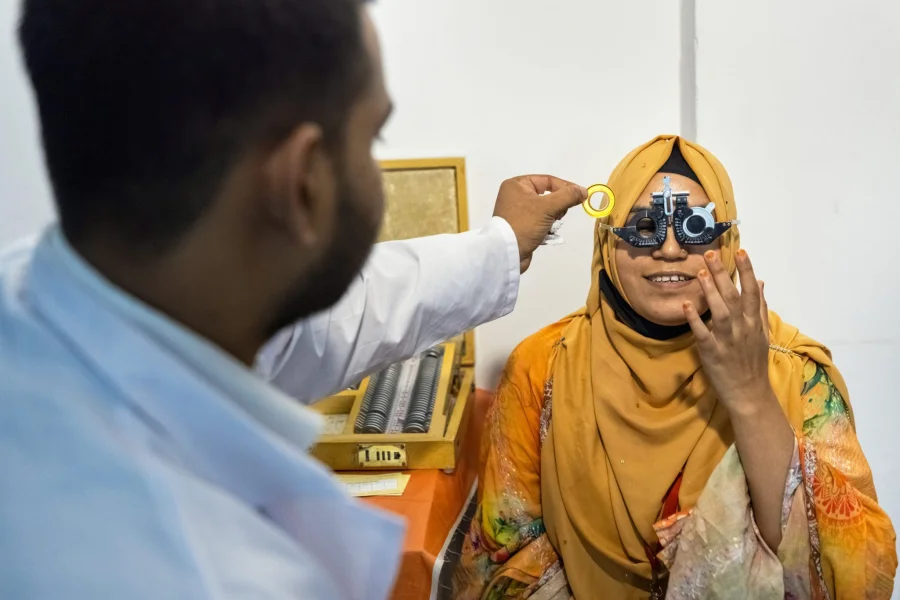

For Ruma Aktar, a sewing machine operator at a garment factory in Bangladesh, one simple item has changed everything: a pair of reading glasses. The $10 glasses are helping her see the stitches clearly, and the impact goes far beyond her own work.
Aktar's job is demanding. Each worker is expected to produce thousands of garments every day. Precision is essential, and even small mistakes can slow down production or lead to rejected items. According to Fortune, Aktar said her new glasses have helped her thread needles much faster and have also relieved her headaches and eye strain.
"Before I got the glasses, it took me a long time to thread the needle. Now I can thread it in just a short time. I make far fewer alterations than before." — Ruma Aktar, as reported by Fortune
How Reading Glasses Boost Productivity in Garment Factories
The problem is widespread. Many garment workers, especially those over 40, experience presbyopia — a natural age-related condition that makes it hard to see close objects clearly. Without proper vision, workers struggle to thread needles, spot defects, and maintain the speed needed to meet production targets.
In Bangladesh, which is home to the world's second-largest garment industry after China, some factory owners are now working on supplying more reading glasses to their employees. The investment is small — about $10 per pair — but the potential return is enormous. According to Fortune, providing these glasses could unlock $27 billion in productivity gains across the industry.
Health and Economic Benefits for Workers
The benefits are not just about speed. Workers like Aktar report fewer headaches and less eye strain after getting glasses. This means they can work more comfortably and for longer periods without discomfort. Fewer mistakes also mean less stress and fewer rejected garments, which directly improves their income and job satisfaction.
For factory owners, the math is simple. A $10 investment per worker can lead to fewer errors, faster production, and higher quality output. In an industry where margins are tight and competition is fierce, even small improvements can make a big difference.
Our Take: A Simple Solution with Massive Potential
This story is a powerful reminder that sometimes the most effective solutions are also the simplest. In our view, the $10 reading glasses are not just a tool — they are a gateway to better health, higher productivity, and greater dignity for millions of workers. The $27 billion figure is not just a number; it represents real improvements in people's lives and the global economy.
What is striking is that this problem has been hiding in plain sight. For years, workers have struggled with vision issues, and the industry has accepted the resulting inefficiencies as normal. Now, with a small investment, everyone wins — workers feel better, factories produce more, and the entire supply chain becomes stronger.
To put it plainly, this is the kind of news that should make us think about other simple, overlooked solutions in industries around the world. Sometimes the biggest gains come from the smallest changes.