

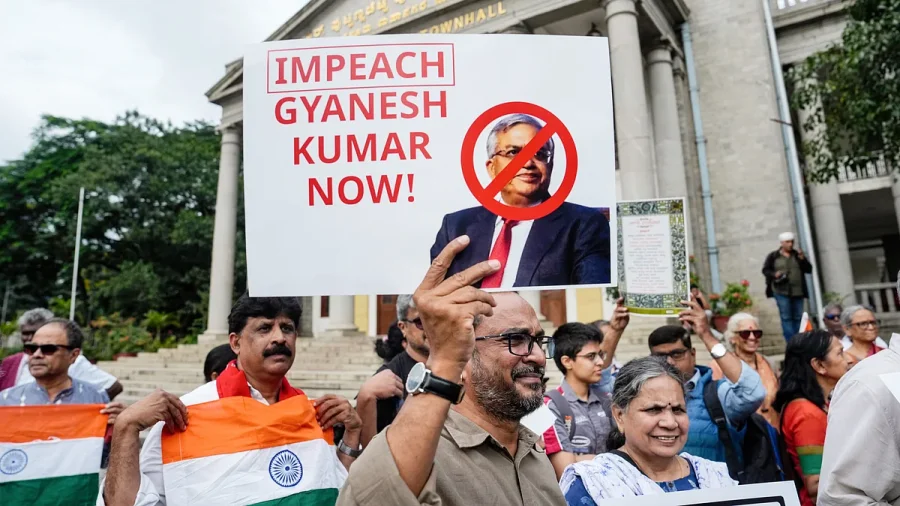

A group of 124 retired civil servants issued an open letter defending Gyanesh Kumar and his actions. The letter has now drawn a sharp response from a columnist, who argues that it amounts to a defence of the indefensible. The piece focuses on why these retired officials chose to speak out at all — and why they chose this particular side.
What the Open Letter by Retired Civil Servants Said
The columnist describes the letter as an "epistle" issued by 124 retired civil servants in support of Gyanesh Kumar and what the writer calls his "nefarious doings." The columnist makes clear that the content of the defence itself is not what surprised him. What surprised him was that these officials chose to speak publicly at all.
Why the Columnist Was Surprised by the Retired Bureaucrats' Letter
The writer says he was not surprised by the letter's existence, because his own WhatsApp groups are densely populated with retired bureaucrats of a similar bent. What caught his attention was that, for once, they came out of what he calls their "burrows."
In the columnist's view, such people are more comfortable staying in the security of the woodwork and prefer to hedge their bets rather than take a public position. Speaking out, he suggests, is not their usual habit.
The Maurice Switzer Quote at the Heart of the Criticism
The columnist opens his argument by invoking the idea that all genuine humour rests on wisdom, which provides the actual punch. He then applies a famous line to the situation:
"It is better to remain silent and be thought a fool than to speak and remove all doubt." — Maurice Switzer, as quoted in the column
The implication is direct. By putting their names to the letter, the signatories have, in the columnist's eyes, removed any doubt about where they stand — and he believes they have chosen the wrong side of history.
Our Take: A Defence That Raises More Questions Than It Answers
To put it plainly, the real story here is not the letter itself but the silence around it. A group of 124 retired civil servants found their voice to defend Gyanesh Kumar. The columnist's point is that these same voices are rarely heard when it matters, and that they emerge only when their own tribe is under pressure.
In our view, the columnist's criticism lands because it is specific. He does not claim the signatories are dishonest. He claims they are selective — comfortable in the woodwork, willing to hedge, and suddenly vocal when a defence is needed. That is a fair question to ask of anyone who once held public office.
Readers should take one clear thing from this: a letter signed by 124 former officials carries weight only if those officials are equally willing to speak when the news is inconvenient for their side. A defence mounted once, and only once, invites exactly the kind of scrutiny this column delivers.
Sources & References
- Original column: "A defence of the indefensible?" — the primary source for all facts, quotes, and characterisations in this article.


