

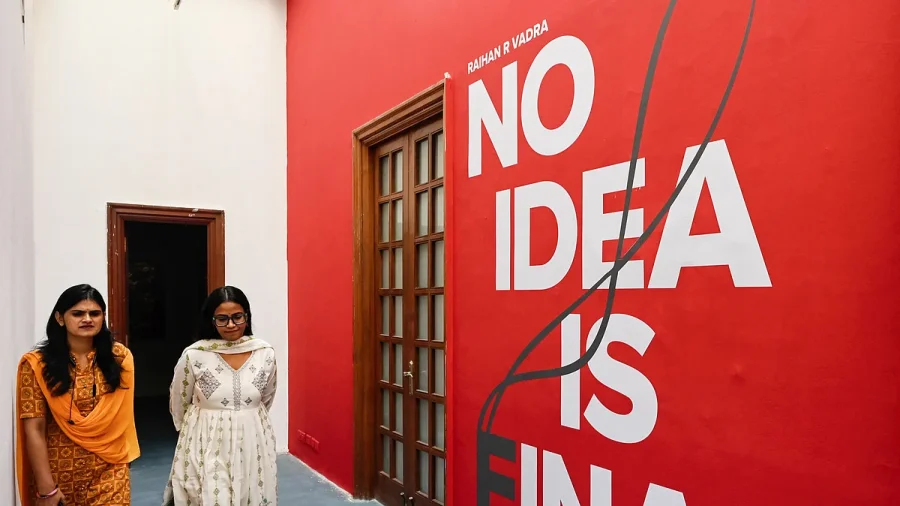

Senior Congress leader Shashi Tharoor has criticised the removal of photographs from Raihan Vadra's exhibition at Bikaner House. He called the move "petty" and described it as "one more nail" — a remark that points to a wider worry about how India treats free expression. The photographs that were taken down documented protests and featured the national flag.
Why Shashi Tharoor Called the Photo Removal Petty
Tharoor did not hold back. He said the removal had cast a shadow on India's reputation as a democracy that protects freedom. In his view, taking down photographs of protests is a small act with a large cost — it sends the wrong signal to the world about how India handles dissent and artistic expression.
He also questioned why anyone would object to photographs that document protests and show the national flag. To put it plainly, his argument is simple: a democracy should not be afraid of images that record its own public life.
What Bikaner House Says About the Removed Photographs
Bikaner House has given its own reason for the removal. It says the photographs that were taken down were inconsistent with its policy. The venue has not framed the decision as a comment on the content of the images themselves, but as a matter of what fits its rules.
Raihan Vadra, meanwhile, is not letting the collection stay hidden. He plans to display the full set of photographs elsewhere, so the work that was removed from Bikaner House will still reach the public.
The Two Sides in the Raihan Vadra Exhibition Row
- Tharoor's side: The removal is petty, and it damages India's image as a democracy that protects freedom.
- Bikaner House's side: The removed photographs were inconsistent with its policy.
- Raihan's response: He will show the full collection at another venue.
- The subject matter: The photographs documented protests and featured the national flag.
Our Take: A Small Removal With a Bigger Message
In our view, Tharoor has put his finger on the real issue. The photographs themselves are not the story — the decision to take them down is. When a venue removes images of protests and the national flag, it invites the question of what exactly it is uncomfortable with. Bikaner House's explanation that the photos were "inconsistent with its policy" is thin. Policies are written by people, and people can explain them. Without a clear reason, the public is left to assume the worst.
Tharoor's phrase "one more nail" is telling. It suggests this is not an isolated incident but part of a pattern, and that is what makes it worth paying attention to. For readers, the takeaway is straightforward: watch what happens to Raihan Vadra's full collection when it is shown elsewhere. If the work travels freely, the Bikaner House episode stays a minor controversy. If it struggles to find a stage, then Tharoor's warning about India's image will look less like politics and more like a prediction.


