
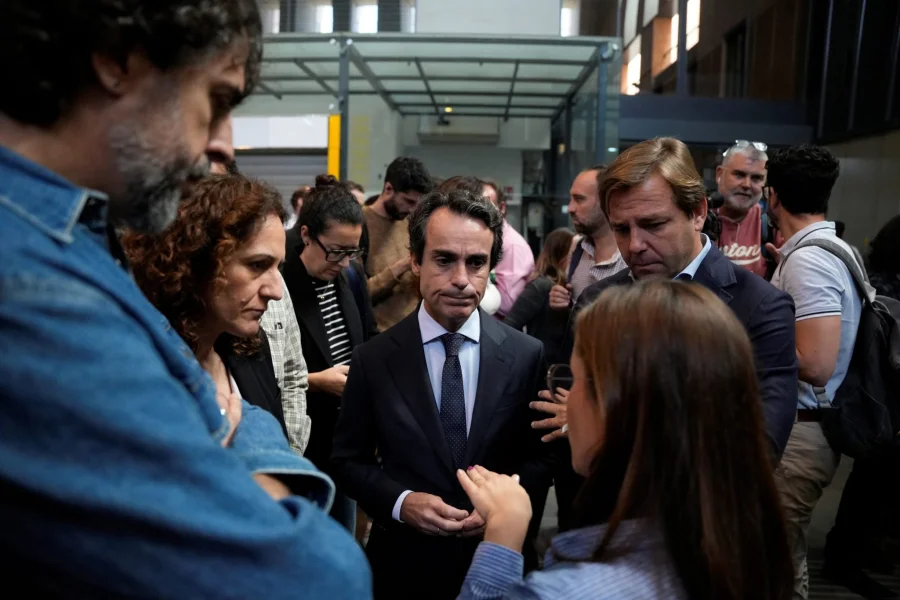

A high-speed train slammed into another train that had stopped on the tracks in Spain, killing at least 68 people and injuring dozens more. The regional government of Castilla La Mancha confirmed the death toll and said another 58 people were receiving medical treatment at hospitals. Rescue workers searched the wreckage through the day for survivors and bodies.
The crash is the second deadly high-speed rail collision in Spain this year. It came just nine months after another deadly crash involving high-speed trains operated by the same two companies in southern Spain in January.
Spain Train Crash: PM Sánchez Says Two Rail Disasters in One Year 'Unacceptable'
Spanish Prime Minister Pedro Sánchez spoke from the crash site, where he announced that his government would declare three days of mourning. He said the country is in grief and called for stronger safety measures.
"Today all of Spain is grieving." — Spanish Prime Minister Pedro Sánchez, from the crash site
Sánchez, who is facing reelection, said it is "unacceptable" to suffer two high-speed rail accidents in one year. His statement puts the focus on rail safety as a political issue, not just a tragedy.
What We Know About the Castilla La Mancha Rail Collision
The facts confirmed so far are limited but serious:
- At least 68 people died when one high-speed train hit another that had stopped on the tracks.
- Another 58 people are being treated at hospitals for injuries.
- The Castilla La Mancha regional government confirmed the death toll.
- Rescue workers spent the day searching the wreckage for survivors and bodies.
- The crash came nine months after a deadly high-speed collision in southern Spain in January, involving trains run by the same two companies.
- Sánchez's government announced three days of mourning.
The fact that the same two companies were involved in both crashes is the detail that matters most. It raises a direct question: were the safety lessons from the January crash actually applied? The original story does not answer that question, and until investigators do, families of the victims deserve more than condolences.
Our Take: A Second Crash in Nine Months Is a Safety Failure, Not Bad Luck
In our view, this is not just a tragedy to mourn — it is a warning that was ignored. Two deadly high-speed rail collisions in nine months, involving the same operators, is a pattern. Patterns do not happen by accident.
Sánchez is right to call it "unacceptable." But words at a crash site are easy. The hard part is what comes next: a real, independent review of why a train was stopped on the tracks and why the system did not protect it. Three days of mourning is proper. It is not a fix.
To put it plainly, readers should watch what the government and the two rail companies actually do in the coming weeks. If safety rules change and are enforced, this crash will mean something. If the mourning ends and nothing else does, Spain will likely be back here again.
For now, at least 68 families are grieving, 58 people are in hospitals, and a prime minister facing reelection has promised action. The promise is the easy part.