

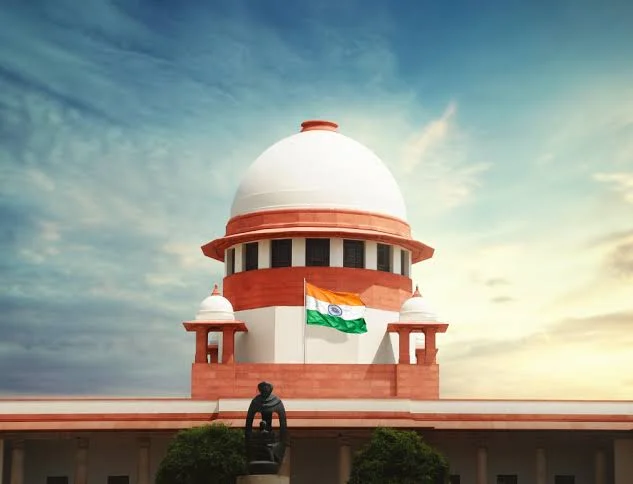

The Supreme Court on Wednesday quashed a 2020 notification issued by the Chandigarh administration that expanded the definition of 'essential service providers' to include vendors selling items such as chhole-bhature, fruits, vegetables, and flowers outside religious places.
A bench of Justices Sanjay Karol and Nongmeikapam Kotiswar Singh noted that the notification was issued under the extraordinary circumstances of the COVID-19 pandemic and has outlived its object, purpose, and utility.
Why the notification was quashed
According to The Tribune, the court observed that the notification was a temporary measure meant to address the unique challenges of the pandemic. With the pandemic situation now under control, the court found no reason to keep the expanded definition in place.
The bench said: "Deliberations with all concerned, including the functionaries, officers present in the Court led us to a formation of consensus with the learned amicus curiae on this specific issue. Accordingly, we quash the said notification dated July 17, 2020, extracted supra. Undoubtedly, the earlier..."
What the 2020 notification did
The 2020 notification had broadened the definition of essential service providers in Chandigarh to include street vendors selling food items like chhole-bhature, as well as fruits, vegetables, and flowers outside religious places. This was done to ensure these vendors could continue operating during the COVID-19 lockdowns when many businesses were shut down.
The move was seen as a way to protect the livelihoods of thousands of street vendors who depend on daily sales near temples, gurdwaras, and other religious sites.
In our view, the Supreme Court's decision is a sensible one. The 2020 notification served a clear purpose during the pandemic — it helped street vendors survive when the economy was frozen. But keeping such a broad definition of "essential services" in place indefinitely would have been illogical. Chhole-bhature, while delicious, are not essential in the same way as healthcare or food supply chains. The court rightly recognized that the notification had outlived its utility. This is a good example of how temporary measures should be reviewed and removed once the crisis they addressed is over.