
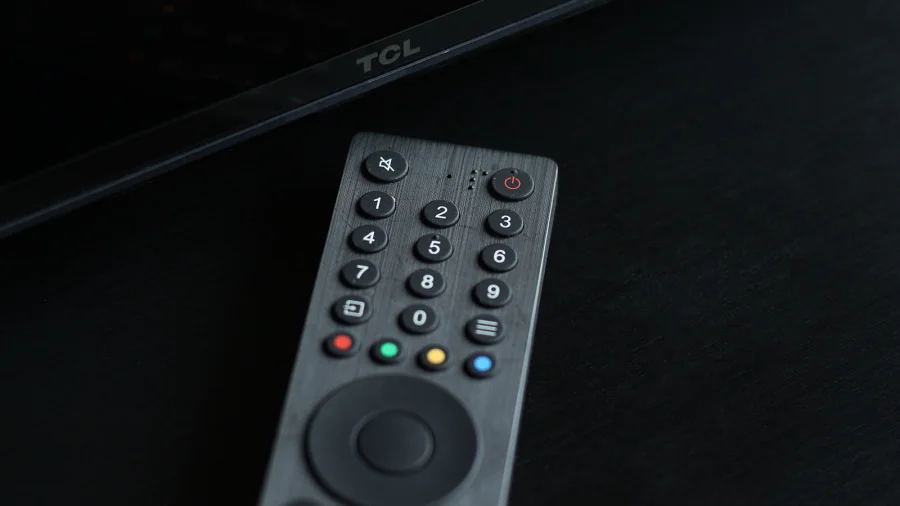

If you have used a TV remote in the last 40 years, you have used infrared technology. It is the same invisible light beam that has been sending signals from your hand to the screen since the 1980s. And despite all the advances in wireless tech — Bluetooth, Wi-Fi, smart assistants — almost every TV remote you pick up today still uses infrared.
Why has this decades-old technology not been replaced? The answer is simple: it works, it is cheap, and most people do not need anything more.
What Makes Infrared Remote Controls So Reliable
Infrared (IR) remote controls have been the standard for consumer electronics for a very long time. According to Celadon, IR remotes remain dominant because of their simplicity, reliability, and cost-effectiveness. There is no pairing process, no software updates, and no batteries draining from constant wireless connections.
The technology works by sending pulses of invisible light from the remote to a sensor on the TV. When you press a button, the remote sends a specific pattern of light pulses that the TV recognizes as a command — like volume up or channel down. It is direct, it is fast, and it does not interfere with other devices in the room.
Cost and Power: The Real Reasons Infrared Stays
One of the biggest reasons infrared has not disappeared is money. IR components cost pennies to manufacture. A basic IR remote can be built for a fraction of the cost of a Bluetooth remote. And because the remote only sends a signal when you press a button, the batteries last for months or even years.
As noted in discussions on Reddit's AskElectronics community, IR is still widely used because it is cheap, easy, and proven. The low cost and low power consumption make it ideal for a device that sits on a coffee table and gets used a few times a day.
Bluetooth, on the other hand, requires a more complex chip, constant power management, and often needs to be paired with the device. For a simple task like changing the channel, that extra complexity is unnecessary for most users.
When Bluetooth Makes Sense — And When It Does Not
Bluetooth remotes do exist. They are common in streaming devices like Apple TV, Roku, and some smart TVs. These remotes offer advantages like not needing to be pointed directly at the TV and being able to control devices from another room.
But for the vast majority of TV users, the infrared remote works perfectly fine. You point it at the TV, press a button, and it works. There is no reason to fix something that is not broken.
Our Take: Sometimes Old Tech Is the Right Tech
In our view, the persistence of infrared in TV remotes is a perfect example of why new technology does not always win. Bluetooth is more advanced, but it solves a problem most people do not have. Infrared is simple, cheap, and reliable — three qualities that matter more than being the newest thing on the market.
Consumers should not feel that their TV remote is outdated just because it uses infrared. The technology works exactly as intended. And until there is a clear reason to switch — like a major drop in Bluetooth costs or a universal need for remote control from another room — infrared will likely stay in our hands for years to come.