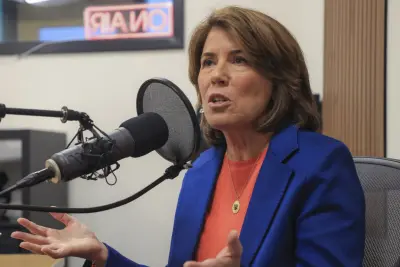



Randi Weingarten says the fastest way to solve America's affordability crisis is a working-class tax cut. Her plan is simple: put cash back in people's wallets by passing the Working Americans' Tax Cut Act. To make that happen, she is urging voters to elect a new Congress on Nov. 3 that is committed to passing the bill.
Weingarten makes clear that the rising cost of living is real. She pushes back on President Trump's claim that higher costs for American families are a hoax. In her view, families are paying more to fill their gas tanks, feed their families, and keep a roof over their heads.
What the Working Americans' Tax Cut Act Would Do
The bill is built around a straightforward idea: let working- and middle-class Americans keep more of what they earn. According to Weingarten, the math is simple.
- The bill exempts the first $46,000 of income for individuals from federal income taxes entirely.
- For married couples, it exempts the first $92,000 of income from federal income taxes.
- It also provides a substantial tax cut to middle-income earners.
Weingarten points to the growing cost of basic necessities as the reason this relief is needed now. She says the average family is paying $4,200 more for basic necessities since Trump returned to office. That number is at the center of her argument that families need direct help, not just talk.
Why She Says the Fix Is a Tax Cut, Not a Slogan
Weingarten's case rests on a direct contrast. On one side, she says, are families paying more for gas, food, and housing. On the other side is a claim from President Trump that these higher costs are a hoax. She rejects that framing and says the pressure on household budgets is real and measurable.
Her answer is not a new government program or a long study. It is a tax cut that leaves the first slice of a worker's income untaxed. For a single worker, that means the first $46,000 of income would carry no federal income tax. For a married couple, the first $92,000 would be tax-free. In her telling, that is the fastest route to relief because it puts money back in people's pockets right away.
The political step matters just as much as the policy. Weingarten ties the tax cut directly to the Nov. 3 election. Her message to voters is that the bill only becomes law if a new Congress is elected and committed to passing it. In other words, the tax cut is the goal, and the election is the lever.
Our Take: A Simple Message With a Clear Ask
In our view, Weingarten's argument works because it is easy to follow. She does not bury the plan in jargon. She names the bill, gives the exact income thresholds, and tells voters what they need to do to get it. That clarity is a strength.
The $4,200 figure is the emotional core of her case. It turns a policy debate into a household budget problem. If a family is paying thousands more just to cover basics, a tax cut that exempts the first $46,000 or $92,000 of income sounds like real relief, not a talking point.
To put it plainly, the proposal raises one honest question: how the tax cut would be paid for. Weingarten's piece does not address that. Readers should keep that in mind. Still, her central claim is hard to argue with on its face — putting cash back in people's wallets is one of the fastest ways to ease an affordability squeeze.
What this news means for readers is direct. If you are a worker or a middle-class family feeling the pinch of higher prices, Weingarten is asking you to treat the Nov. 3 election as the moment to decide whether this tax cut happens. Her bet is that affordability, not rhetoric, will drive how people vote.