

Summary
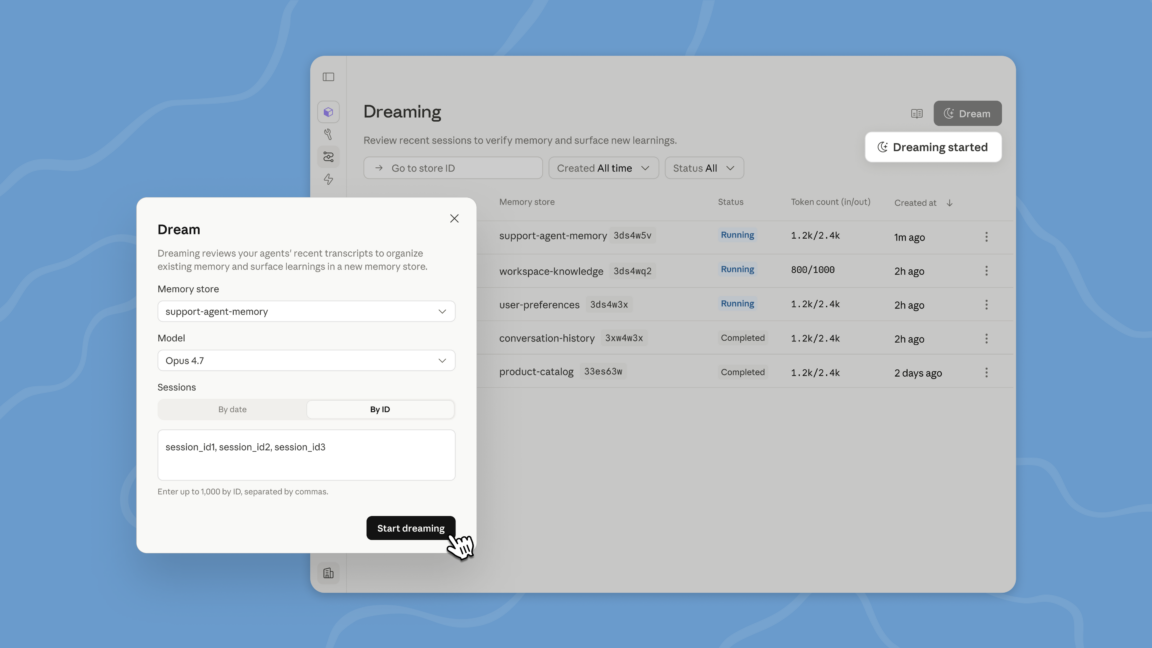
Anthropic has announced a new feature for its Claude AI called "dreaming." This update was shared during the Code with Claude event in San Francisco. The feature is designed for Managed Agents, which are specialized AI tools that handle long and complex tasks. Dreaming allows these agents to look back at their recent work and pick out the most important information to save for later. This helps the AI stay organized and remember key details during long projects that might take hours or days to complete.
Main Impact
The main impact of this update is a significant improvement in how AI handles long-term memory. In the past, AI models often struggled with "forgetting" details as a conversation or task went on for too long. By introducing a dreaming phase, Anthropic is giving its AI a way to filter through large amounts of data. This ensures that the most useful facts are kept while the less important details are cleared out. For businesses and developers, this means AI agents can now work on much bigger projects without losing track of the original goals or important instructions.
Key Details
What Happened
At the Code with Claude developers' conference, Anthropic explained that dreaming is a scheduled process. It is not exactly like human sleep, but it serves a similar purpose. While the AI is in this state, it reviews its recent sessions and memory stores. It looks for patterns and specific pieces of information that will be helpful for future tasks. This process is currently available as a research preview, meaning it is still being tested and refined before a full release to all users.
Important Numbers and Facts
The dreaming feature is specifically built for Claude Managed Agents. These agents are different from the standard chat version of Claude. They are part of a pre-built system that runs on Anthropic’s own infrastructure. These tools are meant for tasks that require multiple AI agents to work together over a long period. Because these tasks can generate a lot of data, the AI needs a way to manage its "context window," which is the amount of information it can process at one time. By curating its memories, the AI can stay within its limits while still being effective.
Background and Context
To understand why dreaming is important, it helps to know how AI memory works. Most AI models use something called a context window. Think of this like a person's short-term memory. If you give the AI too much information at once, it starts to push out the older information to make room for the new stuff. This is a problem for developers who want the AI to remember a specific rule or fact from the beginning of a long project.
In standard AI chats, companies often use a method called "compaction." This is when the AI summarizes a long conversation into a shorter version to save space. However, dreaming goes a step further for agents. Instead of just making things shorter, it actively chooses what is worth keeping as a permanent memory. This makes the AI more like a professional assistant who takes good notes rather than someone who just tries to remember everything at once.
Public or Industry Reaction
The tech community has shown great interest in this update because it addresses one of the biggest weaknesses of modern AI. Developers who build complex software or manage large data sets have often complained that AI agents become less reliable the longer they work. By solving the memory problem, Anthropic is positioning itself as a leader in "agentic" AI—AI that can work independently for long periods. Industry experts see this as a move toward making AI more useful for real-world jobs where tasks are not finished in just a few seconds.
What This Means Going Forward
Looking ahead, this feature could change how we interact with digital assistants. If an AI can manage its own memory, it will require less supervision from humans. We are moving toward a future where you can give an AI a goal in the morning, and it can work all day, checking its own progress and keeping track of what it has learned. However, because this is still in the research phase, there are risks to consider. If the AI chooses to remember the wrong things or forgets a vital instruction during its dreaming phase, it could lead to errors. Anthropic will likely spend the coming months testing how the AI makes these choices.
Final Take
Anthropic is taking a creative approach to a technical problem. By calling this process "dreaming," they are making a complex data management system easier for people to understand. This update is a clear sign that the next step for AI is not just about being smarter, but about being more organized. As AI agents become more common in the workplace, the ability to remember what matters will be just as important as the ability to generate text or code.
Frequently Asked Questions
Is the AI actually sleeping like a human?
No. "Dreaming" is just a term Anthropic uses to describe a scheduled data review process. The AI is simply analyzing past information to decide what is important to keep in its long-term memory.
Who can use the dreaming feature right now?
Currently, the feature is in a research preview. it is only available to developers using Managed Agents on the Claude Platform. It is not yet available for the standard version of Claude that most people use for chatting.
Why is this better than regular AI memory?
Regular AI memory often gets full and starts to forget old information. Dreaming allows the AI to act as its own editor, picking out the most important facts so it can work on long, complex projects without getting confused or losing track of the goal.

