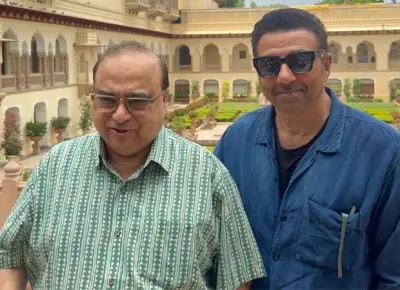



Singer Sonu Nigam has revealed that he was banned by music companies after he raised a copyright battle during his career. He opened up about this difficult period in a conversation on the YouTube show 'Game Changers with Komal Nahta'.
Sonu said that at the time, his career was going extremely well. He was releasing one album after another, and fans were loving his work. But everything changed when he decided to raise the copyright issue.
Sonu Nigam's Ban by Music Companies
According to Sonu, the music companies banned him after he raised the copyright issue. They stopped working with him entirely. People around him began saying, "Yeh toh activist ho gaya hai" (He has become an activist now), and he smiled while recalling this.
Despite the professional setback, Sonu does not regret his decision. He explained his reasoning, saying, "Somebody had to bell the cat." He also shared a spiritual perspective on why he took this path.
"Bhagwan ne mujhe sirf gaane ke liye nahin banaya tha. God made me for..." — Sonu Nigam
How the Copyright Fight Changed Things
Sonu also shared how the situation has changed over time. The same companies that once banned him now pay royalty to him and his team. He added that people from those companies now come to his house for a meal.
This shows how the music industry's approach to copyright and artist rights has shifted since the time Sonu took his stand.
Our Take: Sonu Nigam's Stand on Copyright
In our view, Sonu Nigam's story is a reminder of how difficult it can be to stand up for what is right, especially when your career is at its peak. He risked everything — his albums, his relationships with music companies, and his momentum — to fight for fair treatment of artists.
His comment that "somebody had to bell the cat" is powerful. It shows that change often requires someone to take the first difficult step, even if it comes at a personal cost. The fact that the same companies now pay him royalty and visit his home shows that his fight was not in vain.
For young artists today, this story carries a clear message: standing up for your rights may cost you in the short term, but it can bring respect and fairness in the long run. Sonu Nigam's experience is proof that the industry can change — but only when someone is brave enough to demand it.