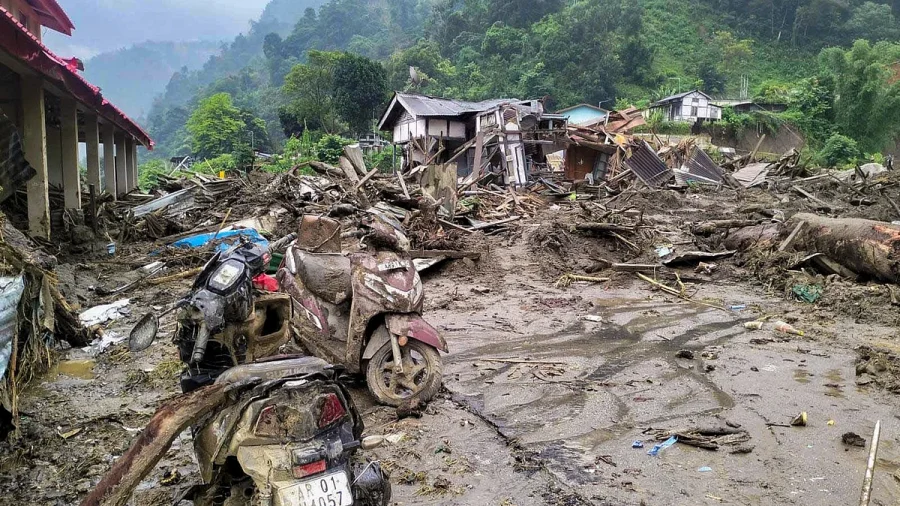

The flood situation in Arunachal Pradesh has worsened, with the death toll rising to four and over 90,000 people affected across all 28 districts of the state, according to official data.
Two women remain missing and 21 others have been injured after days of incessant rain triggered flash floods and landslides. The natural disaster has damaged homes, roads, bridges and essential public infrastructure, according to a report by the State Emergency Operation Centre (SEOC).
Government Response and Surveys in Keyi Panyor
The deteriorating situation prompted Chief Minister Pema Khandu and Union ministers Shivraj Singh Chouhan and Kiren Rijiju to undertake aerial and ground surveys of the worst-affected Keyi Panyor district. The visit came a day after Union Home Minister Amit Shah spoke to Khandu to review the flood situation.
According to The Hindu, the flood situation has affected agricultural land and caused widespread disruption across the state.
Impact on Agriculture and Infrastructure
The floods have caused significant damage to agricultural land, with over 90,000 hectares affected, as reported by Economic Times. The destruction of roads and bridges has hampered rescue and relief operations in several areas.
The State Emergency Operation Centre continues to monitor the situation as rescue teams work to reach affected communities. The heavy rainfall has also led to landslides in several districts, further complicating relief efforts.
Our Take: A Crisis Demanding Urgent Action
In our view, the rising death toll and the scale of devastation across all 28 districts of Arunachal Pradesh highlight the urgent need for a coordinated disaster response. The fact that two women remain missing and 21 are injured shows that the situation is still unfolding.
To put it plainly, the government's quick response with aerial surveys by top ministers is welcome, but the focus must now shift to providing immediate relief to the over 90,000 affected people. The damage to roads and bridges means many remote areas may still be cut off, and reaching them should be the top priority.
This disaster also raises questions about long-term preparedness for such events, especially as extreme weather events become more frequent. The state and central governments must work together not just on relief, but on building more resilient infrastructure in flood-prone regions.