
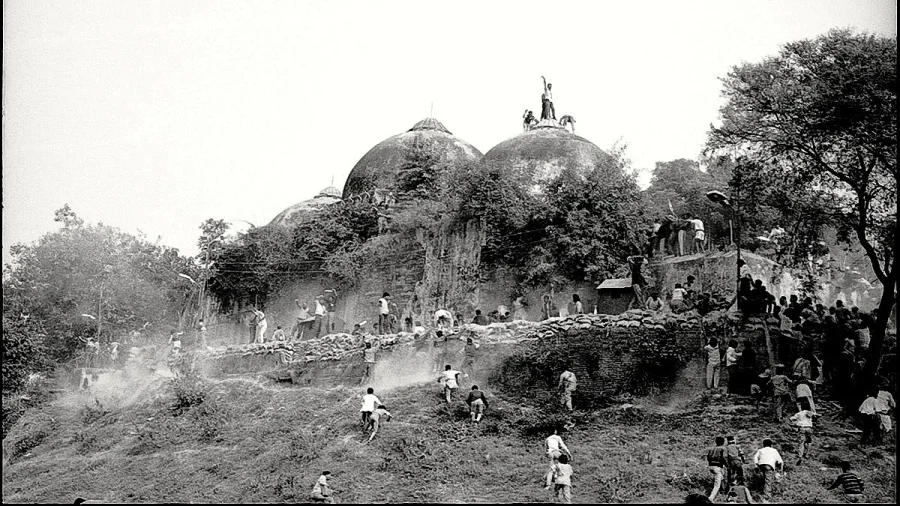

The demolition of the Babri Masjid in 1992 was not just a physical act of destruction. It was a moment that laid bare a deep and ongoing conflict in India — the collision between academic history and Hindutva mythology.
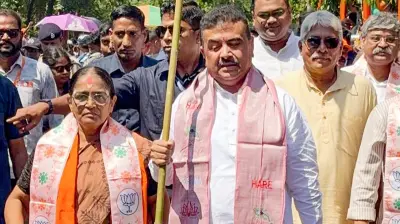
For the Bharatiya Janata Party (BJP), its ideological mentor the Rashtriya Swayamsevak Sangh (RSS), and its militant affiliate Vishva Hindu Parishad (VHP), the event was seen as a "moment of civilisational triumph." These groups had spearheaded the movement for Ram Janmabhoomi, claiming the site as the birthplace of Lord Ram.
But for many other Indians — still an overwhelming majority composed overwhelmingly of Hindus — the demolition was something else entirely. It was a "horrific reminder that the ghosts of Partition had not been exorcised, that religious bigotry was alive and kicking in the country." These citizens, proud of their Constitution's devotion to pluralism, saw the event as a betrayal of India's founding principles.
Roots of the History-Mythology Conflict
The tension between academic retellings of ancient and early medieval Indian history and Hindutva mythology did not begin in 1992. The first rumblings of discontent can be traced to the first non-Congress government — the Janata Party — that was voted to power in 1977. This was the election that followed the Emergency.
The BJP, in its earlier avatar as the Bharatiya Jana Sangh, was part of this political shift. The party's rise brought with it a challenge to established historical narratives, particularly those that did not align with a Hindutva-centric view of India's past.
Two Competing Visions of India
At the heart of this collision are two fundamentally different visions of India. One vision, rooted in the Constitution, celebrates pluralism and diversity. It sees India as a land of many faiths, cultures, and histories. The other vision, promoted by Hindutva ideology, seeks to define India primarily as a Hindu nation, with a single, unified historical narrative drawn from mythology.
This conflict is not merely academic. It has real-world consequences. The Babri Masjid demolition led to widespread riots and loss of life. It reshaped Indian politics, propelling the BJP to national prominence. And it continues to influence debates over history textbooks, temple construction, and the very meaning of Indian identity.
Our Take: A Conflict That Defines Modern India
In our view, the collision between history and Hindutva mythology is one of the defining struggles of modern India. It is a struggle over who gets to tell the story of the nation's past — and therefore, who gets to shape its future.
Academic history, with its reliance on evidence, sources, and critical analysis, offers a complex and often uncomfortable picture of India's past. It acknowledges diversity, conflict, and change. Hindutva mythology, by contrast, offers a simple, heroic narrative — one that is emotionally powerful but historically questionable.
The danger is not in mythology itself. Every culture has its myths. The danger comes when mythology is presented as history, and when it is used to justify violence and exclusion. The Babri Masjid demolition was a stark example of what happens when myth is allowed to override fact.
To put it plainly: India's strength has always been its pluralism. The Constitution enshrines this. The challenge now is to ensure that history — real, evidence-based history — is not erased by mythology. The ghosts of Partition have not been fully exorcised. But they can be, if we choose truth over triumphalism.