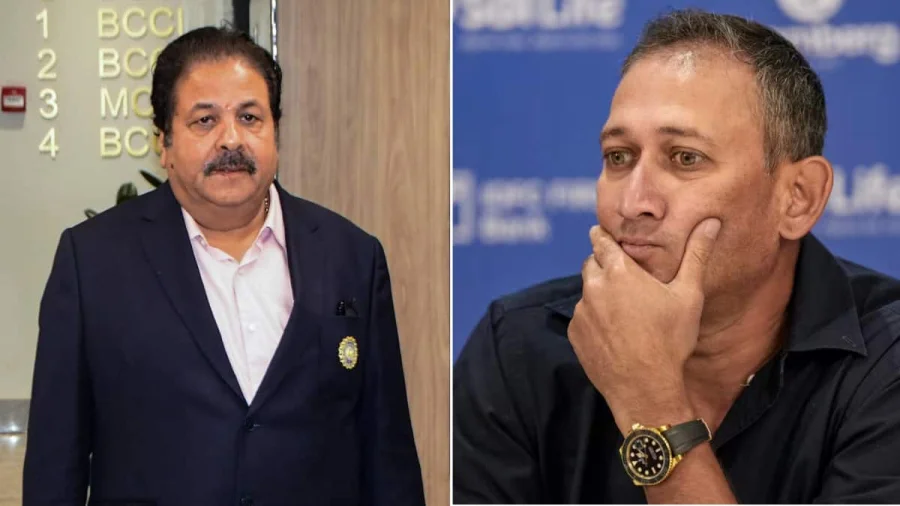

The Board of Control for Cricket in India (BCCI) has opened the door for a decision on the future of Ajit Agarkar and the men's senior selection committee. After the board's 95th Annual General Meeting (AGM) in Mumbai, BCCI vice-president Rajeev Shukla confirmed that the office-bearers have been authorised to take a call on the matter.
The development comes amid growing speculation over whether Agarkar will continue as chairman of the senior selection committee.
What The BCCI Said After The AGM
Shukla spoke to the media after the AGM and confirmed the board's position. According to PTI, he said:
"Arun Singh Dhumal, Majumdar retain..." — Rajeev Shukla, BCCI Vice-President, as quoted by PTI
The key point from his statement is that the office-bearers — not the full board — now hold the authority to decide what happens next with Agarkar's role. This means the call rests with a small group of senior BCCI officials rather than going through a wider process.
Why Ajit Agarkar's Future Is Being Discussed
Ajit Agarkar currently serves as chairman of the men's senior selection committee. Speculation had been building over whether he would continue in that role, and the AGM has now cleared the way for a formal decision.
The BCCI did not announce a final outcome on Agarkar's position at the AGM itself. Instead, it handed the decision-making power to the office-bearers. This keeps the matter open and means an announcement could come once those officials complete their discussions.
- The decision was taken at the BCCI's 95th AGM in Mumbai
- Office-bearers, not the full board, will decide Agarkar's future
- Agarkar's role in question is chairman of the men's senior selection committee
- Rajeev Shukla confirmed the development to the media after the meeting
Our Take: A Decision Deferred, Not Delivered
To put it plainly, the BCCI has not decided anything about Ajit Agarkar yet. It has only decided who gets to decide. That is a meaningful difference, and fans should read it that way.
In our view, handing the matter to the office-bearers is a way of keeping options open. It avoids a public vote or a messy debate at the AGM, and it lets a handful of senior officials control the timing of any announcement. That is practical, but it also means there is no clarity for Agarkar or for the selection committee he leads.
For readers, the takeaway is simple: watch the office-bearers, not the AGM. The next real signal on Agarkar's future will come from them. Until they speak, his position remains unresolved — and the speculation that surrounded the AGM will continue.