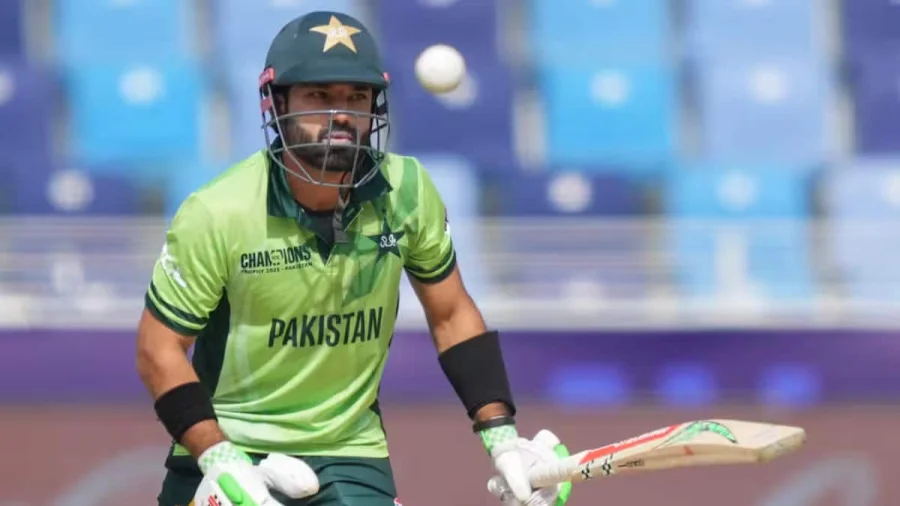

Pakistan wicketkeeper-batsman Mohammad Rizwan reportedly tried twice to speak publicly about the ongoing National Cyber Crime Investigation Agency (NCCIA) inquiry. Both times, the Pakistan Cricket Board (PCB) stopped him, according to a Geo News report.
Rizwan wanted to explain his side of the episode. He approached the board on two separate occasions seeking permission to address the controversy publicly. The PCB rejected both requests.
Why Rizwan Wanted to Speak About the NCCIA Probe
The NCCIA is investigating matters involving financial dealings and alleged dressing-room information leaks. As part of that inquiry, the agency is reportedly conducting forensic checks of players' mobile phones.
According to Geo News, Rizwan was keen to give his own account of the situation. Instead of letting him speak, the board chose to keep him silent while the investigation continues.
This is not a small detail. When a player of Rizwan's standing wants to clear the air and is told to stay quiet, it raises obvious questions about who controls the narrative — the player or the board.
What the PCB's Decision Means for the Investigation
The PCB's decision to block Rizwan from speaking keeps the public in the dark. The inquiry involves serious allegations — money matters and claims of information leaking from the dressing room. These are the kinds of accusations that can damage a player's reputation quickly.
By refusing permission, the board has effectively left Rizwan without a public voice on a matter that directly involves him. The NCCIA continues its work, including the forensic examination of mobile phones, while no player has been allowed to explain their position openly.
It is worth noting what we do not know. The report does not say why the PCB rejected Rizwan's requests. It does not say whether other players have also asked to speak. And it does not say when the investigation will conclude. Those gaps matter because they leave room for speculation — the very thing the board's silence is supposed to prevent.
Our Take: Silence Is Not Always Protection
In our view, the PCB's decision to stop Rizwan from speaking twice looks less like caution and more like control. If a player wants to explain his side and the board keeps saying no, the public will naturally assume the worst — either about the player or about the board itself.
To put it plainly, this approach hurts everyone. Rizwan cannot defend himself in public. The PCB looks like it is hiding something. And the fans are left to rely on leaks and rumours instead of facts.
There is a fair argument for letting an investigation run its course without public commentary. But there is also a fair argument that a player facing serious allegations deserves a chance to respond — especially when his own phone is being examined.
What readers should take from this: the NCCIA probe is active, Rizwan tried to speak, and the PCB said no. Until someone involved explains why, the questions will keep piling up. And in cricket-crazy Pakistan, unanswered questions never stay quiet for long.