

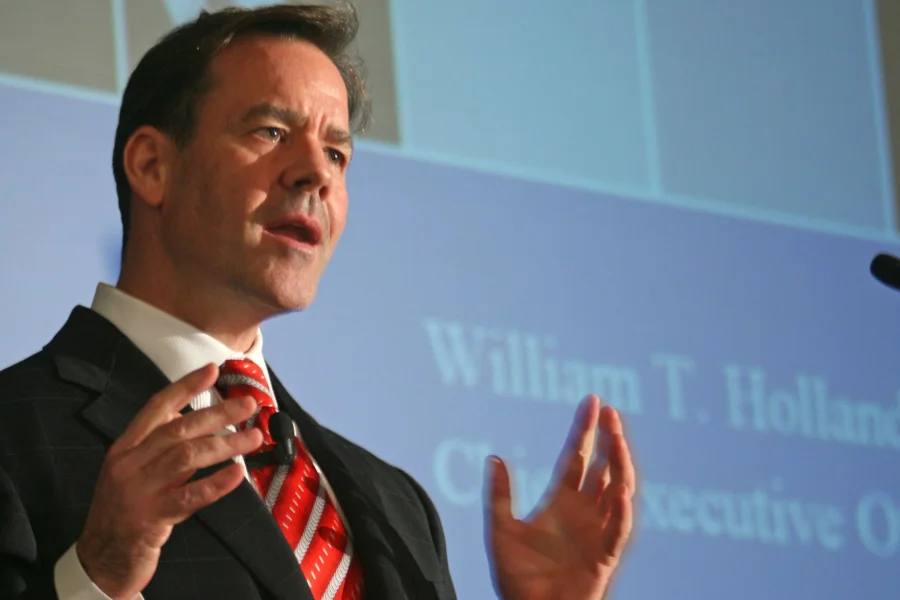

Bill Holland achieved what many people spend their entire careers chasing: by age 32, he had made enough money to retire for good. But over three decades later, the now-67-year-old still hasn’t hung up his hat.
The former CEO of CI Financial, one of Canada’s largest investment management firms, didn’t take a conventional path to the top. Despite graduating from Toronto’s York University, Holland drifted through a string of self-described “crappy jobs,” like delivering 7Up, working in a factory, and serving as a doorman at a Toronto bar before finding his footing in finance.
From Factory Floor to Finance Floor
At 27, he landed a customer service representative position at Mackenzie Financial Corp.—a demanding job that required fielding roughly 120 customer calls a day, according to a recent profile in Canadian business media. That role became his entry point into the finance world, setting him on a path that would lead to extraordinary wealth.
By age 32, Holland had accumulated enough money to retire. But instead of leaving the workforce, he kept going. He eventually became CEO of CI Financial, one of Canada’s biggest investment firms.
Why a Millionaire Still Takes Public Transport
What makes Holland’s story unusual is not just how quickly he made his fortune—but how he lives now. Three decades after he could have stopped working, he still goes to the office and takes public transport, according to the profile.
For many, retirement is the ultimate goal. But Holland’s choice suggests that for some people, work is not just about money. It is about purpose, routine, and staying connected.
Our Take: The Real Meaning of Financial Freedom
Bill Holland’s story challenges the idea that financial freedom means quitting work forever. In our view, true wealth is not just having enough to stop—it is having the freedom to choose what you do every day. Holland chose to keep working, not because he had to, but because he wanted to. That is a lesson worth remembering: money is a tool, not a destination.
His path from factory worker to CEO also shows that a slow start does not mean a small finish. Holland worked “crappy jobs” well into his twenties. He did not land in finance until 27. Yet within five years, he had retired. That is a reminder that career success is not always linear—and that the right opportunity, combined with hard work, can change everything.