

Summary
Two high-ranking officials at the Shaheed Bhagat Singh International Airport in Chandigarh are now under investigation by the Central Bureau of Investigation (CBI). The case involves serious allegations of extortion, bribery, and unfair treatment of local workers. This legal action follows a long-standing complaint from the airport's taxi union, which claimed that the officials were harassing them for money. The investigation marks a major step in holding top management accountable for how they run public facilities.
Main Impact
The investigation has sent shockwaves through the aviation industry because it targets the very top of the airport’s leadership. Rakesh Ranjan Sahay, the former Chief Executive Officer (CEO), and Amrit Garg, the former Commercial Head, are the primary targets of the probe. Their involvement suggests that corruption may have reached the highest levels of the airport's daily operations. This case highlights the power of worker unions to challenge management when they face unfair treatment or illegal demands.
Key Details
What Happened
The trouble began when the Airport Taxi Union decided to speak up against what they called "systemic harassment." They claimed that the airport officials were using their power to bully taxi drivers and demand illegal payments. The union did not just make verbal claims; they provided a pen drive filled with audio recordings as evidence. These recordings allegedly capture the officials discussing bribes and showing favoritism toward a specific private company called M/s Nanuan’s. The taxi drivers felt they were being pushed out while this preferred company was given special advantages.
Important Numbers and Facts
The case is built on several key pieces of information and historical data regarding the airport:
- The Accused: Rakesh Ranjan Sahay (former CEO) and Amrit Garg (former Commercial Head).
- Legal Charges: The FIR includes charges of criminal conspiracy and extortion under the Indian Penal Code and the Prevention of Corruption Act.
- Evidence: A pen drive containing multiple audio clips was submitted to investigators.
- Airport Value: The terminal was built at a cost of ₹939 crore and covers 53,000 square meters.
- Timeline: The alleged illegal activities started in 2021. The formal hand-over to the CBI happened in February 2025 after an internal review.
Background and Context
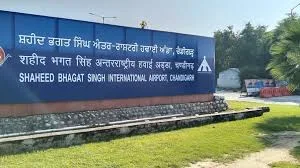
The airport, officially known as Shaheed Bhagat Singh International Airport, is a vital piece of infrastructure for Northern India. It serves the "Tricity" area, which includes Chandigarh, Mohali, and Panchkula. Because it is a joint venture, it is owned by three different government bodies. The Airports Authority of India (AAI) owns 51 percent, while the governments of Punjab and Haryana each own 24.5 percent. This shared ownership means that the airport is funded by public money and is expected to follow strict ethical rules.
The airport was inaugurated by Prime Minister Narendra Modi in 2015 and was meant to be a symbol of growth for the region. When top officials at such a high-profile site are accused of running an extortion racket, it damages the public's trust in government-run institutions. The taxi union’s complaint forced the Airports Authority of India to look closely at its own staff, leading to this federal investigation.
Public or Industry Reaction
The reaction to this case has been significant because it is rare for a small union of taxi drivers to successfully trigger a CBI probe against a CEO. Many people in the industry see this as a victory for transparency. The Central Vigilance Commission (CVC), which is the country’s top anti-corruption watchdog, had to step in to make sure the case moved forward. They noted that the internal investigation by the airport authority was not enough because they did not have the tools to check the audio files or follow the money trail. The public is now watching closely to see if the CBI will find enough evidence to bring the case to court.
What This Means Going Forward
The CBI is now using forensic experts to study the audio recordings. They need to prove that the voices on the tapes belong to Sahay and Garg. They are also looking into bank records and emails to see where the money went. If the evidence is strong, the officials could face trial and prison time. For the airport, this means there will likely be new rules for how contracts are handed out to private companies. It also means that other airport unions across the country might feel more confident in reporting corruption if they see it happening at their own workplaces.
Final Take
This case shows that no official is too high-ranking to be questioned. When public servants are accused of using their positions to squeeze money from hard-working people, it is a serious matter that requires a deep and honest investigation. The outcome of this CBI probe will determine whether the management at one of India’s most important airports can be trusted to act fairly in the future. It serves as a clear warning that digital evidence, like audio recordings, can be a powerful tool for those seeking justice against corruption.
Frequently Asked Questions
Who are the main people accused in this case?
The two main people are Rakesh Ranjan Sahay, who was the CEO of the airport company, and Amrit Garg, who was the head of the commercial department. Both held very powerful positions at the airport.
What evidence does the CBI have?
The main evidence includes audio recordings provided by the taxi union on a pen drive. The CBI is also looking at internal emails, contract documents, and the money trail to see if bribes were paid.
Why did the CBI take over the case?
The Airports Authority of India did an initial check but realized they did not have the forensic tools to verify the audio clips or the power to fully investigate a criminal money trail. The Central Vigilance Commission then ordered the CBI to take over.