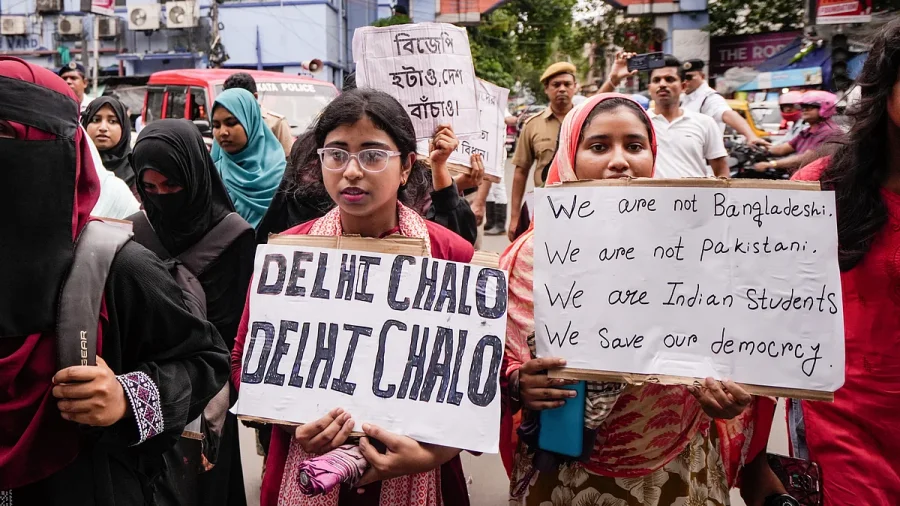

The Cockroach Janata Party (CJP) has announced plans to expand its protest nationwide, and the move has already sparked a sharp political battle in West Bengal. Political parties in the state have taken strongly different positions ahead of the CJP's planned protest march in Kolkata on Friday, 24 July.
Political divide over CJP protest in Kolkata
According to National Herald, the Trinamool Congress (TMC), the Congress, and the Left have expressed solidarity with the students' demands. In contrast, the BJP-led government has strongly opposed the proposed rally, warning that it will not allow any breakdown of law and order.
TMC leader backs students' right to protest
TMC leader Pratikur Rehman backed the students' demands, stating clearly that it is their right to protest against corruption. He said, "It is the right of the students to protest against corruption, and I don't think they will have to take permission for that. They should intimate the police about their rally."
Rehman also added that TMC supremo and former chief minister Mamata Banerjee had already expressed support for the agitation. Party leaders including Mahua Moitra have also backed the cause, according to the report.
BJP government's strong opposition
On the other side, the BJP-led government in West Bengal has taken a firm stance against the CJP's planned march. The government has warned that it will not allow any disruption of law and order during the protest. This has set the stage for a direct confrontation between the ruling party and the opposition in the state.
Our Take: A test for democracy in West Bengal
In our view, this situation is a clear test of democratic values in West Bengal. The right to peaceful protest is a fundamental right in India. When political parties take sides based on their own interests rather than the principle of free expression, it weakens democracy. The TMC, Congress, and Left are right to support the students' right to protest. The BJP government's warning against a "breakdown of law and order" sounds like a threat to silence dissent. To put it plainly, the government should facilitate peaceful protests, not threaten them. The CJP's demands against corruption deserve a hearing, not a crackdown.