
Summary
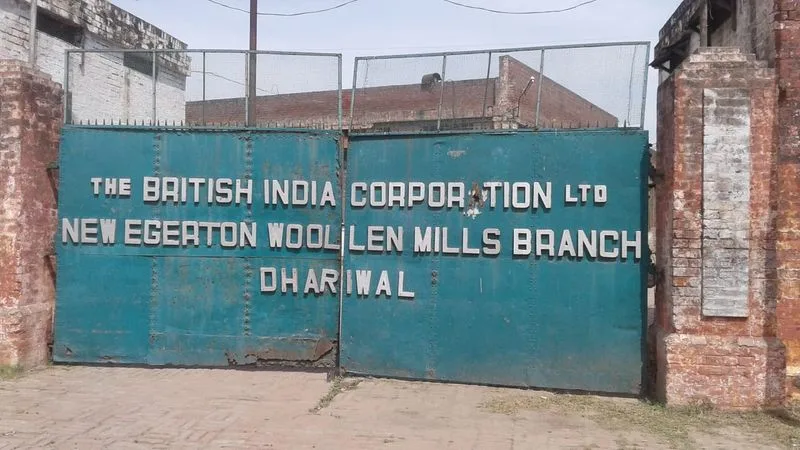
The famous Dhariwal Woollen Mills in Gurdaspur is officially closing its doors after 152 years of operation. The Union Government decided to shut down the historic unit following a recommendation from NITI Aayog, the government's main policy think tank. This move marks the end of the "My Fair Lady" brand, which was known worldwide for its high-quality woollen products. While legal and bureaucratic steps are still being finished, the factory has already stopped all production, leaving a small group of workers waiting for the final closure.
Main Impact
The closure of this mill is a major blow to the local economy and the history of North India. For over a century, the mill was the heart of the Dhariwal township. Its shutdown means the loss of a historic industrial landmark that once put the region on the global map. The most immediate impact is felt by the remaining employees and the local community, who have seen their primary source of income and identity disappear. The famous brands produced here, which were once symbols of quality and luxury, will no longer be manufactured, ending a long chapter in the Indian textile industry.
Key Details
What Happened
The decision to close the mill comes after decades of financial struggle and competition from private companies. Although the mill was a public sector undertaking, it could not keep up with modern market changes. Production has now completely stopped. Currently, the facility is being managed as a "legacy asset," which means the government is just looking after the property until the legal process of closing the business is finished. A few staff members, including security guards and clerks, still show up to the site, but there is no work left for them to do.
Important Numbers and Facts
The decline of the mill is clearly shown by the numbers. At its peak, the factory employed 5,000 people and was a massive operation. Today, that number has dropped to only 50 employees. These remaining workers have not been paid their wages since January. In the past, the situation was even worse, with some workers going 36 months without receiving their salaries. The mill was established over 150 years ago and was famous for using high-quality wool imported from Australia and New Zealand to create its products.
Background and Context
Dhariwal Woollen Mills was not just any factory; it was a pioneer in Indian industry. It was the first factory in the region to use water power to run its machines. Its importance was so great that the Indian Railways built a specific station at Dhariwal just to serve the mill. They even built a private railway track that went directly into the factory grounds to help move goods and raw materials. The mill produced famous brands like Lal Imli, Ambassador, Angola, and President. It was also a key supplier for the Indian military, providing high-quality shawls and fabrics to the defense and paramilitary forces for many years.
Public or Industry Reaction
The news of the closure has caused deep sadness in the local community. In the town of Dhariwal, almost every family has a connection to the mill. For generations, working at the mill was a point of pride. Local leaders and former workers say the town feels like it has lost its soul. Many people blame the decline on the rise of private textile hubs in nearby cities during the 1980s. Union leaders have expressed frustration over the years of unpaid wages and the lack of a plan to save the historic site. There is a general feeling that a great piece of history was allowed to fade away because it could not adapt to modern times.
What This Means Going Forward
The next steps involve clearing the remaining legal hurdles to officially dissolve the unit. Once the bureaucratic process is complete, the land and the old machinery will likely be handled by the government's textile ministry. For the town of Dhariwal, the future is uncertain. Without the mill acting as an economic anchor, the community must find new ways to support itself. There are also concerns about what will happen to the historic buildings and the specialized machinery left inside. The closure serves as a reminder of how difficult it is for old government-run factories to survive in a competitive private market.
Final Take
The end of Dhariwal Woollen Mills is the end of an era for Indian manufacturing. While the world moves toward faster and cheaper production, the loss of a 152-year-old institution shows the cost of failing to modernize. The "My Fair Lady" brand will be remembered as a sign of quality, but the empty halls of the mill now stand as a silent witness to a vanished age of industry.
Frequently Asked Questions
Why is the Dhariwal Woollen Mill closing?
The mill is closing because it is no longer financially viable. NITI Aayog recommended its closure due to heavy losses, competition from private companies, and its inability to modernize over the last few decades.
What were the most famous brands made at the mill?
The mill was famous for the "My Fair Lady" brand. It also produced other well-known labels such as Lal Imli, Ambassador, Angola, Dhariwal, and President, using wool from Australia and New Zealand.
What will happen to the current workers?
There are only about 50 workers left at the mill. They are currently facing financial hardship as they have not been paid since January. Once the legal closure is finished, their employment will officially end, and the government will handle any remaining settlements.