

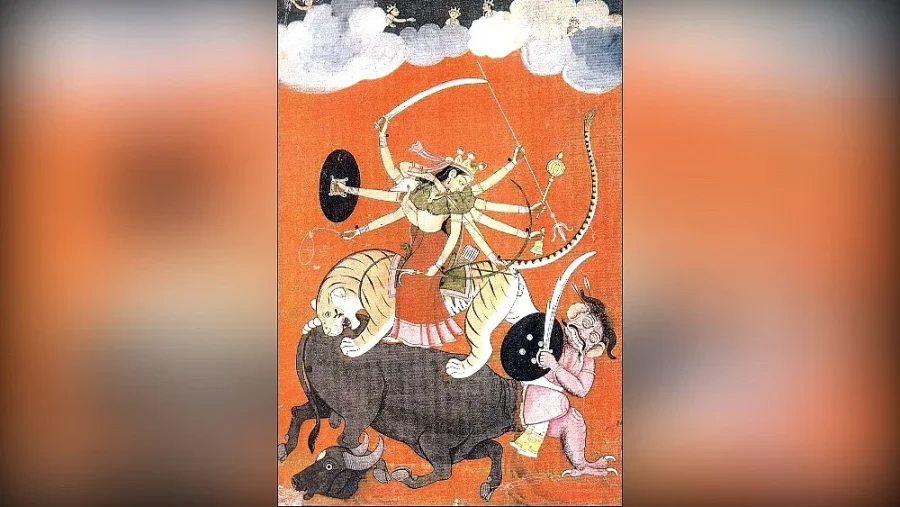

A story from Bengal is asking a simple but uncomfortable question about religion and diet. It points out a contradiction at the heart of Durga Puja. The goddess Durga rides a lion, which is a fierce carnivore. But her worshippers are asked to be strict vegetarians. The story uses humour to ask why this difference exists.
The Lion, the Goddess, and the Vegetarian Problem
The central argument is direct. You cannot have Durga ride a fierce carnivore and then ask worshippers to be strict herbivores. The story asks why Ma Durga, described as a pure and authentic goddess, should ride an animal that devours flesh. It suggests that this does not fit with the values her devotees are expected to follow.
Pumpkins, Eggplants, and Other Vahana Ideas
The story offers several replacements for the lion. It asks why the goddess should not ride a plunderous pumpkin or an eccentric eggplant. It admits that some hymns will have to be subtly tweaked. But it jokes that this is not a big problem because few people understand Sanskrit anyway. It even imagines a reddish radish being glorified in a bombastic shloka with imperfect metre, and asks who would complain.
The story also considers how the goddess herself would react. It says she will be unhappy at first. She is not used to a vahana that will not respond when she bids it to roll forward or veer leftward. But the story argues that even she must bow to superior ethics.
What If the Goddess Throws a Tantrum?
The story then offers bigger alternatives. If the goddess throws a tantrum, it suggests a rambunctious rhinoceros. Or perhaps a monumental mammoth. But it quickly notes a new problem. Ganesha will not like that. The story stops there, leaving the reader with a funny but pointed question about tradition and logic.
Our Take: Faith Should Not Fear a Question
In our view, this story is not an attack on Durga Puja. It is a lesson in the right way to pray. The right way to pray is to ask honest questions. If a tradition says one thing and does another, it is fair to notice. The story uses humour, but the point is serious. Many religious rules about food and animals come from old times. Some of them may no longer make sense. That does not mean faith is false. It means faith can grow and change.
To put it plainly, the story asks believers to think. It does not ask them to stop believing. It asks them to look at the lion and the vegetarian plate and wonder why they sit side by side. That is a healthy habit. A faith that cannot be questioned is a weak faith. A faith that can laugh at itself and still stand is a strong one. The people of Bengal have a long tradition of mixing devotion with sharp humour. This story is part of that tradition. It is a lesson, not a insult.
For readers, the message is simple. Do not be afraid to ask why. Whether the answer is a pumpkin, a rhinoceros, or the same old lion, the act of asking is what matters. That is the right way to pray.