

Summary
The Haryana Human Rights Commission (HHRC) has taken a strong stand following the tragic deaths of two workers in a Greater Faridabad sewer. The commission is now demanding detailed reports from several high-ranking local officials to explain how this happened. This move comes after allegations that the workers were forced to clean the sewer manually without any safety gear, which is a direct violation of Indian law. The case highlights the ongoing struggle to end the dangerous practice of manual scavenging in urban areas.
Main Impact
The intervention by the HHRC puts significant pressure on the Faridabad Municipal Corporation and the local police department. By seeking formal replies, the commission is holding the authorities accountable for the safety of sanitation workers. This case serves as a reminder that the ban on manual scavenging is not just a suggestion but a legal requirement. The outcome of this investigation could lead to stricter enforcement of safety rules and potential legal consequences for the officials or private builders who allowed the workers to enter the sewer without protection.
Key Details
What Happened
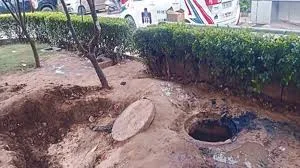
On May 2, two men named Rajendra and Sunil went to work in Greater Faridabad. They were residents of Kheri Kalan village and were tasked with cleaning a sewer line located in front of the Puri Pranam Society. According to reports, the two men entered the manhole without any protective clothing, oxygen masks, or safety harnesses. When they did not return home that evening, their families became worried. On the morning of May 4, family members searched the area and found the workers' bicycle and motorcycle parked near the open manhole. Sadly, both men had died inside the sewer after breathing in toxic gases.
Important Numbers and Facts
The HHRC member, Deep Bhatia, heard the case on May 13 and has set a deadline for the next hearing on July 8. The authorities required to submit reports include the Commissioner of the Municipal Corporation, the Commissioner of Police, the Chief Executive Officer of the Faridabad Metropolitan Development Authority, and the Deputy Commissioner. The legal basis for the complaint is the Prohibition of Employment as Manual Scavengers and their Rehabilitation Act, 2013. This law strictly forbids sending humans into sewers without specialized machinery and safety equipment. The police have already registered a case against the estate manager of BPTP, the builder responsible for the area where the incident occurred.
Background and Context
Manual scavenging is an old and dangerous practice where people clean human waste or sewers by hand. In India, this practice is illegal because it is extremely hazardous and undignified. Sewers often contain poisonous gases like methane and hydrogen sulfide. When a person enters these pipes without a mask, they can lose consciousness in seconds and die from a lack of oxygen. Despite the 2013 law and several orders from the Supreme Court, many private contractors and local bodies still use manual labor instead of machines to save money or time. This often leads to preventable deaths, especially in rapidly growing cities like Faridabad.
Public or Industry Reaction
The complaint was filed by Kamal Anand, a resident of Sangrur, who was moved by news reports of the tragedy. He argued that these workers are being pushed into "death traps" by negligent officials and contractors. Anand pointed out that the state is supposed to ensure "zero human intervention" in sewer cleaning, meaning machines should do the work instead of people. He is calling for a high-level investigation to find out who allowed the workers to enter the sewer without gear. The families of the deceased are also seeking fair compensation and justice, as they have lost their primary breadwinners due to this negligence.
What This Means Going Forward
The upcoming hearing on July 8 will be a turning point for this case. The reports from the Faridabad officials will reveal whether safety protocols were ignored and who gave the orders for the manual cleaning. If the HHRC finds evidence of gross negligence, it may recommend heavy fines and criminal charges against the responsible parties. This case might also force the Faridabad Metropolitan Development Authority to invest more in mechanized cleaning equipment. For the families, the focus remains on receiving the mandatory compensation guaranteed under the law for such accidents.
Final Take
The deaths of Rajendra and Sunil were entirely preventable. While laws exist to protect workers from such dangerous conditions, the lack of local oversight continues to put lives at risk. True progress will only happen when authorities stop viewing manual scavenging as a quick fix and start treating the safety of every worker as a top priority. Holding officials accountable is the first step toward making sure no more families have to find their loved ones' belongings abandoned next to a manhole.
Frequently Asked Questions
What is manual scavenging?
Manual scavenging is the practice of cleaning, carrying, or handling human waste from sewers or latrines by hand. It is illegal in India due to the high risk of death and health problems.
Why did the workers die in the Faridabad sewer?
The workers died of asphyxia, which means they could not breathe. This was caused by toxic gases trapped inside the sewer line that they entered without safety masks or equipment.
What does the law say about sewer cleaning?
The 2013 Act and Supreme Court rulings state that sewers should be cleaned using machines. If a human must enter a sewer in an emergency, they must have full safety gear, oxygen tanks, and constant supervision.
