
Summary
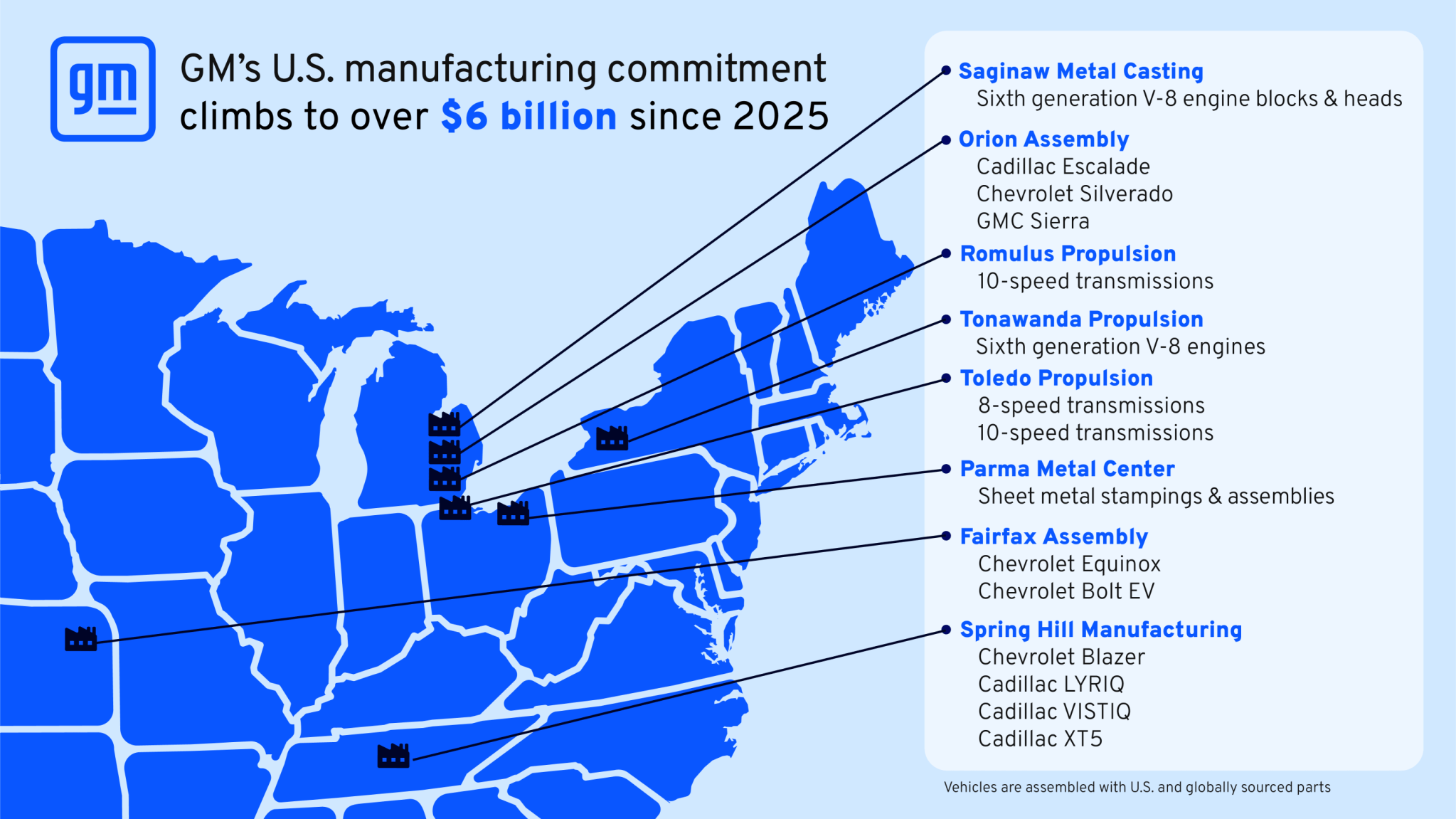
General Motors (GM) has reached a major milestone by spending $6 billion on its U.S. factories in just one year. The latest part of this plan involves an $830 million investment in three specific plants located in Michigan and Ohio. This massive spending highlights a shift in how the company operates, moving toward a strategy that balances traditional gas-powered engines with new electric vehicle technology. By putting money back into its American roots, GM is positioning itself to handle a changing car market where customer needs are constantly shifting.
Main Impact
The primary impact of this investment is the creation of a more adaptable manufacturing system. GM is not just betting on one type of car; instead, it is building the tools to produce whatever the public wants to buy. This "flexible" approach means the company can build powerful V-8 engines for trucks and Corvettes while also maintaining a large lineup of electric vehicles (EVs). This strategy protects the company from risks, such as slow EV sales or changes in government trade rules, by ensuring their factories stay busy regardless of which technology leads the market.
Key Details
What Happened
On Wednesday, GM announced it would send $830 million to three "propulsion" plants. These are the factories that build the parts that make a car move, such as engines and transmissions. The money is being split between three locations. The Romulus Propulsion Systems plant in Michigan is receiving $300 million to increase the production of 10-speed transmissions for large trucks and SUVs. The Saginaw Metal Casting plant, also in Michigan, will get $150 million to make parts for the newest generation of V-8 engines. Finally, the Toledo Propulsion Systems plant in Ohio is receiving $40 million for light-duty truck parts.
Important Numbers and Facts
The $6 billion spent over the last 12 months represents one of the largest domestic manufacturing pushes in the company's recent history. While many competitors are struggling to balance old and new technology, GM currently ranks second in U.S. electric vehicle sales. Even with this success in EVs, the company is still pouring hundreds of millions of dollars into traditional engine parts. This shows that the company believes gas-powered trucks and high-performance cars will remain profitable for a long time.
Background and Context
This new way of working is actually a return to a very old idea. In the 1920s, GM leader Alfred P. Sloan became famous for the slogan, "A car for every purse and purpose." This meant the company wanted to sell a vehicle to every person, no matter how much money they had or what they needed the car for. For many years, GM moved away from this, focusing on fewer models. Now, the company is returning to that original goal. By offering more than a dozen different electric models alongside a full range of gas-powered trucks, they are trying to be the top choice for every type of driver once again.
Public or Industry Reaction
Inside the factories, the reaction has been focused on communication and job security. GM’s manufacturing chief, Mike Trevorrow, noted that the company made sure workers and union representatives heard the news first. The company has been using frequent surveys to ask employees how to improve the workplace. According to Trevorrow, this feedback has led to better lighting, better shift hours, and even custom tools made with 3D printers. While there is some worry among workers about robots and artificial intelligence (AI) taking jobs, GM has spent $250 million over five years to train workers on how to use this new technology rather than being replaced by it.
What This Means Going Forward
Looking ahead, GM plans to follow a mantra of being "fast, flexible, and frugal." This means they want to move quickly to meet market trends, keep their factories able to build different types of cars, and save money where they can. The company did not cancel any of its planned electric models when the market slowed down; instead, they simply reduced the number of batteries they were making. This allows them to stay ready for when EV demand picks up again. The next few years will test whether this "all-of-the-above" strategy can keep GM ahead of both traditional rivals and new tech-focused car companies.
Final Take
GM is proving that a massive, century-old company can still be agile. By spending $6 billion to modernize its U.S. plants, the automaker is betting that the best way to win the future is to stay rooted in the variety that made it famous in the first place. Success will depend on how well they can manage the transition from gas to electric without leaving their workers or their traditional customers behind.
Frequently Asked Questions
Why is GM spending $6 billion on U.S. factories?
The company is investing this money to upgrade its plants so they can build both high-tech electric vehicles and traditional gas-powered trucks. This flexibility helps them stay profitable regardless of market changes.
Is GM stopping the production of gas engines?
No. In fact, a large portion of the recent $830 million investment is specifically for V-8 engines and transmissions for trucks and performance cars like the Corvette.
How is GM helping its workers with new technology?
GM has committed $250 million to train and upskill its workforce. They are teaching employees how to work alongside robots and AI to improve safety and efficiency in the factories.