

Summary
Humanoid robots are moving out of research labs and onto factory floors. British tech firm Humanoid has signed a major deal to bring these advanced machines to factories owned by Schaeffler, a large German industrial supplier. This move is part of a growing trend where companies use "physical AI" to handle manual tasks like moving boxes and organizing supplies. By training robots using data from real human movements, businesses hope to make manufacturing and service work more efficient over the next decade.
Main Impact
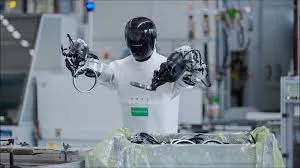
The partnership between Humanoid and Schaeffler represents a significant shift in how factories will operate. Instead of robots that stay in one place, these humanoid models can move around and perform different tasks. The agreement involves deploying up to 2,000 robots by the year 2032. This shows that major industrial players are now ready to invest in mobile, human-like machines for long-term use. It also creates a circular business model, as Schaeffler will provide the mechanical parts, known as actuators, that help the robots move their limbs.
Key Details
What Happened
Humanoid and Schaeffler have agreed to a long-term plan to integrate robots into manufacturing sites. The first phase will begin between late 2026 and mid-2027 at two locations in Germany. These robots will start with simple jobs, such as picking up and moving boxes. At the same time, other companies like the South Korean startup RLWRLD are gathering data to make robots even smarter. They are recording workers in hotels and warehouses to see exactly how humans fold napkins, grip tools, and place items on shelves.
Important Numbers and Facts
The scale of this project is quite large. Humanoid expects to place between 1,000 and 2,000 robots in Schaeffler’s global sites. To build these robots, Schaeffler will supply at least 1 million actuators through 2031. An actuator is a small motor that acts like a muscle, allowing the robot to move its joints. Other tech giants are also moving fast. Hyundai plans to use robots from Boston Dynamics in its factories by 2028, and Samsung aims to have fully AI-driven factories by 2030.
Background and Context
Physical AI is a type of artificial intelligence that allows machines to interact with the physical world. Unlike a chatbot that only processes text, physical AI needs to understand weight, balance, and touch. To teach robots these skills, engineers use "motion data." They put cameras and sensors on human workers to track their every move. This data is then turned into code that a robot can understand. This technology is becoming more popular because many industries are facing labor shortages and need help with repetitive or heavy lifting tasks.
Public or Industry Reaction
While tech companies are excited, labor groups are more cautious. In South Korea, trade unions have expressed concern about how this data is collected and used. They worry that replacing people with robots could lead to fewer jobs and a loss of traditional skills. Some workers believe that while robots can help with "back-of-house" tasks like cleaning or moving heavy crates, they cannot replace the human touch needed for customer service. For example, hotel staff noted that a robot currently takes much longer to clean a room than a person does.
What This Means Going Forward
The next few years will be a testing period for these machines. We will see if robots can truly handle the messy and unpredictable environment of a busy warehouse or hotel. Companies will focus on improving "hand dexterity," which is the ability of a robot to use its fingers for delicate tasks. As the technology improves, the cost of these robots is expected to go down, making them more common in everyday workplaces. However, businesses will also have to address the concerns of their human employees to ensure a smooth transition.
Final Take
The arrival of humanoid robots in factories is a clear sign that the world of work is changing. While these machines are not yet as fast or as skilled as humans, the massive amount of data being collected today will bridge that gap. The success of these early tests in Germany and South Korea will likely determine how quickly other industries adopt physical AI. For now, the focus remains on teaching robots to assist humans rather than replacing them entirely.
Frequently Asked Questions
What is a humanoid robot?
A humanoid robot is a machine designed to look and move like a human. It usually has a head, torso, two arms, and two legs, or it may use wheels to move around while keeping a human-like upper body.
Why are companies recording human workers?
Companies record workers to collect "motion data." This data teaches the AI how to perform physical tasks, such as how much force to use when picking up a glass or how to bend a joint to reach a high shelf.
Will robots replace all factory workers?
Most experts believe robots will first take over repetitive, dangerous, or very heavy tasks. While they will change the types of jobs available, many roles involving complex decision-making and human interaction are still very difficult for robots to do.