
Summary
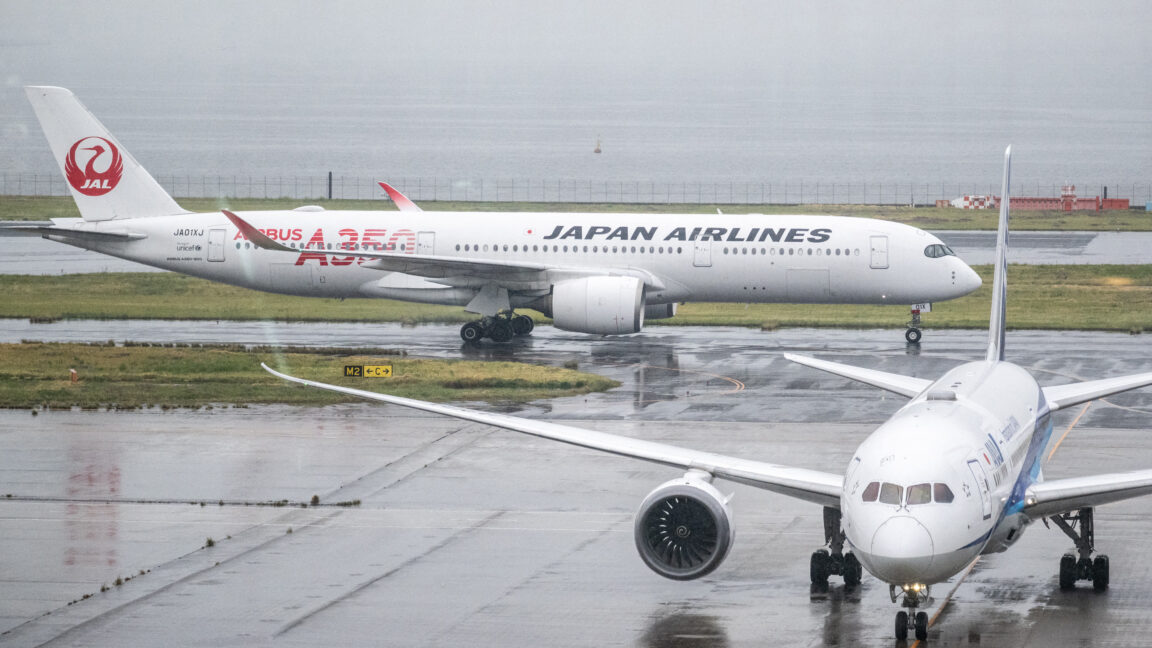
Japan Airlines is launching a new trial at Tokyo’s Haneda Airport that uses humanoid robots to manage baggage and cargo. This experiment is a response to a growing shortage of workers in Japan as the number of travelers continues to rise. By testing these advanced machines in a real-world setting, the airline hopes to find a long-term solution for handling heavy physical labor. The project will help determine if robots can work safely and effectively alongside humans in a busy airport environment.
Main Impact
The introduction of humanoid robots at one of the world’s busiest airports marks a major shift in how the travel industry handles labor. For years, airports have relied on human teams to move millions of suitcases and heavy cargo containers. However, with fewer people available for these physically demanding jobs, the industry faces a crisis. If these robots succeed, it could lead to a future where machines handle the most difficult tasks, allowing airports to stay efficient even with a smaller workforce. This move also signals that humanoid technology is moving out of controlled labs and into the public eye.
Key Details
What Happened
Japan Airlines (JAL) announced that it will begin testing humanoid robots at Haneda Airport starting in May 2026. These robots are designed to look and move somewhat like humans, which allows them to operate in spaces originally built for people. During the trial, the robots will be responsible for sorting luggage and loading cargo onto planes. Unlike older types of automation that stay in one place, these robots can move around and adapt to different tasks. The airline also plans to see if the robots can clean the inside of airplanes and move ground equipment like baggage carts.
Important Numbers and Facts
The testing phase is not a short-term project. It is scheduled to run from May 2026 until 2028. This two-year window gives engineers enough time to fix technical issues and see how the robots perform during different seasons and peak travel times. Haneda Airport is the primary location for the test because it handles a massive volume of both domestic and international flights. The robots being used are part of a new generation of hardware that features advanced software capable of recognizing different shapes and sizes of luggage, which is much harder than working with uniform boxes in a warehouse.
Background and Context
Japan is currently facing a significant demographic challenge. The country has an aging population and a shrinking number of young people entering the workforce. This has created a labor shortage in many industries, especially those that require manual labor, such as construction, shipping, and airport ground services. At the same time, tourism in Japan has reached record highs, putting more pressure on airports to process passengers and their bags quickly.
In the past, robots in workplaces were mostly "robotic arms" bolted to a factory floor. These machines are great at doing the exact same movement thousands of times. However, an airport is an unpredictable place. Bags come in all shapes, weights, and materials. Some are hard plastic, while others are soft fabric. A robot working in an airport must be able to "see" and "feel" what it is touching to avoid breaking items. Humanoid robots are being tested because they can use the same tools, doors, and vehicles that humans use, meaning the airport does not have to be completely rebuilt to fit the machines.
Public or Industry Reaction
The aviation and tech industries are watching this trial very closely. Many experts believe that this is the ultimate test for humanoid robotics. While robots have been tested in car factories and quiet warehouses, a busy airport terminal is much more chaotic. Some industry leaders are excited about the potential to reduce workplace injuries, as lifting heavy bags often leads to back problems for human workers. However, there are also questions about whether the technology is truly ready. Critics point out that current robots can still be slow or clumsy when faced with unexpected obstacles, such as a bag falling off a belt or a person walking in their path.
What This Means Going Forward
If the trial at Haneda Airport is successful by 2028, we could see a rapid rollout of similar technology at other major airports across Japan and eventually the world. This would change the career paths for airport staff, shifting their roles from manual labor to supervising and maintaining the robot fleets. It also means that travelers might soon become used to seeing metallic figures walking through the terminals or working on the tarmac. The next few years will be a period of learning, where software developers will use the data from Haneda to make robots smarter, faster, and safer around humans.
Final Take
The use of humanoid robots at Haneda Airport is more than just a tech experiment; it is a necessary step for a country with more jobs than people to fill them. By turning to high-tech solutions for baggage handling, Japan Airlines is trying to ensure that the travel experience remains smooth for millions of visitors. While the sight of a robot carrying your suitcase might feel like science fiction today, it may soon be a standard part of every trip.
Frequently Asked Questions
Why is Japan Airlines using robots instead of hiring more people?
Japan is experiencing a severe labor shortage due to an aging population. There are not enough people available to fill manual labor roles, so the airline is using robots to ensure work gets done as travel numbers increase.
When will passengers start seeing these robots at the airport?
The official testing at Haneda Airport is set to begin in May 2026. The trials are expected to continue through 2028, so travelers may see them in action during that period.
Can these robots do more than just carry bags?
Yes. While the main focus is on luggage and cargo, Japan Airlines also plans to test the robots for cleaning aircraft cabins and moving ground support equipment like baggage carts.