
Summary
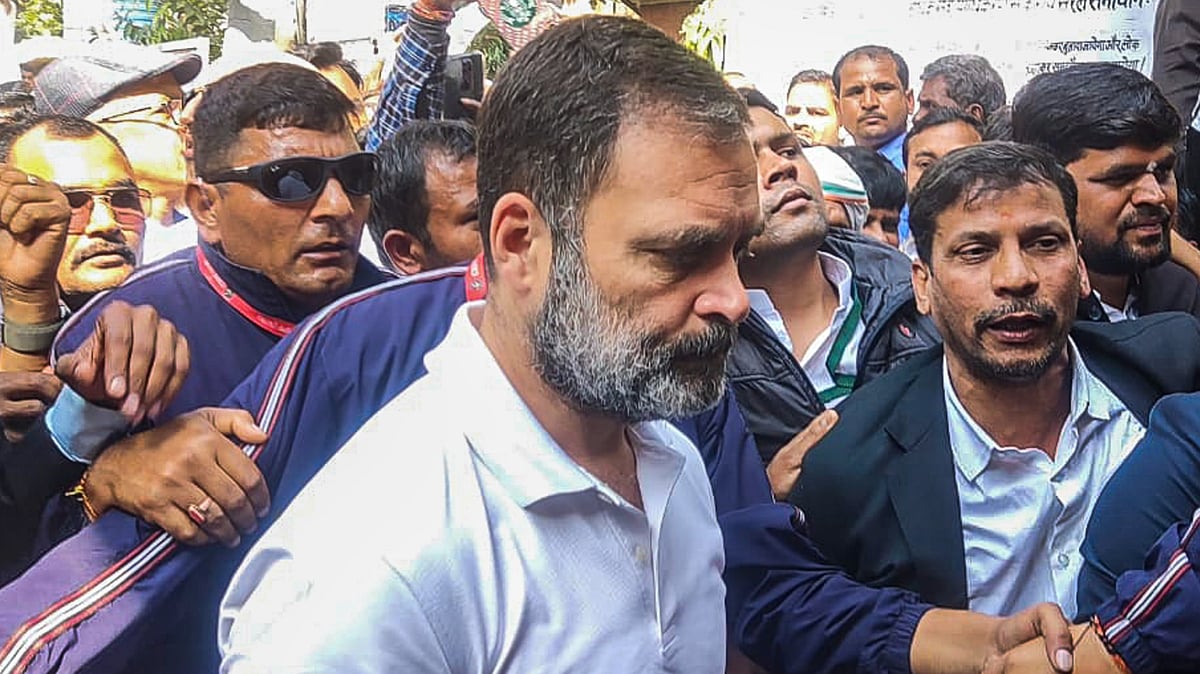
A special court in India has turned down a request to collect a voice sample from Congress leader Rahul Gandhi. This request was made as part of a defamation case that has been going on for several years. The court listened to arguments from both sides before deciding that the voice sample was not necessary at this stage. This legal battle involves comments made during a political campaign several years ago, and the next hearing is now set for May 11.
Main Impact
The court's decision to reject the voice sample plea is a major development in this long-standing legal fight. By denying the request, the court has limited the type of evidence the prosecution can use for now. This move provides a temporary legal win for Rahul Gandhi, who has consistently stated that the case against him is based on political reasons rather than legal facts. The decision also shows how courts handle requests for personal forensic data, ensuring that such demands meet specific legal standards before they are granted.
Key Details
What Happened
The request for the voice sample came from Vijay Mishra, a member of the Bharatiya Janata Party (BJP). His legal team wanted the court to order Rahul Gandhi to provide a recording of his voice. They planned to use this recording to compare it with an audio clip that they had submitted as evidence in the case. The goal was to prove that the voice in the clip belonged to the Congress leader. However, Gandhi’s lawyers argued against this, and the judge ultimately agreed to dismiss the application. After the ruling, the lawyers representing the BJP member said they do not agree with the decision and plan to take the matter to a higher court.
Important Numbers and Facts
This legal issue started in 2018, making it a six-year-old case. It involves remarks allegedly made during the Karnataka Assembly election campaign. In December 2023, the court took a firm step by issuing a warrant against Gandhi. By February 2024, the Congress leader appeared in person to address the matter. At that time, he was granted bail after providing two sureties of 25,000 rupees each. The case has faced several delays over the past few months. Some of these delays were caused by strikes held by local lawyers, while others were due to the poor health of the legal staff involved in the case.
Background and Context
Defamation cases are common in the political world of India. They often involve one politician accusing another of making false statements that harm their reputation. In this specific instance, the complaint centers on comments Rahul Gandhi allegedly made about Amit Shah, a senior leader in the BJP. The case is being heard in a special MP/MLA court. These are specific courts set up to handle legal matters involving members of parliament and members of the legislative assembly. The goal of these courts is to speed up the legal process for politicians, though many cases still take years to reach a final decision.
Rahul Gandhi has maintained his innocence throughout the process. In July of last year, he gave an official statement to the court. He denied all the charges and claimed that the legal action was a way for his political opponents to target him. This case is one of several legal challenges the Congress leader has faced in recent years across different states in India.
Public or Industry Reaction
The reaction to the court's decision has been split along political lines. Supporters of the Congress party view the rejection of the voice sample plea as a sign that the case lacks strong evidence. They believe the legal system is correctly identifying the case as a political tool. On the other hand, members of the BJP and the legal team for Vijay Mishra feel that the voice sample is a necessary piece of evidence. They argue that forensic testing is a standard way to verify audio recordings and that the court should have allowed it. The announcement that they will file a revision petition shows that they are not ready to let the matter go.
What This Means Going Forward
The case is far from over. The next immediate step is the hearing scheduled for May 11, where the court will continue to look at other aspects of the defamation claim. Meanwhile, the prosecution's plan to file a revision petition in a sessions court adds a new layer to the legal process. If the sessions court decides to hear the petition, it could potentially reverse the current decision and order the voice sample to be taken. If not, the prosecution will have to rely on other forms of evidence to prove their claims. This situation ensures that the legal battle will remain in the public eye for the foreseeable future, especially as political tensions remain high.
Final Take
The rejection of the voice sample request highlights the careful balance courts must maintain between gathering evidence and protecting the rights of the accused. While the prosecution sees the voice sample as a key to their case, the court's current stance suggests that the legal requirements for such a demand have not yet been met. As the case moves toward its next hearing in mid-May, both sides are preparing for a long legal struggle that continues to mix law with high-stakes politics.
Frequently Asked Questions
Why did the court reject the voice sample request?
The court dismissed the plea after hearing arguments from both legal teams. While the specific legal reasoning was not fully detailed in the immediate report, courts often reject such requests if they feel the evidence is not essential at that moment or if the legal grounds for the request are weak.
What is the defamation case about?
The case was filed in 2018 by a BJP official. It claims that Rahul Gandhi made defamatory remarks against Amit Shah during a political campaign in Karnataka. Gandhi denies these claims and says the case is politically motivated.
What happens next in the case?
The next hearing is scheduled for May 11. Additionally, the person who filed the complaint plans to challenge the court's decision regarding the voice sample by filing a petition in a higher sessions court.