
Summary
India is currently serving as the chair of the BRICS group, but the organization is facing a period of deep internal division. The ongoing conflict involving Iran has split the member nations, making it nearly impossible for the group to reach a common ground. As New Delhi prepares to host the major summit in September, India finds itself in a difficult position, trying to balance its ties with Western nations while leading a group that often opposes Western influence. This lack of unity suggests that the group's influence on the global stage may be fading.
Main Impact
The primary impact of these internal disagreements is the total paralysis of the BRICS group. For years, the bloc was seen as a rising force that could challenge the dominance of the United States and its allies. However, the current crisis shows that the group cannot even agree on a basic statement regarding a war involving one of its own members. This failure to act together makes the group look weak and disorganized. For India, the impact is even more significant, as its attempt to remain neutral is causing it to lose influence to China, which is taking a much more active role in shaping the group's future.
Key Details
What Happened
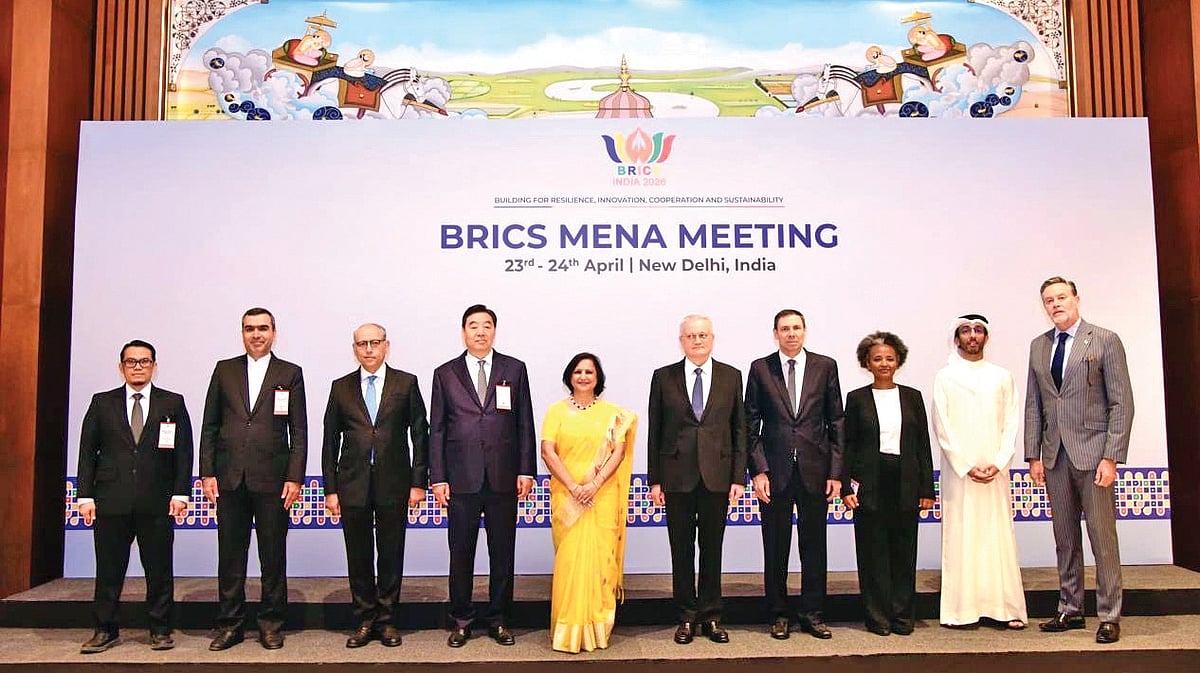
In late April 2026, India hosted a meeting for deputy foreign ministers and special envoys to discuss issues in West Asia and North Africa. The goal was to create a joint declaration that showed the group was united. Instead, the meeting ended in a deadlock. Because the members could not agree on the wording, India had to release a "chair’s summary" instead of a collective statement. In the world of international politics, a chair's summary is a sign that the participants failed to reach a consensus. This was a clear signal that the group is no longer working as a single unit.
Important Numbers and Facts
The 18th BRICS summit is set to take place in New Delhi in September 2026. The recent failed meeting occurred on April 23 and 24. The group has recently grown in size, adding countries like Iran and the UAE to its original lineup of Brazil, Russia, India, China, and South Africa. While Iran expected the group to support it during its military confrontations, the UAE resisted using any language that would anger the United States or Israel. Meanwhile, Russia and China have moved closer to Iran’s position, leaving India stuck in the middle with no clear direction.
Background and Context
BRICS was originally formed to give a voice to the world's fastest-growing economies. The idea was to create a "multipolar" world, which simply means a world where power is shared among many countries instead of just one or two. Over time, the group began to focus more on politics and security. However, as more countries joined, their interests began to clash. India has worked hard to maintain "strategic autonomy," which means it tries to be friends with everyone. It has strong trade and military ties with the US and Israel, but it also needs energy from the Middle East and wants to keep good relations with Iran. This "friend to everyone" approach is now becoming very hard to maintain as global tensions rise.
Public or Industry Reaction
Many experts believe that India’s refusal to take a firm side is hurting its reputation. Within the BRICS group, other members see India’s hesitation as a lack of loyalty to the bloc’s goals. Iran, in particular, has expressed disappointment that India has not used its position as chair to gather support for Tehran. On the other side, the United States has issued warnings. The Trump administration has threatened to put high taxes, or tariffs, on any country that tries to move away from using the US dollar for trade. This has made the Indian government very nervous about supporting any BRICS plans that challenge the current global financial system.
What This Means Going Forward
The outlook for the September summit is not very positive. Many expect the meeting to produce only vague statements that avoid the most important issues. There are even rumors that China’s president may not attend, which would be a major blow to the event's importance. As India tries to avoid making enemies, China is stepping in to fill the leadership gap. Many of the newer members of BRICS are more aligned with China’s goals than India’s. This suggests that India may find itself sidelined within the very group it is supposed to be leading. The risk is that India will become a host that has no say in the final decisions.
Final Take
India is finding that it is impossible to please everyone in a world that is becoming more divided. By trying to stay in the middle, New Delhi is losing its ability to lead. The BRICS group is growing larger, but it is also becoming less effective. Unless the member nations can find a way to agree on major global crises, the organization may soon lose its relevance entirely. For now, India is presiding over a group that is moving in different directions, leaving its own foreign policy in a state of uncertainty.
Frequently Asked Questions
Why did the BRICS meeting in New Delhi fail to reach a consensus?
The members could not agree on how to talk about the war involving Iran. Some members wanted to support Iran, while others, like the UAE, did not want to criticize the US or Israel. This disagreement prevented a joint statement.
What is "de-dollarization" and why is it a problem for India?
De-dollarization is the idea of using other currencies instead of the US dollar for international trade. India is hesitant to support this because the US has threatened to impose trade penalties on countries that move away from the dollar.
How is China's role in BRICS changing?
China is becoming the most powerful member of the group. As BRICS expands, many of the new members have closer ties to Beijing than to New Delhi, which gives China more control over the group's agenda.