
Summary
Farmers in Haryana have launched a new wave of protests against a proposed trade deal between India and the United States. The Bhartiya Kisan Union (Charuni) held a major meeting in Kurukshetra to voice their strong opposition to the agreement. They believe the deal will cause significant harm to India's agriculture sector and the livelihoods of local farmers. To show their anger, the group has planned a series of statewide demonstrations and is working to build a national movement to stop the government from moving forward.
Main Impact
The primary concern regarding this trade deal is the potential for a massive drop in crop prices within India. Farmers fear that the agreement will allow the United States to send large amounts of agricultural products into the Indian market at very low prices. Because US farmers often receive large subsidies from their government, they can sell their goods for less than Indian farmers can. This competition could make it impossible for local growers to earn a fair living, leading to deeper poverty in rural areas. The protest movement aims to force the government to reconsider the terms of the deal before it is officially signed.
Key Details
What Happened
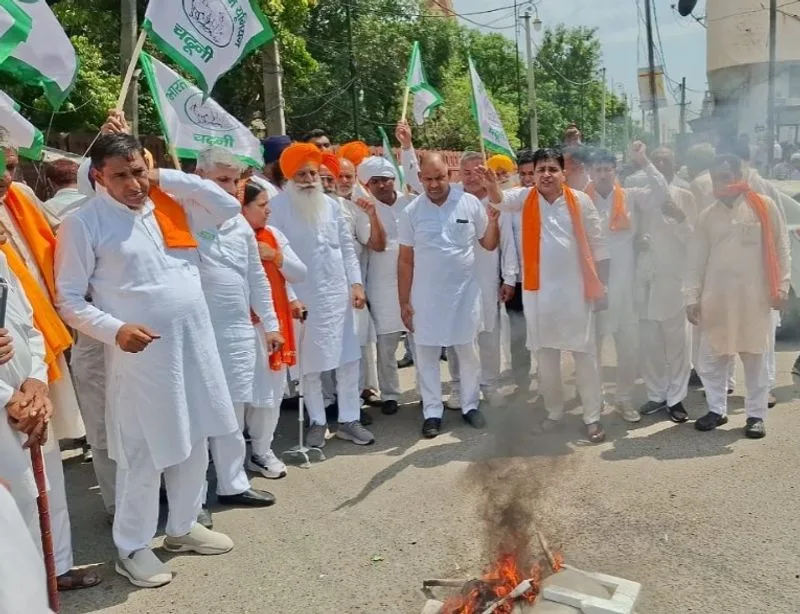
On June 1, 2026, members of the Bhartiya Kisan Union (Charuni) gathered at the Jat Dharmashala in Kurukshetra for a state-level meeting. Led by their chief, Gurnam Singh Charuni, the farmers discussed the risks they believe are hidden within the India-US trade deal. After the meeting, the group held a public demonstration where they burned an effigy representing the US delegation that had just arrived in the country. They also shouted slogans against the government, demanding that the interests of Indian farmers be protected over international business interests.
Important Numbers and Facts
The US delegation is currently on a four-day visit to India, which began on June 1, to finalize the details of the trade agreement. In response, the BKU (Charuni) has called for protests at every district headquarters across Haryana on June 4. Following these local protests, a larger three-day camp is scheduled to begin on June 6 in Uttarakhand. This camp will bring together farmer leaders from several major states, including Haryana, Uttar Pradesh, Punjab, and Uttarakhand, to plan a long-term strategy against the deal.
Background and Context
Trade deals are agreements where two or more countries agree to reduce taxes, known as duties, on goods they sell to each other. The goal is usually to increase business and help the economy grow. However, in the case of agriculture, these deals can be very risky. India has millions of small-scale farmers who rely on stable prices to survive. If the government removes protections that keep foreign goods expensive, the market could be flooded with cheaper imports. This is not the first time Indian farmers have protested against government policies; previous movements have shown that the farming community is well-organized and capable of holding long-term demonstrations to protect their rights.
Public or Industry Reaction
The reaction from the farming community has been swift and firm. Gurnam Singh Charuni stated that the deal is one-sided and will only benefit the United States while causing heavy losses for India. He pointed out that the Prime Minister has already warned about a possible financial crisis, and he argues that this trade deal will only make the country's economic situation worse. Other farmer unions are also starting to show support. Leaders are currently in talks to unite different groups from across North India to create a single, powerful voice against the agreement. They believe that only a massive, national movement can stop the government from implementing the deal.
What This Means Going Forward
The next few weeks will be critical for both the government and the farmer unions. The protests on June 4 will serve as a test of the union's strength and the level of public support in Haryana. If the meetings in Uttarakhand on June 6 result in a unified plan, the government could face a situation similar to the major farmer protests seen in previous years. This could lead to road blocks, large marches toward the capital, and significant political pressure. The government will have to decide if the benefits of the trade deal with the US are worth the risk of widespread domestic unrest.
Final Take
The tension over the India-US trade deal highlights the difficult balance between global economic goals and the protection of local workers. While the government seeks to strengthen international ties, the farming community sees these moves as a direct threat to their survival. The upcoming protests will determine whether the government continues with its current plan or pauses to address the fears of the people who feed the nation.
Frequently Asked Questions
Why are Indian farmers against the trade deal with the US?
Farmers fear that the deal will allow cheap US agricultural products to enter India, which would lower the prices of local crops and hurt their income.
When and where are the next protests taking place?
Statewide protests are planned across Haryana at district headquarters on June 4, followed by a major planning meeting in Uttarakhand starting June 6.
Who is leading the protest movement?
The movement is currently being led by Gurnam Singh Charuni and the Bhartiya Kisan Union (Charuni), with support expected from other unions in Punjab and Uttar Pradesh.