

Summary
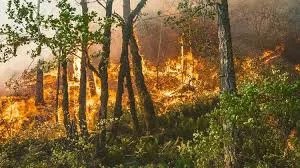
A new study shows that forest fires in the Western Himalayas are happening more often and moving into higher areas. Scientists found that rising temperatures and long dry periods are the main reasons for this change. These fires happen most frequently between February and June, putting both nature and local villages at high risk. This research highlights how climate change is making the mountain environment more fragile and dangerous.
Main Impact
The increasing number of fires is causing a major shift in the mountain ecosystem. As fires move to higher altitudes, they reach areas that were previously safe from such heat. This movement threatens rare plants and animals that live in cooler climates. Additionally, the study shows that the heat of the ground itself is now a bigger factor in starting fires than the amount of rain the region receives. This means that even if it rains, high temperatures can still lead to massive blazes.
Key Details
What Happened
Researchers from the CSIR-Institute of Himalayan Bioresource Technology spent twenty years looking at satellite data. They wanted to see how fire patterns have changed over time. They discovered that the fire season follows a specific path across the states. It starts early in the year in the lower regions and moves north as the weather gets hotter. While people often start these fires by accident or for farming, the dry weather makes the flames spread much faster than they used to.
Important Numbers and Facts
The data shows that the Western Himalayas face about 1,300 forest fires every single year. The peak of this activity is in May, which is usually the hottest and driest month before the summer rains arrive. The study also identified which trees are most at risk. Chir pine forests are the most likely to burn, making up 57 percent of all fire cases. Broadleaf forests account for about 24 percent of the fires. Among all the states in the region, Uttarakhand has the highest number of fire incidents, followed by Himachal Pradesh, Jammu and Kashmir, and Ladakh.
Background and Context
The Himalayas are known for their thick forests and diverse wildlife. In recent years, the amount of forest cover has actually grown in some parts of the mountains. However, this has created a new problem. More trees mean more leaves and wood on the ground, which act as fuel for fires. When you combine this extra fuel with more people living near the woods and a warming climate, the risk of a large fire goes up significantly. The Western Himalayas are particularly sensitive because the steep slopes allow fires to climb quickly from the valleys to the peaks.
Public or Industry Reaction
Experts are worried about the safety of people living in these areas. In the Kangra district of Himachal Pradesh, more than half of the forest area is now considered vulnerable to fire. About 10 percent of that area is in a high-risk zone. Thousands of small villages are located right next to these danger zones. Local leaders and environmental groups are calling for better ways to watch the forests and warn people before a fire gets out of control. There is a growing understanding that traditional fire-fighting methods may not be enough as the climate continues to change.
What This Means Going Forward
To help solve this problem, scientists have started using new technology. A system called PhenoMet has been set up at the Baba Balaknath Temple. This system uses a special camera that takes pictures over a long time to see how the forest changes. It also has tools to measure heat, rain, and wind in real time. By using this data, experts hope to predict when a fire is likely to start. The goal is to create an early warning system that can tell villagers and fire teams about a danger before the first spark appears. This technology will be vital for protecting the mountains in the coming years.
Final Take
The rise in Himalayan forest fires is a clear sign that global warming is changing the world right now. It is no longer just a future threat. With over a thousand fires every year, the region needs better protection and smarter technology to survive. Protecting these forests is not just about saving trees; it is about keeping the people who live there safe and making sure the mountain environment stays healthy for the next generation. The shift of fires to higher ground is a warning that we must act quickly to adapt to a warmer world.
Frequently Asked Questions
Which month has the most forest fires in the Himalayas?
May is the peak month for forest fires because it is the time when temperatures are highest and the ground is very dry.
Which state in the Western Himalayas is most at risk?
Uttarakhand is the state with the highest number of forest fire incidents, according to the twenty-year study.
What kind of trees burn most often?
Chir pine forests are the most vulnerable, accounting for more than half of all the forest fires recorded in the region.
