
Summary
Beijing recently held its second annual half-marathon for humanoid robots, showing a massive leap in technology compared to last year. The event featured over 100 robots competing across a 13-mile course. While the first race in 2025 was filled with robots falling and needing human help, this year’s competition was much more professional. The winning robot even managed to finish the race faster than the current human world record holder.
Main Impact
The biggest takeaway from this event is the incredible speed of improvement in the robotics industry. In just one year, the winning time for the 13-mile race dropped from over two and a half hours to just over 50 minutes. This progress shows that Chinese tech companies are making fast gains in how robots balance, move, and think for themselves. It also signals a shift from robots being seen as "toys" or "experiments" to machines that can perform high-level physical tasks without constant human control.
Key Details
What Happened
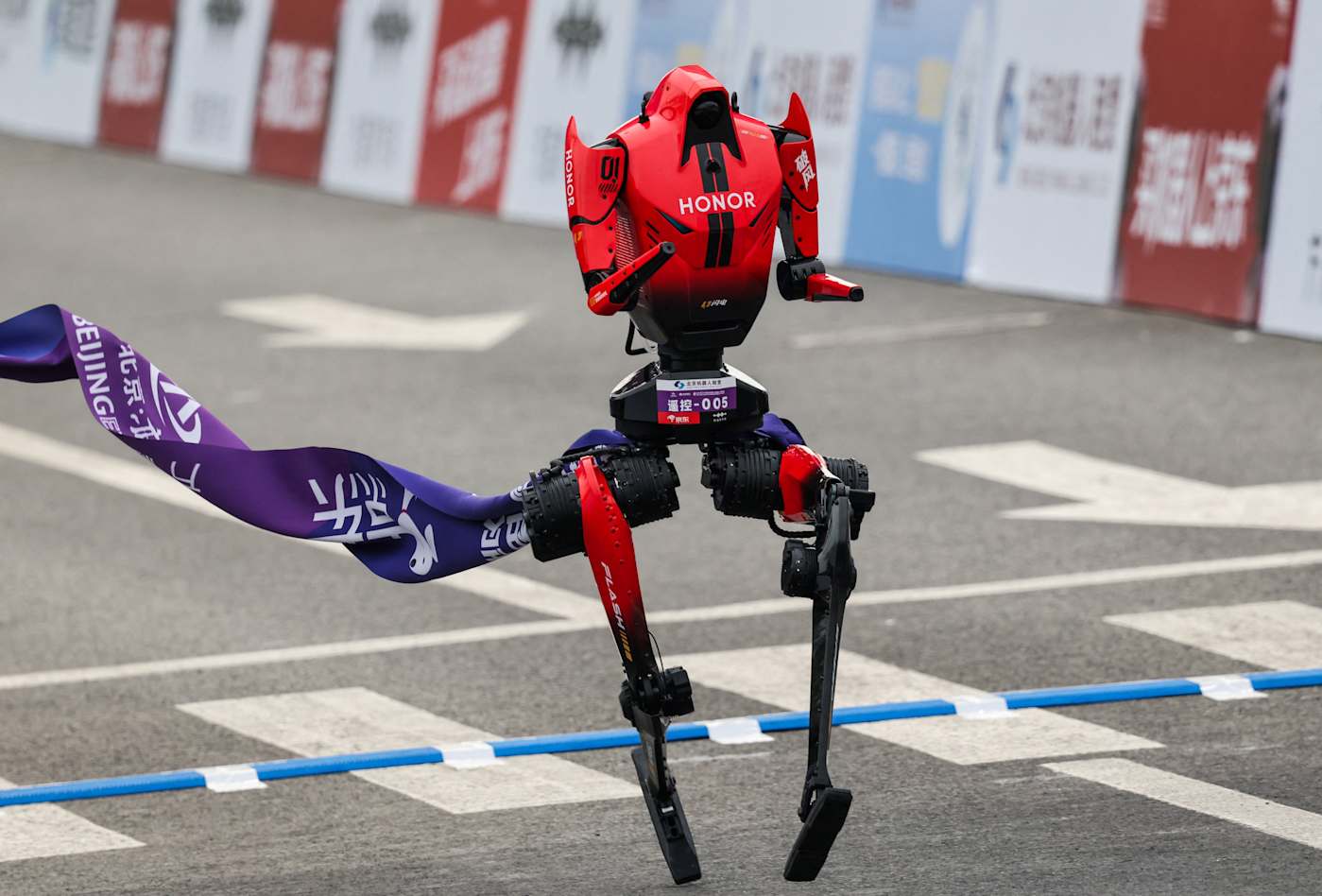
The race took place in Beijing and invited various tech companies to show off their latest humanoid machines. Unlike last year, where many robots were tied to human handlers or fell over at the starting line, this year’s field was much more stable. A robot named Lightning, built by the company Honor, took first place. Honor is a brand mostly known for making smartphones, but they have now proven they are a major player in the world of robotics as well.
Important Numbers and Facts
The statistics from the race are surprising. The winning robot, Lightning, finished the half-marathon in 50 minutes and 26 seconds. To put that in perspective, the human world record for a half-marathon is 57 minutes and 31 seconds, held by Jacob Kiplimo. This means the robot was several minutes faster than the fastest human on Earth. Additionally, while only 21 robots competed last year, over 100 joined this time. About 40 percent of these robots were fully autonomous, meaning they moved on their own without a person using a remote control.
Background and Context
Building a robot that can walk on two legs is one of the hardest challenges in engineering. Humans have complex inner-ear systems and muscles that help us stay upright, but robots have to rely on sensors and software to do the same. For a long time, humanoid robots were slow and clumsy. Beijing started this event to push companies to make robots that are more agile and reliable. A half-marathon is a great test because it requires the robot to maintain balance for a long time while managing battery power and navigating different types of ground.
Public or Industry Reaction
The reaction to this year’s race has been much more positive than last year. In 2025, videos of the race went viral because the robots looked "goofy" and often crashed into each other or the ground. This year, news agencies like CCTV and the BBC noted that the event felt like a real athletic competition. However, it was not perfect. Even though the top robots were very fast, there were still several crashes. Some robots lost their balance during turns or when the ground was uneven. Industry experts say that while the speed is impressive, the next big challenge is making sure the robots can handle unexpected obstacles without falling.
What This Means Going Forward
The success of robots like Lightning suggests that we might see these machines in everyday life sooner than expected. If a robot can run 13 miles faster than a human, it could eventually be used for delivery services, emergency rescues, or working in factories. The fact that 40 percent of the robots ran autonomously is a big step toward machines that do not need humans to watch them every second. In the coming years, we can expect more companies to join these races, focusing on making robots that are not just fast, but also smart enough to avoid accidents entirely.
Final Take
This race proves that the days of robots being slow and clumsy are ending. By beating human records and showing better self-control, these machines are proving their worth. While there are still technical bugs to fix, the jump in performance over just twelve months is a clear sign that the future of robotics is moving at a very fast pace.
Frequently Asked Questions
How fast did the winning robot run?
The winning robot, named Lightning, finished the 13-mile half-marathon in 50 minutes and 26 seconds, which is faster than the human world record.
Did the robots drive themselves?
About 40 percent of the robots were autonomous, meaning they moved on their own. The other 60 percent were controlled by humans using remotes.
Which company built the winning robot?
The winning robot was built by Honor, a Chinese technology company that is also well-known for manufacturing smartphones and other mobile devices.